
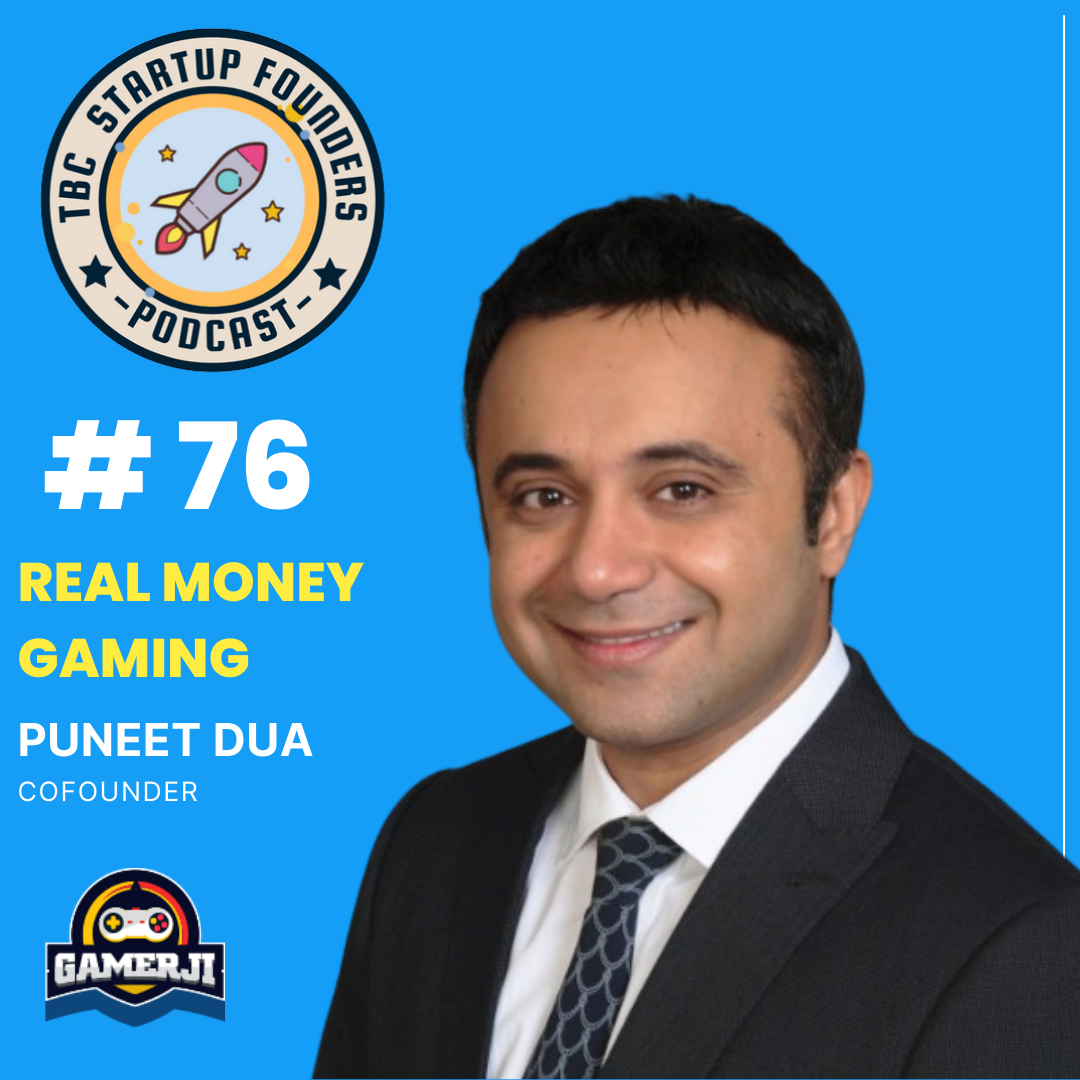
Scaling the “Missing Middle” of Esports: Soham Thacker on Building Gamerji for 10M+ Users
In this episode of The Builders Club podcast, host Sohail Khan sits down with Soham Thacker, the Co-founder and CEO of Gamerji, to dissect the evolution of the Indian gaming ecosystem. For Founders and CXOs, this discussion is a masterclass in identifying overlooked market segments, navigating turbulent regulatory shifts like the 28% GST, and the strategic pivot from a B2C platform to a global B2B SaaS powerhouse.
Executive Summary: The Strategic Vision
While the world focused on “Pro” athletes and “Casual” gamers, Soham Thacker identified the “Missing Middle”: the aspiring amateur who wants a professional experience without being a full-time athlete. Since its inception in 2019, Gamerji has scaled to over 9.5 million users, conducting 500+ daily tournaments across 27+ titles.
The conversation pivots from the early days of “reverse migration” (Soham’s return from the US) to the high-stakes reality of the Indian gaming industry today—marked by the distinction between Esports and Real Money Gaming (RMG) and the expansion into high-ARPPU markets like the MENA region.
The Discussion: A Detailed Synthesis
1. The Genesis: Reverse Migration and the “Fire Within”
Soham discusses his journey from being a computer engineer at Rutgers and working at Motorola/SAP in the US to returning to India in 2012.
- The Founder’s Lesson: Entrepreneurship is a marathon, not a sprint. Soham emphasizes that the “glamour” of founding a startup is a myth; it is a solo journey of endurance.
- Key Detail: He candidly admits to making “every basic mistake,” from wrong corporate structures to text-heavy pitch decks, underscoring that persistence outweighs early perfection.
2. Identifying the “Missing Middle”
Most gaming platforms cater to either the 0.1% (Pros) or the casual 90%. Gamerji targets the semi-pro and aspiring amateur.
- Product Philosophy: Building a “Gaming CV.” Every win/loss on Gamerji is tracked, creating a persistent professional profile for gamers to get scouted.
- Automation at Scale: To handle 500 tournaments a day, Gamerji built an AI-driven automated engine that matches players by skill level, eliminating the manual bottleneck of traditional tournament hosting.
3. The GST Controversy and Regulatory Nuance
A significant portion of the discussion covers the 28% GST impact. Soham provides a critical distinction for business leaders:
- Esports vs. RMG: While the government often buckets them together, Esports is a game of skill (video games like BGMI, FIFA, CS:GO).
- The Revenue Shift: The ambiguity in regulation has pushed Gamerji to stay compliant by avoiding “casino” mechanics, focusing instead on in-app purchases and B2B partnerships.
4. Scaling: From 100k to 10 Million Users
Soham breaks down the operational shift required at different stages of growth:
- Retention over Acquisition: “If your funnel is wider at the bottom and slimmer at the top, it’s a failed venture.” Gamerji maintains a staggering 76% retention rate by focusing on community features like group chats and leaderboards.
- B2B SaaS Pivot: One of the most interesting takeaways for CXOs is Gamerji’s expansion into 23+ global telcos (including Vi in India) as a white-labeled tournament engine.
5. Global Footprint: India vs. MENA
- India: High volume, mobile-first, lower ARPPU.
- MENA (UAE/Saudi Arabia): Higher purchasing power, PC-heavy, and a massive appetite for cross-border competition.
Key Takeaways for Founders and Enterprise CXOs
- Equity Discipline: Soham advises early-stage founders to be extremely protective of equity. Diluting 40% in a seed round often makes a company “un-investable” for Tier-1 VCs later. Aim for 7-12% dilution in early rounds.
- The Data Moat: By owning the behavioral data of millions of amateur players, Gamerji is no longer just a platform—it is becoming a Gaming Publisher. For enterprise leaders, the lesson is clear: the platform is the entry point; the data is the asset.
- Adaptive Monetization: In a high-tax environment (28% GST), diversify your revenue. Gamerji’s move into B2B SaaS partnerships with telcos provides a stable, recurring revenue stream that is decoupled from the volatility of B2C RMG regulations.
- Reverse Migration Advantage: Bringing global operational standards (learned at Motorola/SAP) to the local Indian market allows for better structural scaling when a startup hits the “hyper-growth” phase.
Frequently Asked Questions (FAQs)
Who is Soham Thacker?
Soham Thacker is a serial entrepreneur and the Founder/CEO of Gamerji, India’s leading esports tournament platform. He is a Rutgers University alumnus with a background in technology and game development.
What is the difference between Esports and Real Money Gaming (RMG)?
As discussed by Soham Thacker, Esports involves competitive video gaming based on skill (e.g., FIFA, BGMI), whereas RMG (Real Money Gaming) often involves fantasy sports or card games where a deposit is made for a potential cash win.
How does Gamerji make money?
Gamerji utilizes a multi-pronged revenue model: in-app purchases/subscriptions, sponsored leagues for brands, and a B2B SaaS model where they provide their tournament engine to global telecommunications companies.
Why is the “Missing Middle” important in gaming?
The “Missing Middle” represents the largest segment of competitive gamers—those who are better than casual players but aren’t yet professionals. By providing this group with a “Gaming CV” and structured tournaments, Gamerji has captured a massive, underserved market.
What are Soham Thacker’s tips for startup founders?
He emphasizes the “Marathon Mindset,” the importance of customer feedback over founder ego, and being extremely cautious with early-stage equity dilution.