
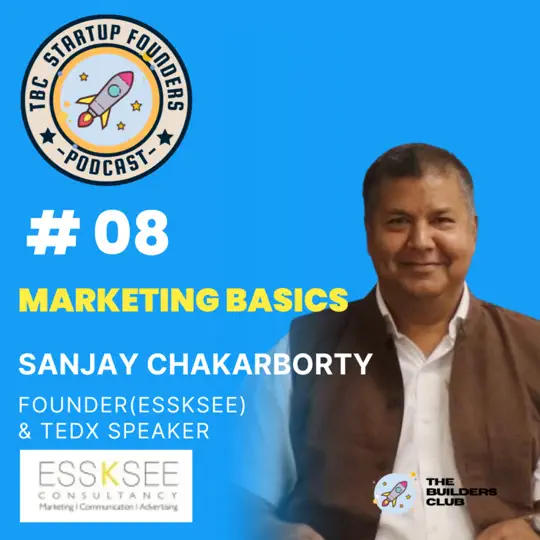
The Architecture of Influence: Sanjay Chakraborty on Why Branding is Business Currency
Table of Contents
- The Architecture of Influence: Sanjay Chakraborty on Why Branding is Business Currency
- Executive Summary: The Strategic Shift
- Key Discussion Points: Takeaways for CXOs and Founders
- 1. From Salesman to Storyteller: The Power of Grassroots Insights
- 2. Branding vs. Advertising: Defining the "Why"
- 3. The Myth of "Cheap" Social Media
- 4. Reverse Mentoring: Staying Relevant in the Gen Z Era
- Detailed Transcript Highlights (Abridged)
- The ESSKSEE Framework for Growth
- Frequently Asked Questions (FAQs)
- Who is Sanjay Chakraborty?
- What is ESSKSEE Consultancy?
- What is the difference between a brand and a logo?
- Why do most branding campaigns fail?
In an era of fleeting digital attention, the difference between a “commodity” and a “brand” lies in the invisible layers of trust and emotional connection. For founders and enterprise CXOs, branding isn’t an line-item expense—it is the strategic infrastructure of the organization.
In this deep-dive discussion, Sanjay Chakraborty, Founder and Chief Marketing Communication Advisor at ESSKSEE Consultancy, shares over 25 years of industry wisdom. Having worked with giants like Adani Wilmar, Wagh Bakri, and Audi, Chakraborty decodes the psychology of influence and the evolving landscape of advertising.
Executive Summary: The Strategic Shift
The conversation centers on a fundamental truth: Branding is a belief, and it is a promise. Chakraborty argues that while advertising is the tool of communication, branding is the perception created in the consumer’s mind. For the modern business leader, the takeaway is clear: stop building in boardrooms and start building in the field.
Key Discussion Points: Takeaways for CXOs and Founders
1. From Salesman to Storyteller: The Power of Grassroots Insights
Chakraborty’s journey began in hard-core sales, an experience he deems non-negotiable for any marketer.
- The CXO Insight: Sales experience provides the “buyer’s psychology” required to sell creative ideas later. If you don’t understand the friction at the point of purchase, your high-level strategy will likely fail.
- Actionable Advice: Business leaders should periodically “reverse-engineer” their strategy by meeting the end consumer directly to validate boardroom assumptions.
2. Branding vs. Advertising: Defining the “Why”
Many leaders conflate the two. Chakraborty clarifies:
- Advertising is the medium—the tools and platforms used to reach an audience.
- Branding is the “currency” of your name. It is the peace of mind a customer feels when they choose you over a cheaper alternative.
- Core Principle: “When the why is clear, the how becomes easy.” Purpose-driven branding ensures longevity, whereas feature-driven advertising is easily replicated by competitors.
3. The Myth of “Cheap” Social Media
A common trap for SMEs and startups is viewing digital media solely as a cost-saving measure.
- The Reality: No medium is a substitute for another; they are complementary. Reach always comes at a price—whether in capital or time.
- The Balanced Approach: Strategic resource utilization is more important than the volume of content. CXOs must focus on “optimal utilization” rather than just “circulation numbers.”
4. Reverse Mentoring: Staying Relevant in the Gen Z Era
With 30+ years of experience, Chakraborty emphasizes the need for humility.
- Evolution: To remain relevant, leaders must embrace Reverse Mentoring—learning from the younger generation who navigate the digital-first world instinctively.
- Cultural Shift: Don’t blame the new generation for changing the rules; adapt your communication style to fit the new attention economy.
Detailed Transcript Highlights (Abridged)
Host: Sanjay, you’ve seen the industry evolve from traditional print to the digital explosion. What remains constant?
Sanjay Chakraborty: “What remains constant is human emotion. Tools change, but the reason people buy remains the same: trust. I always say, branding is not just about a logo or a catchy slogan. It is about the perception you create and the emotional connection you build. Your name is a currency. If your name doesn’t hold value in the market, no amount of advertising spend can save the business.”
Host: You often speak about ‘Half Glass Full.’ How does that apply to business leadership?
Sanjay Chakraborty: “It’s about perspective. In my early career, I faced physical challenges that could have ended my professional life. But I viewed them as a challenge to transcend. In business, leaders often see the ’empty’ part of the glass—the missed targets or the market shifts. But the ‘full’ part is your resourcefulness. Success comes from knowing how to use the resources you have, not just lamenting what you lack.”
The ESSKSEE Framework for Growth
Based on the discussion, these are the four pillars Sanjay Chakraborty uses to advise SMEs and Enterprises:
- Listen to the Market: Strategy must be shaped by market listening, not just internal goals.
- Investment over Expense: View branding as a long-term asset on the balance sheet.
- Novelty in Communication: Don’t repeat what the market already knows. Say something novel or stay silent.
- Internal Delivery: A brand promise is only as good as the internal team’s ability to deliver it.
Frequently Asked Questions (FAQs)
Who is Sanjay Chakraborty?
Sanjay Chakraborty is a renowned marketing and advertising professional with over 25 years of experience. He is the Founder and Chief Marketing Communication Advisor at ESSKSEE Consultancy and a two-time Limca Book of Records holder. He is also a TEDx speaker and author of best-selling books like Half Glass Full and Marketing Tid-Bits.
What is ESSKSEE Consultancy?
ESSKSEE Consultancy, founded by Sanjay Chakraborty, provides strategic mentorship, advisory, and consultancy services in branding, advertising, and sales, specifically catering to SMEs, Startups, and large corporations in Gujarat and beyond.
What is the difference between a brand and a logo?
As per Sanjay Chakraborty, a logo is a visual identifier, but a brand is a belief and a promise. A brand represents the reputation and the “currency” of a name, providing customers with peace of mind.
Why do most branding campaigns fail?
According to Chakraborty, campaigns fail when they are built in boardrooms without consumer insight, or when they focus on features rather than the “why” (purpose) behind the brand.