The Architecture of Modern Healthcare: Building Scalable Ecosystems for Bharat.
Table of Contents
- The Architecture of Modern Healthcare: Building Scalable Ecosystems for Bharat.
- Executive Summary
- Strategic Key Points & Takeaways
- Podcast Transcript Highlights
- Actionable Insights for CXOs
- Frequently Asked Questions (FAQs)
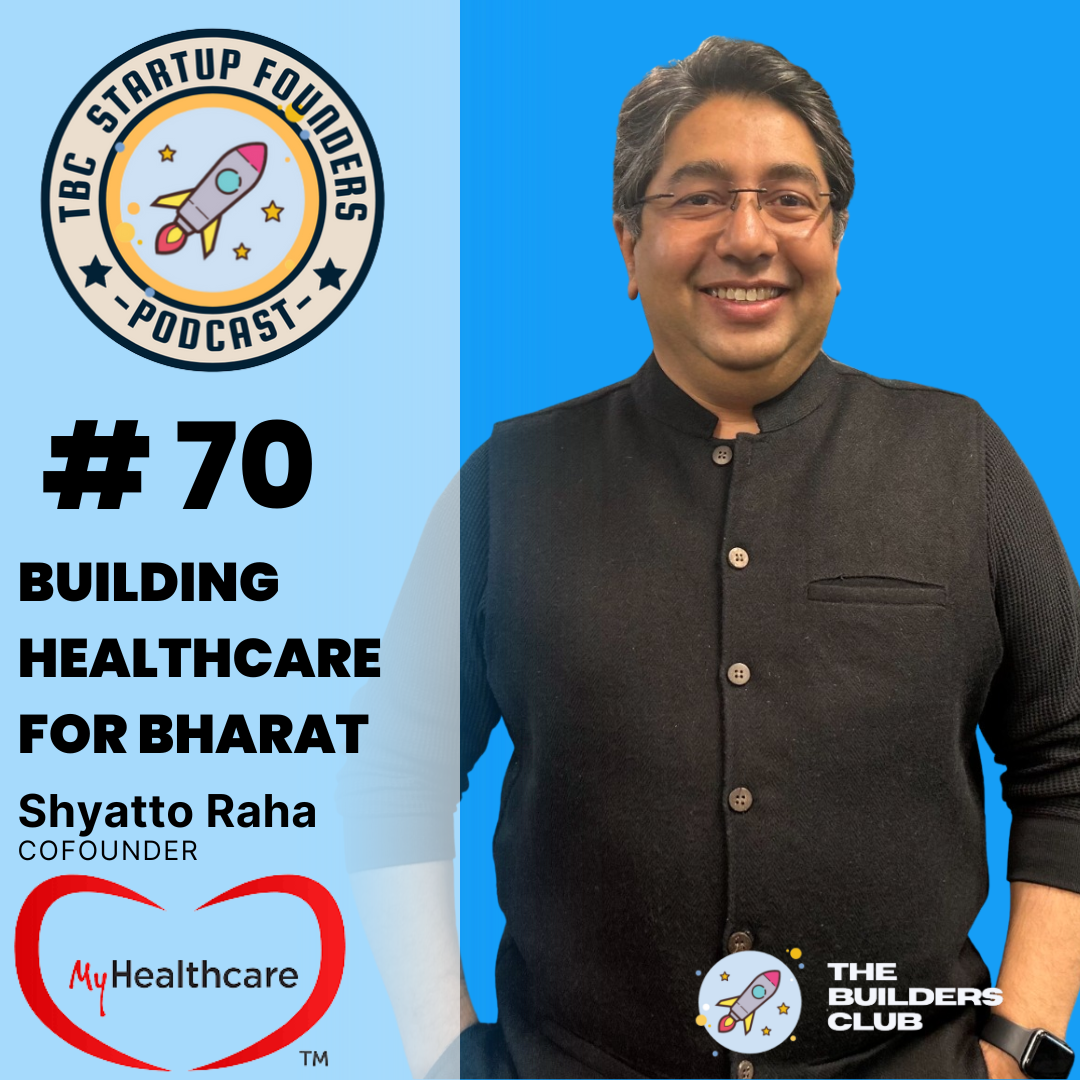
In a landscape where healthcare accessibility remains one of the most significant challenges for the Indian subcontinent, Shyatto Raha, Co-founder of MyHealthcare, provides a masterclass on building a resilient, data-driven healthcare ecosystem. In this deep-dive discussion, Shyatto explores the transition from fragmented “point solutions” to integrated platforms that serve 40 million+ patients.
For founders and enterprise leaders, this episode is less about “health-tech” and more about the strategy of ecosystem orchestration, the psychology of change management, and the scalability of B2B2C models.
Executive Summary
The discussion centers on the “Demonetization Moment” for Indian healthcare—the pandemic—and how it accelerated a decade’s worth of digital adoption into two years. Shyatto Raha details how MyHealthcare transitioned from a tech provider to a specialty care ecosystem, partnering with over 130 super-specialty hospitals (including Fortis, Max, and Nanavati) to bridge the gap between hospital care and home-based recovery.
Strategic Key Points & Takeaways
1. Moving from Disjointed Services to Longitudinal Care
Most healthcare models in India are fragmented—patients go to one place for a consult, another for pharmacy, and a third for diagnostics. Shyatto highlights that the value lies in Longitudinal Patient History. By centralizing data, MyHealthcare reduces medical administration errors and allows for clinical decision support systems (CDSS) that assist doctors in real-time.
2. The “B2B + D2C” Hybrid Strategy
For CXOs, the takeaway here is the distribution model. Rather than competing with established hospitals, MyHealthcare embeds itself as the digital layer of the hospital. This allows them to scale rapidly by leveraging existing trust while providing the hospital with a “command center” for remote patient monitoring.
3. Overcoming the “Change Management” Hurdle
Healthcare is notoriously slow to adopt technology. Shyatto discusses the “behavioral shift” required by both doctors and patients. The insight for leaders: Technology should not replace the caregiver but automate the “low-value” administrative tasks, allowing the specialist to focus on the “high-value” clinical outcomes.
4. Deep-Tech as the Backbone
With a microservices framework and a robust data lake, the platform handles complex workflows including polypharmacy alerts and real-time vital tracking (SPO2, BP, Blood Sugar). This level of technical debt management is a lesson for any enterprise leader building for high-stakes environments.
Podcast Transcript Highlights
(Note: The following are transcribed excerpts capturing the core philosophy of the discussion.)
On the Vision of MyHealthcare:
“India ranks 145th in healthcare access. Our goal wasn’t just to build an app, but to build a digital bridge. We saw that 70% of the country lacks access to specialty care, and the only way to solve that is through a data-driven care process that follows the patient from the hospital bed to their home.”
On the Impact of the Pandemic:
“What demonetization was to digital payments, the pandemic has been to digital healthcare. It broke the inertia. Suddenly, telemedicine wasn’t a ‘good-to-have’; it was the only way to survive. We saw years of behavioral change happen in months.”
On AI and the Human Element:
“The intent of technology is never to replace the doctor. It’s to give the doctor a single-screen EMR that has built-in intelligence. If a doctor has to click 20 times to write a prescription, they won’t use it. If it’s voice-to-text and alerts them of a drug reaction instantly, it becomes an extension of their expertise.”
Actionable Insights for CXOs
- Platform over Product: If you are building in a fragmented market, aim to be the “Integration Layer” rather than just another service provider.
- Compliance as a Moat: In healthcare, compliance isn’t a hurdle; it’s a competitive advantage. Shyatto emphasizes that building for the highest global standards of data privacy allowed them to partner with the largest hospital chains.
- The Power of Ecosystems: The launch of MyHealthFin (healthcare financing) shows that once you own the ecosystem, you can solve adjacent problems like affordability.
Frequently Asked Questions (FAQs)
Who is Shyatto Raha?
Shyatto Raha is the Founder and CEO of MyHealthcare, a leading digital specialty care ecosystem in India. He is a seasoned entrepreneur with extensive experience in building scalable technology platforms that bridge the gap between physical and digital services.
What is the “MyHealthcare Ecosystem”?
It is a cloud-based integrated platform that connects hospitals, doctors, diagnostics, and pharmacies. It provides a 360-degree care view for patients, including Electronic Medical Records (EMR), remote monitoring, and home care services.
How does MyHealthcare use AI?
AI is used primarily in the Clinical Decision Support System (CDSS). It helps doctors by providing care protocols, identifying potential drug-to-drug interactions, and automating administrative tasks through voice-to-text features.
Why is longitudinal patient history important?
Most medical errors occur due to a lack of historical data. By maintaining a centralized history, MyHealthcare ensures that any doctor the patient visits has the full context of previous treatments, allergies, and chronic conditions.
Can MyHealthcare be used at home?
Yes. Through the MyHealthcare@Home module, the platform acts as a command center for hospitals to monitor patients remotely using IoT devices and wearables, ensuring continuity of care after discharge.