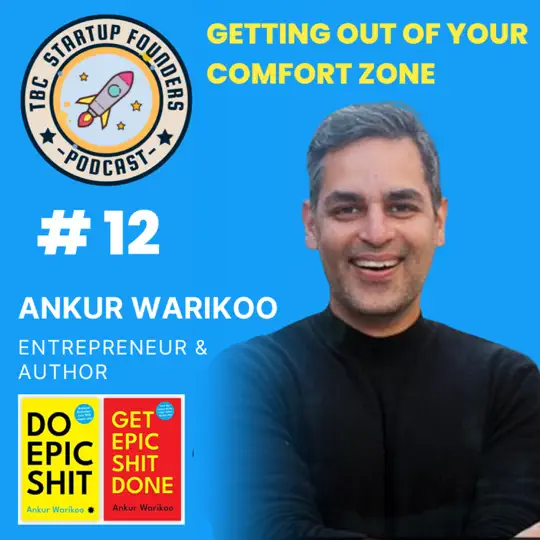
The Comfort Zone Trap: Ankur Warikoo on Why Certainty is the Enemy of Growth
Table of Contents
- The Comfort Zone Trap: Ankur Warikoo on Why Certainty is the Enemy of Growth
- Executive Summary: The Architecture of Discomfort
- Key Discussion Points & Strategic Takeaways
- Transcript Highlights: Critical Moments
- Actionable Framework for Business Leaders
- Frequently Asked Questions (FAQs)
In an era where “stability” is often equated with success, Ankur Warikoo, in a deep-dive session on the Matrix Moments podcast, challenges the conventional corporate wisdom. For founders, CXOs, and seasoned business leaders, the “comfort zone” isn’t just a psychological state—it is a strategic risk.
This discussion explores the nuanced transition from being a high-performing professional to becoming a self-aware leader. Whether you are navigating a mid-career pivot or scaling an enterprise, Warikoo’s insights on mental models, decision-making, and the “tight shoe” analogy offer a masterclass in intentional living.
Executive Summary: The Architecture of Discomfort
The core of the discussion revolves around the idea that human beings are wired to seek comfort, yet growth only occurs in its absence. Warikoo breaks down the journey of moving out of your comfort zone not as a reckless leap, but as a systematic rebranding of one’s identity.
Key takeaway for leaders: If your current role feels “comfortable,” you are likely depreciating in value. The “Market Value” of a leader is tied directly to their ability to solve problems they haven’t encountered before.
Key Discussion Points & Strategic Takeaways
1. The “Tight Shoe” Analogy for Career Stagnation
Warikoo introduces a powerful mental model: wearing shoes that are slightly too small.
- The Trap: Initially, the discomfort is manageable. You “break into” the shoe.
- The Long-term Cost: Over time, the constant friction causes permanent damage (burnout, resentment, loss of creativity).
- The Leadership Lesson: Many CXOs stay in “tight-shoe” roles because of the “Sunk Cost Fallacy”—the time and prestige already invested. Warikoo argues that the cost of staying is always higher than the cost of leaving.
2. Rebranding Before the Market Does
For professionals with 15–20 years of experience, your “brand” can become a cage. Warikoo emphasizes proactive rebranding.
- The Strategy: Do not wait for a layoff or a market shift to pivot.
- The Action: Constantly invest in skills that are adjacent to your current expertise. Stability should fuel creativity, not kill it.
3. The 50-Hour Productivity Rule
In a counter-intuitive take for the “hustle culture” era, Warikoo discusses why productivity tanks after 50 hours a week.
- Deep Work vs. Busy Work: For a founder, the most valuable output is clarity, not hours.
- The CXO Perspective: High-level decision-making requires mental white space. If your calendar is 100% full, you are a manager, not a leader.
4. Fear of Judgment as a Growth Barometer
Warikoo notes that the biggest barrier to getting out of the comfort zone isn’t the fear of failure—it’s the fear of being judged by peers.
- The Insight: We often value our reputation in our current “tribe” more than our potential in a new one. To grow, you must be willing to be a “nobody” again in a new field.
Transcript Highlights: Critical Moments
[00:05:30] On Mindfulness and Management:
“Mindfulness is a muscle. It’s not about controlling your thoughts; it’s about not letting your thoughts control your schedule. You have to create a gap between waking up and ‘attending to life’.”
[00:18:45] On Career Pivots:
“The most dangerous place for a leader is a role where they know all the answers. If you aren’t asking ‘How do I do this?’ at least once a week, you’ve stopped growing.”
[00:32:10] The Definition of Success:
“Success isn’t the absence of discomfort; it’s the ability to choose which discomfort you are willing to endure.”
Actionable Framework for Business Leaders
If you are a Founder or CXO feeling the “stagnation of success,” Warikoo suggests these three steps:
- The Identity Audit: Ask yourself, “If I lost my title tomorrow, what value do I provide to the market?”
- Test the Dream: Before quitting or pivoting, run a “low-fidelity” experiment. Use your weekends to consult, write, or build a prototype.
- Control the Time: Reclaim your calendar. Do not outsource your schedule to an EA; own your time to own your outcomes.
Frequently Asked Questions (FAQs)
How does Ankur Warikoo define the ‘Comfort Zone’?
Warikoo views the comfort zone as a “psychological cage” where the fear of losing what you have (status, salary, certainty) outweighs the desire for what you could become. It is a state where learning stops and repetition begins.
Why does productivity decline after 50 hours?
According to Warikoo, beyond 50 hours, the law of diminishing returns sets in. The mental fatigue leads to poor decision-making, reduced emotional intelligence (critical for CXOs), and a lack of the “strategic boredom” necessary for innovation.
How can a senior leader start getting out of their comfort zone?
Start by identifying “Tight Shoe” situations in your current role. Seek out projects where you are the least knowledgeable person in the room. This forces a “Beginner’s Mindset,” which is essential for long-term career resilience.
What is Ankur Warikoo’s advice on rebranding?
His advice is to rebrand internally first by acquiring new skills, then externally by sharing your journey transparently. This ensures that when you are ready for a major pivot, the market already associates you with your new direction.