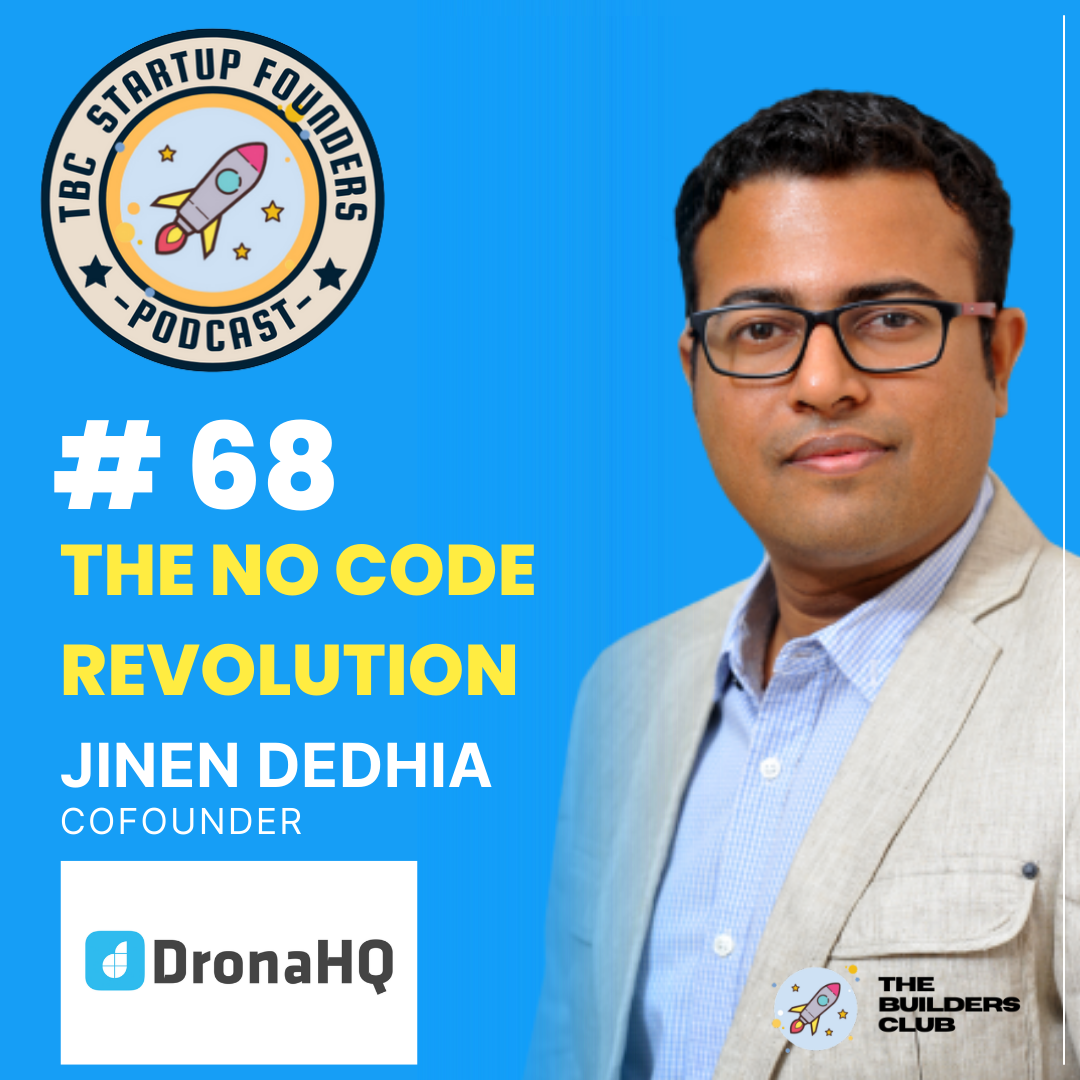
The No-Code Revolution: How Jinen Dedhia is Redefining Enterprise Agility with DronaHQ
Table of Contents
- The No-Code Revolution: How Jinen Dedhia is Redefining Enterprise Agility with DronaHQ
- Executive Summary: The Shift from Coding to Configuring
- Strategic Takeaways for Business Leaders
- 1. Closing the "IT Delivery Gap"
- 2. The Multiplier Effect of Low-Code for Pro-Developers
- 3. Governance as a Catalyst, Not a Constraint
- Detailed Discussion Transcript (Highlights)
- Key Points & Milestone Insights
- Frequently Asked Questions (FAQs)
- Who is Jinen Dedhia?
- What is the difference between No-Code and Low-Code?
- Can DronaHQ integrate with existing enterprise databases?
- Is Low-Code scalable for large-scale enterprise use?
In an era where digital transformation is no longer a luxury but a survival mandate, the bottleneck often lies in the “delivery gap”—the space between a business idea and the available engineering bandwidth. In a recent masterclass on the ELI Podcast, Jinen Dedhia, Co-founder of DronaHQ, unpacks the evolution of the No-Code/Low-Code movement and why it has become a strategic pillar for Fortune 500 enterprises and high-growth startups alike.
For Founders and CXOs, this discussion transcends technical tools; it’s a blueprint for building a “composable enterprise” that can pivot at the speed of thought.
Executive Summary: The Shift from Coding to Configuring
The conversation explores the 15-year journey of DronaHQ, starting from the early days of mobile app wrappers to becoming a global leader in internal tool builders. Jinen Dedhia highlights a critical shift: the democratization of development. By empowering “citizen developers” and enabling pro-developers to work 10x faster, organizations can finally clear their IT backlogs and focus on core innovation.
Key Themes:
- Speed to Market: Reducing development cycles from months to days.
- Operational Excellence: Modernizing legacy systems without “ripping and replacing.”
- The AI Synergy: How Generative AI is acting as a co-pilot in the No-Code ecosystem.
Strategic Takeaways for Business Leaders
1. Closing the “IT Delivery Gap”
Jinen emphasizes that most enterprises have 50-100 internal apps waiting to be built—tools for HR, inventory, or sales ops—that never get prioritized by the core engineering team. No-code platforms allow these “last-mile” applications to be built by the teams who actually use them, governed by IT.
2. The Multiplier Effect of Low-Code for Pro-Developers
A common misconception is that No-Code is only for non-techies. Jinen clarifies that DronaHQ is a “Low-Code” powerhouse for engineers. It handles the “plumbing”—UI components, security protocols, and API integrations—allowing senior architects to focus on complex business logic and proprietary algorithms.
3. Governance as a Catalyst, Not a Constraint
For CXOs, security is the primary concern with democratization. The discussion outlines how modern platforms provide a “Sandbox” environment where IT maintains control over data access and deployment, ensuring that agility doesn’t come at the cost of compliance.
Detailed Discussion Transcript (Highlights)
Interviewer: Jinen, you’ve been in this space before “No-Code” was even a buzzword. What was the “Aha!” moment for DronaHQ?
Jinen Dedhia: We realized that 80% of enterprise software is repetitive—forms, tables, dashboards, and CRUD operations. We asked: Why write the same code for the thousandth time? The “Aha!” moment was realizing we could build a platform that abstracts these components, allowing users to simply “drag, drop, and configure.”
Interviewer: How do you address the skepticism of CTOs who fear “Shadow IT”?
Jinen Dedhia: By design, not by accident. We built DronaHQ with an enterprise-first mindset. IT admins have a bird’s-eye view of every app built, every API called, and every user permission. It’s about moving from “Shadow IT” to “Managed Innovation.”
Interviewer: What role does AI play in the future of DronaHQ?
Jinen Dedhia: AI is the ultimate interface. Instead of dragging a component, you will soon just describe the app: “Build me a dashboard that tracks real-time logistics from my SQL database.” Our platform then generates the structure, and the human provides the final 10% of nuance.
Key Points & Milestone Insights
- Legacy Modernization: Using DronaHQ to build modern front-ends on top of legacy SAP or Oracle databases.
- Customization vs. SaaS: Why “buying” off-the-shelf software often fails due to a lack of flexibility, and why “building” with low-code is the middle path.
- The Cost of Inaction: Every manual spreadsheet in your organization is a symptom of a missing internal tool.
Frequently Asked Questions (FAQs)
Who is Jinen Dedhia?
Jinen Dedhia is the Co-founder of DronaHQ, a leading low-code platform. He is a pioneer in the enterprise mobility and no-code space, helping organizations like Wipro, Mondelez, and Pfizer accelerate their digital initiatives.
What is the difference between No-Code and Low-Code?
No-Code is designed for business users (citizen developers) to build apps via visual interfaces. Low-Code is geared toward developers, allowing them to skip manual coding for standard features while offering the ability to add custom scripts (JavaScript) for complex functionality.
Can DronaHQ integrate with existing enterprise databases?
Yes. DronaHQ offers native connectors for SQL, MongoDB, PostgreSQL, and REST APIs, allowing it to act as a seamless layer over existing data stacks without requiring data migration.
Is Low-Code scalable for large-scale enterprise use?
Absolutely. DronaHQ is built for high-concurrency environments and includes enterprise-grade security features like SSO (Single Sign-On), RBAC (Role-Based Access Control), and on-premise deployment options.