
The $100 Billion Skills Gap: Why Upskilling is the New Currency for Enterprise CXOs
Table of Contents
- The $100 Billion Skills Gap: Why Upskilling is the New Currency for Enterprise CXOs
- Discussion Summary: The Paradox of Abundance
- Key Takeaways for Business Leaders (CXO Perspective)
- Transcript Highlights: Notable Quotes
- SEO Deep Dive: Why This Matters for Your Brand
- Expert FAQs: Navigating the Future of Work
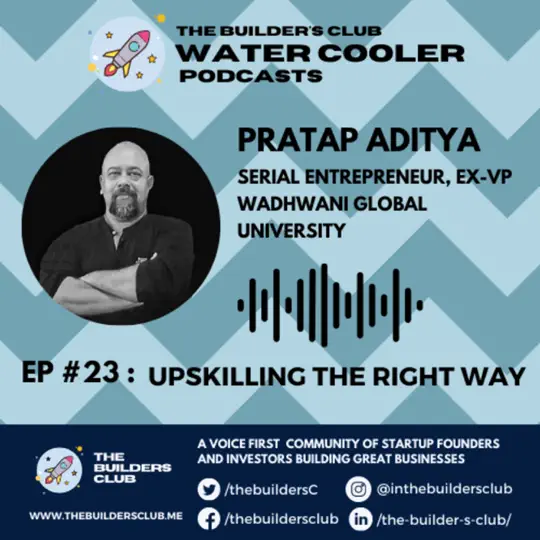
The global economy is at a critical inflection point. As AI, Industry 4.0, and digital transformation reshape the corporate landscape, a “Degree First” approach is rapidly becoming obsolete. In a recent high-level discussion on the Wadhwani Foundation Podcast, Pratap Aditya, EVP at Wadhwani Skills Network, shared a provocative blueprint for the future of the Indian and global workforce.
For Founders and CXOs, the takeaway is clear: Upskilling is no longer a CSR initiative—it is a core strategic lever for business scalability.
Discussion Summary: The Paradox of Abundance
The podcast explores the “Employability Paradox.” While India possesses one of the world’s largest talent pools, industry leaders consistently struggle with a lack of “job-ready” talent. Pratap Aditya delves into how the Wadhwani Foundation is bridging this 120-140 million person skill gap by moving away from traditional certifications toward 21st-century employability skills.
The conversation pivots from the “What” (technical skills) to the “How” (mindset, communication, and adaptability), emphasizing that a professional’s “Learning Quotient” (LQ) is now more valuable than their Intelligence Quotient (IQ).
Key Takeaways for Business Leaders (CXO Perspective)
1. From Degree-Centric to Skill-Centric Hiring
Pratap Aditya emphasizes that within the first seven minutes of an interview, a candidate’s fate is often decided—not by their technical knowledge, but by their confidence, curiosity, and clarity.
- CXO Insight: Shift your HR metrics. Prioritize “Learnability” and “Soft Skills” over institutional prestige to find talent that survives the AI disruption.
2. The AI-Driven Skill Evolution
Technology like Generative AI is displacing routine tasks but creating a massive demand for “High-Touch” human roles.
- Actionable Strategy: Leaders should invest in internal “Job Rise” programs. It is more cost-effective to upskill an existing employee who understands your company culture than to find new talent in a hyper-competitive market.
3. Grassroots Digital Transformation
The foundation’s work with ITIs and Vocational Institutes highlights that digital literacy is a human right in the modern economy.
- The Business Case: By partnering with skilling initiatives (like Wadhwani’s JobReady program), enterprises can create a sustainable pipeline of entry-level talent that is productive from Day 1, reducing the “OJT” (On-the-Job Training) overhead.
Transcript Highlights: Notable Quotes
“In a fast-evolving business environment, the successful candidate shows confidence, curiosity, and clarity. Within seven minutes, you can tell if someone will be rejected.” — Pratap Aditya
“The paradigm shift from degree-certification to new-age skills development is imminent. We are looking at a reskilling requirement of nearly 140 million by 2025.” — Sunil Dahiya/Wadhwani Leadership
SEO Deep Dive: Why This Matters for Your Brand
When searching for Pratap Aditya or the Wadhwani Foundation, the focus is consistently on scalability and social impact. This podcast serves as a roadmap for how large-scale non-profits and multi-billion dollar enterprises can align their goals.
For founders, the Wadhwani model offers a “Lean Startup” approach to social good—using AI-enabled platforms (like My Career Advisor and My Interview Coach) to democratize high-quality training.
Expert FAQs: Navigating the Future of Work
Q1: What are the ’21st Century Skills’ every CXO should look for?
According to the Wadhwani Foundation framework, the core pillars are:
- Critical Thinking & Innovation: Problem-solving beyond the manual.
- Digital Literacy: Comfort with AI copilots and data security.
- Customer-Centricity: The ability to empathize and solve for the user.
- Self-Management: High levels of emotional intelligence (EQ) and adaptability.
Q2: How is AI impacting the skilling landscape?
AI is not just a subject to be learned; it is a delivery mechanism. Tools like AI-powered interview coaches and personalized learning analytics allow for “population-scale” training that was previously impossible.
Q3: Why should Founders care about the ‘Employability Gap’ in ITIs and Colleges?
Because the “Talent War” is won at the source. If the grassroots workforce is not job-ready, the cost of labor increases, and the speed of innovation decreases. Supporting ecosystem-wide upskilling ensures long-term economic stability.