inthebuildersclub_1765881600_3788867679306648755_45770748198

Virtual Roundtable series

The Global Tech Roundtable: Where the World’s Tech & GTM Leaders Sit at One Table

The Builders Club · Virtual Event Series

The world’s most interesting conversations about technology rarely happen in one place — they happen across time zones, ecosystems and markets. The Global Tech Roundtable, The Builders Club’s flagship virtual event series, was built to close that gap: a single, open forum where CXOs and founders from the US, UK, Europe, Dubai and beyond come together to talk candidly about tech, go-to-market and the opportunities hiding inside every domain.

Each session zooms in on one theme — a trend, a shift, or a market — and brings the people actually building inside it into the same room. No surface-level panels. Just real operators sharing what’s working, what’s changing, and where the next opening is.

One Global Forum, Many Time Zones

The premise is simple but rare to execute: get leaders from across the globe onto one common forum and let them think out loud together. Across editions we’ve hosted voices from the US, the UK, Europe, Dubai and India — each bringing the texture of their own market to a shared conversation. The result is a roundtable that feels less like a webinar and more like a working session between peers who happen to live on different continents.

View this reel on Instagram

Conversations on Tech & GTM

Technology and go-to-market are two sides of the same growth story, and the series treats them that way. One conversation might unpack an emerging engineering trend; the next digs into how teams actually take a product to a new market. By keeping both threads in the room — the builders and the go-to-market leaders — the discussions stay grounded in how decisions really get made: from architecture to pipeline, from product to positioning.

View this reel on Instagram

Voices From Across the World

A roundtable is only as good as the people around it. What makes this series distinct is the range of ecosystems represented in a single conversation — a leader scaling in the US, an operator navigating Europe’s regulatory landscape, a founder building out of Dubai, a CXO from the UK. Those different vantage points turn a familiar topic into a genuinely global one, surfacing perspectives you simply can’t get from a single-market discussion.

View this reel on Instagram

Trends, Signals & What’s Next

Every edition is anchored to a theme that matters right now — the trends reshaping a domain, the signals worth watching, and the shifts leaders are quietly preparing for. Instead of recycled predictions, the value comes from people who are living the change and willing to say what they’re actually seeing on the ground. It’s a fast, honest read on where a domain is heading, straight from the operators steering it.

View this post on Instagram

Opportunities Inside Every Domain

Trends are interesting; opportunities are actionable. A recurring thread across the series is turning “what’s happening” into “what can we do about it” — the white spaces opening up in a domain, the gaps incumbents are too slow to fill, and the moves that give challengers an edge. For founders and CXOs, these are the moments worth leaning into, mapped out by people who’ve already spotted them.

View this post on Instagram

A Launchpad for Market Expansion

At its core, the Global Tech Roundtable exists to help businesses grow into new geographies. If you’re looking to expand into a new market, there’s no substitute for hearing directly from the CXOs who already operate there — what the ecosystem rewards, where the friction lives, and what a credible entry actually looks like. The series gives expansion-minded leaders a place to pressure-test their thinking before they commit budget and headcount.

View this post on Instagram

Direct Access to the Ecosystem’s CXOs

Beyond the insight, the real currency is access. The roundtable puts founders and business leaders in front of CXOs from the ecosystems they want to enter — to share a thought, exchange perspective, understand what those markets need, and build the relationships that make expansion possible. It’s the kind of room where a single conversation can shorten months of trial and error.

View this post on Instagram

Pull Up a Chair

The Global Tech Roundtable keeps growing because the format works: one domain, the right people, an open forum, and a global set of perspectives in every session. Whether you’re scaling a tech business, sharpening your go-to-market, or planning your next geography, there’s a seat for you at the table.

View this post on Instagram

Want to join the next Global Tech Roundtable? Connect with CXOs and founders from across the globe — explore the community.

Bangalore Tech Symposium

Bangalore Tech Symposium: AI & the Future of Working in Tech

We just wrapped the Bangalore Tech Symposium — one of the most grounded conversations on AI in tech we’ve hosted so far. Organised by The Builders Club in association with Dell Technologies and AMD, the day brought together the people leading the curve — CTOs, GCC leaders, founders, operators and investors — for a focused, no-fluff look at how AI is reshaping the way tech businesses operate, compete and grow.

As the industry moves past experimentation, the discussion centred on what it actually takes to build, operate and scale in an AI-first world — from infrastructure and engineering systems, to enterprise-scale deployment inside GCCs, to how capital is flowing across the AI ecosystem. The day was built for depth, not breadth: a keynote fireside, three practitioner panels, and a networking dinner to close. 100+ attendees, 15 speakers.

A glimpse of the day

What a room. Beyond the stage, the real energy was in the conversations between sessions — the debates, introductions and perspectives exchanged in real time. Here’s the highlight reel.

View this reel on Instagram

The keynote fireside, with Dell

The day opened with a fireside featuring Madhumalar Anandan, Microsoft 365 & Workplace AI Leader at Dell Technologies, on “Rethinking Workplace Computing: What Modern Tech Teams Actually Need from Their Devices.” AI workloads aren’t what legacy infrastructure was built to handle — the conversation dug into the hidden performance ceilings created by legacy device setups, and what genuinely AI-ready infrastructure looks like for high-performance teams.

Tech Panel โ€” Building an AI-First Workplace

The CTO perspective: rearchitecting infrastructure, overhauling engineering processes, and making the hard calls on where to invest and what to leave behind.

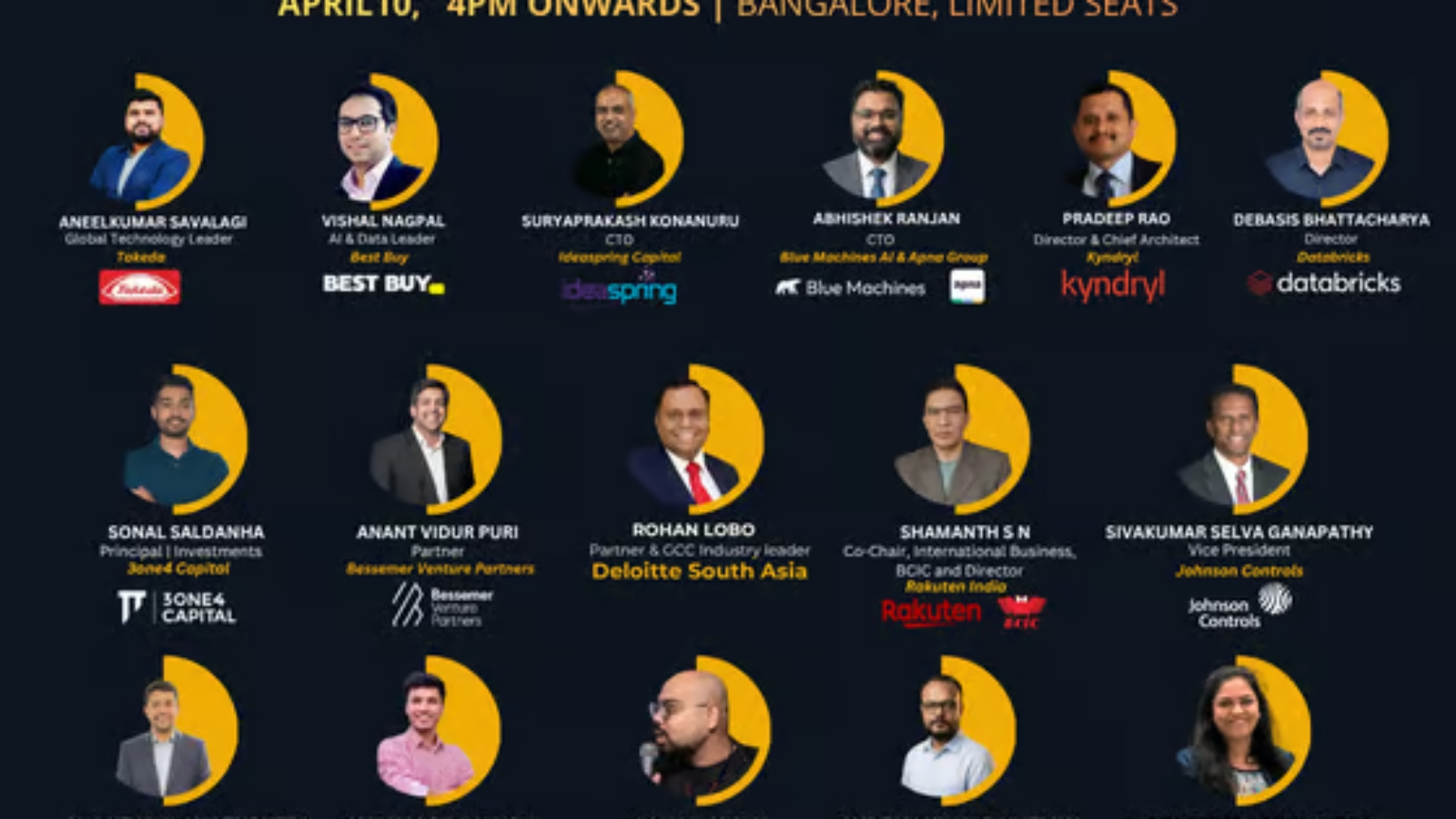
Abhishek Ranjan (Blue Machines AI & Apna Group), Debasis Bhattacharya (Databricks), Sivakumar Selva Ganapathy (Johnson Controls) and Suresh Kumar Khemka (Atlassian), moderated by Shamanth S N (Rakuten India | BCIC).

GCC Panel โ€” The AI Productivity Multiplier

GCC leaders aren’t just adopting AI — they’re defining what enterprise-grade deployment looks like for the rest of the industry, setting requirements and making the talent and infrastructure calls.

Vishal Nagpal (Best Buy), Pradeep Rao (Kyndryl), Aneel Kumar Savalagi (Takeda) and Rohan Lobo (Deloitte), moderated by Sohail Khan (Founder, The Builders Club).

Investor Panel โ€” Investing in the AI Era

A rare, unfiltered view of how investors are reading the landscape — what’s getting funded, and where durable value is actually being created.

Anant Vidur Puri (Bessemer Venture Partners), Shivam Rajvanshi (Together Fund), Sonal Saldanha (3one4 Capital) and Suryaprakash Konanuru (Ideaspring Capital), moderated by Shantanu Chaturvedi (Transition VC).

What the room actually took away

Across the fireside and the panels, a few themes kept surfacing — the kind of signal you only get when CTOs, GCC heads and investors are honest in the same room. AI is no longer a layer; it’s becoming the operating model. Infrastructure and data readiness are the real bottlenecks to scale. Productivity gains are real, but capturing them as advantage is still uneven. And the gap between companies moving fast and those waiting is widening rapidly.

Moments from the room

View this post on Instagram

Who was in the room

The Symposium was built for the leaders already in the arena — IT and technology leaders rebuilding from the inside, GCC and enterprise tech heads deploying at scale, founders and business heads across IT and SaaS, and investors looking for ground-level signal. That mix is exactly what The Builders Club is built around. Not just events — rooms for real conversations. More to come.

Nagarro Delivery

The AI Inflection Point: Reshaping the Life Sciences Ecosystem

The AI Inflection Point: Reshaping the Life Sciences Ecosystem

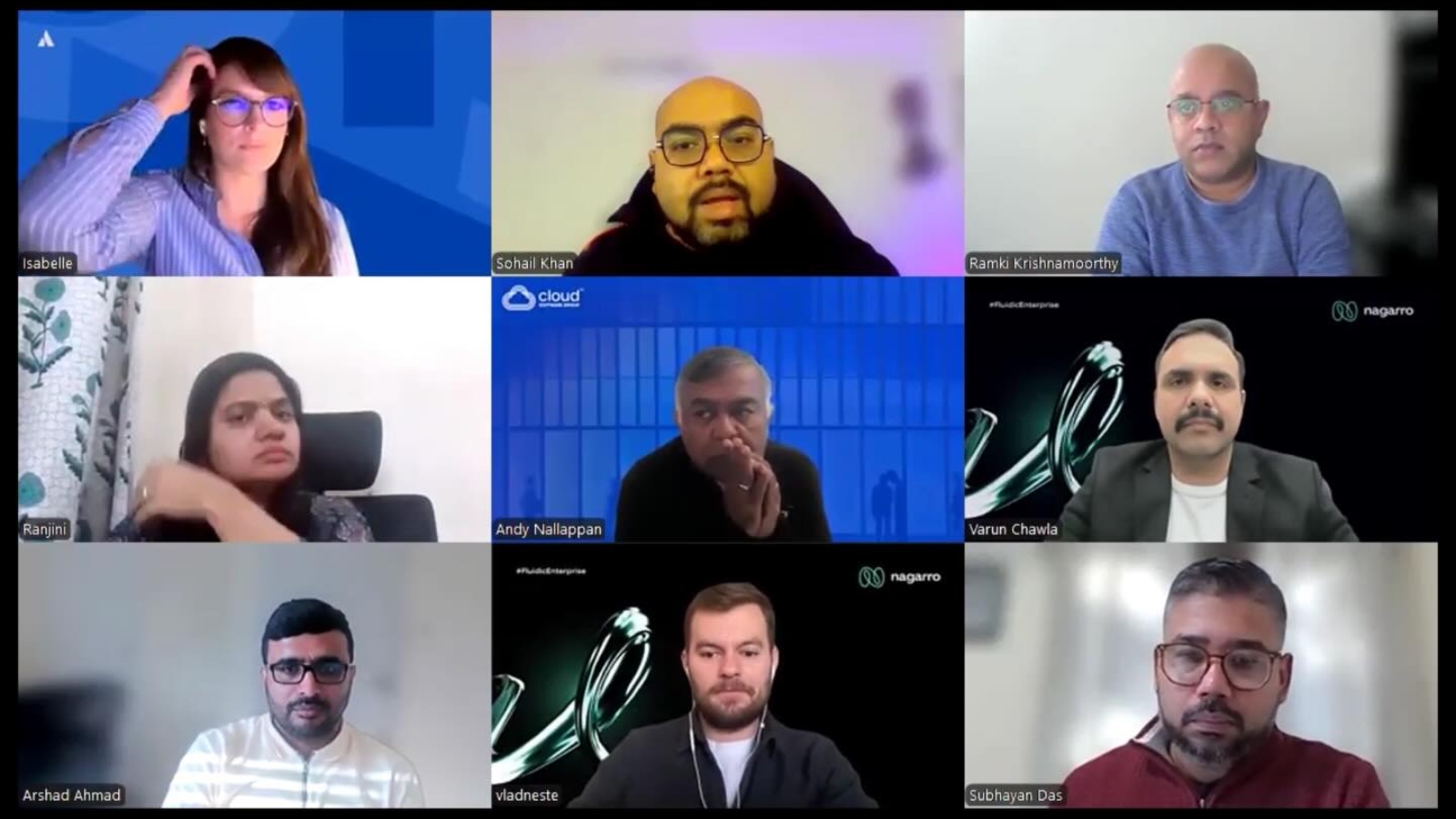
In a recent Life Sciences boardroom hosted by The Builder Club in partnership with Nagarro and Atlassian, a group of industry leaders convened to cut through the hype surrounding artificial intelligence. The session’s purpose was to foster a real conversation about how AI is tangibly reshaping discovery, delivery, and the operational rhythm of the life sciences, pharma, and healthcare industries. Against a backdrop of accelerating drug R&D, rising regulatory demands, and an intensifying drive for personalized patient care, this dialogue explored what is actually changing inside the labs, data centers, and boardrooms. The insights shared by this panel provide a high-fidelity map of an industry at a critical inflection point, moving beyond hype to execution where the convergence of human and artificial intelligence is now the primary force multiplier for innovation.

The Panel of Experts: Voices from the Forefront

The discussion was enriched by a diverse panel of experts, each pushing the boundaries of technology and science within their respective domains.

Expert & AffiliationDomain of Expertise
Ashwin Chandramouli, Portfolio Growth, BaxterDriving the integration of AI and digital health to connect clinical needs with technical innovation.
Asha Mahesh, Senior Director of R&D Data Science, J&J Innovative MedicineLeading the deployment of AI to convert biological insight into predictive models for discovery and clinical trials.
Kumudha Narayan, Director of IT, Thermo Fisher ScientificOverseeing the digital platforms and infrastructure that underpin R&D, ensuring IT systems enable agility and compliance.
Vinod Das, Associate Director, Bayer Healthcare PharmaceuticalsDriving an “AI literacy” movement within Bayer R&D to augment human expertise with digital and scientific transformation.
Arun Changamveetil, Head of Partner Solutions, Americas, AtlassianStrategizing how platform technologies can be extended through partnerships to solve complex team collaboration challenges.
Vlad Neste, Director, Life Sciences & Healthcare Practice, NagarroLeading Nagarroโ€™s strategy to help pharma, biotech, and med-tech clients adopt AI and digital engineering.
Vivek Bhide, Director & Co-head, Global Atlassian Practice, NagarroLeading global delivery and partnerships to help enterprises achieve digital transformation through the Atlassian ecosystem.

The Market at a Tipping Point: Quantifying the Opportunity

The strategic conversations taking place across the industry are substantiated by powerful market indicators. In the United States, the AI and life sciences analytics market was estimated to be approximately 600 million in 2024**. It is projected to surge to almost **1.7 billion by 2034, reflecting a compound annual growth rate (CAGR) of 11.3%. The global picture is even more dramatic; the worldwide AI in life sciences market is forecasted to reach nearly $14.2 billion by 2024, expanding at a remarkable CAGR of 20.2%. These statistics provide undeniable evidence that the industry is at a significant inflection point where the tools are maturing and adoption is accelerating rapidly, moving AI from a theoretical advantage to a core competitive necessity.

AI in Action: From Strategic Imperative to Tangible Impact

While many organizations remain mired in AI theory, a clear pattern of practical application is emerging among industry leaders. The following examples are not isolated pilots but strategic deployments targeting the industry’s most persistent pain points: workforce strain, clinical trial inefficiency, and a sluggish innovation culture. These initiatives showcase how leading organizations are translating AI potential into operational reality, moving from experimentation to enterprise-scale impact.

Augmenting the Human Element: Alleviating Staff Burdens

A primary front for AI adoption is in alleviating workforce burdens, a theme echoed across different operational domains. At Baxter, for instance, the focus is on deploying voice technology in clinical settings to combat the cognitive overload, staff shortages, and burnout straining healthcare staff. In parallel, Thermo Fisher Scientific is applying AI to its internal IT organization, using it to streamline change management and guide users through complex systemsโ€”proving that augmenting the human element is as critical in the back office as it is at the patient’s bedside.

Accelerating Clinical Pathways: Precision in Patient and Site Selection

Johnson & Johnson Innovative Medicine has successfully operationalized AI for over five years to fundamentally enhance its clinical trial processes. As described by Asha Mahesh, J&J developed a sophisticated model that analyzes vast datasets, including real-world data and historical study performance, to identify specific patient populations and recommend the most optimal clinical sites and countries for a given trial. This AI-driven approach has a proven track record, having been instrumental in relaunching trials that were put on hold during the pandemic. By improving the probability of enrollment success, this initiative directly tackles one of the most significant challenges in drug development, demonstrating AI’s power to bring treatments to patients faster.

Fostering an Innovation Culture: The Power of Enterprise-Wide AI Access

In a bold move to embed an AI-native culture, Bayer rolled out its “myGenAI assist” platform in early 2023, as detailed by Vinod Das. This initiative provides all employees with direct access to a range of powerful Large Language Models (LLMs) like Gemini and Anthropic. The strategic rationale was to prioritize ease of use and accelerate experimentation across the entire organization, deliberately avoiding the delays associated with traditional, siloed pilot programs. By democratizing access to cutting-edge AI tools, Bayer is fostering a ground-up innovation movement, enabling teams across the business to discover and implement AI-driven efficiencies. This enterprise-wide cultural shift is creating the fertile ground needed to tackle AI’s most ambitious application: redefining the frontier of Research and Development itself.

The New R&D Frontier: Reimagining Discovery and Development

Research & Development stands as one of the most promising and complex arenas for AI-led transformation in the life sciences. The journey from a promising molecule to a market-ready therapeutic is fraught with challenges that AI is uniquely positioned to address. This section explores how AI is being deployed to augment the work of scientists, unify siloed institutional knowledge, and help organizations navigate the critical tension between the speed of innovation and the rigors of regulatory compliance. The insights from the panel reveal a new frontier where data-driven intelligence is becoming an indispensable partner in scientific discovery.

From Wet Lab to “Lab in the Loop”: The Reality of AI in Discovery

A realistic assessment of AI’s current role in drug discovery reveals it as a powerful augmentative tool rather than a wholesale replacement for traditional science. Vinod Das of Bayer noted that the industry is still “scratching the surface” and that today’s model is best described as “lab in the loop,” where the wet lab remains essential. AIโ€™s primary function is to enhance the capabilities of scientists through:

  • Rapid hypothesis generation
  • Virtual screening of molecules
  • Predicting molecular properties to identify promising targets

Echoing the theme of incremental progress, Asha Mahesh of J&J issued a crucial call to action for greater industry collaboration. She highlighted the “Lilly Tune Lab” initiativeโ€”where a major pharmaceutical company has made billions of dollars’ worth of data availableโ€”as a new model for the industry. By sharing data and working collectively, organizations can accelerate the development of AI models that advance discovery for everyone.

Breaking Down Silos: The Strategic Value of a Unified Knowledge Fabric

One of the greatest barriers to R&D productivity is knowledge fragmentation, with genomic data, lab notebooks, and regulatory documents often existing in disconnected silos. Arun Changamveetil explained Atlassian’s approach to solving this with its Teamwork Graph. This technology acts as a metadata or knowledge layer, connecting disparate information sources to function as a “memory layer” for an organization’s R&D efforts. This concept of a unified knowledge fabric addresses what is arguably the costliest bottleneck in R&D: the inability to learn from an organization’s own collective history. Critically, this approach aims to solve a missing link in the innovation pipeline by translating AI outputs (like AlphaFold’s protein structure predictions) directly into actionable team workflows, such as automatically linking a prediction to a validation task in Jira.

The Race for Agility: Balancing Speed with Compliance

The life sciences industry operates under a unique tension between the need for speed and the non-negotiable requirement for regulatory adherence. Ashwin Chandramouli of Baxter asserted that in today’s landscape, speed will ultimately win, as being first-to-market provides invaluable learning cycles that compound over time. This drive for speed creates what Arun Changamveetil described as the industry’s core paradox: the need to “move fast but stay compliant.” Ultimately, the panel’s discussion framed this balance not as a trade-off but as the central strategic challenge that modern life sciences organizations must solve. Success depends on implementing integrated platforms that build traceability and governance directly into agile workflows. Achieving this difficult balance between agility and compliance, however, is not merely a matter of process; it depends entirely on the robust technical and data foundations that underpin the entire enterprise.

Building the Foundation: Navigating Infrastructure, Data, and Governance

Successful and scalable AI implementation depends entirely on a robust, well-governed technical foundation. The most sophisticated algorithms are rendered ineffective without the right infrastructure, clean data, and clear governance frameworks. This section examines the critical decisions leaders must make regarding infrastructure deployment, data management, and enterprise-wide governance, revealing the trade-offs and differing philosophies at play. Getting these foundational elements right is a prerequisite for unlocking the full transformative potential of AI.

The Infrastructure Trilemma: On-Premise, Cloud, and Hybrid Models

As Kumudha from Thermo Fisher explained, there is no “one-size-fits-all” solution for AI infrastructure. The choice between on-premise, cloud, or hybrid models is driven by a consistent set of trade-offs tailored to specific organizational needs and regulatory constraints. The primary drivers for these decisions include:

  • Data Residency and Privacy: In highly regulated sectors, on-premise infrastructure offers maximum physical control over where data resides and is processed, simplifying compliance with jurisdictional requirements.
  • Latency and Performance: Keeping compute power close to massive datasetsโ€”whether through on-premise centers, edge computing, or hybrid modelsโ€”is critical to avoid network bottlenecks and ensure real-time performance.
  • Risk and Intended Use: As Asha Mahesh pointed out, a risk-based framework is essential to determine which compute workloads can operate at the edge versus those that must remain in a more controlled on-premise or private cloud environment.

The Governance Gauntlet: Security, Regulation, and Corporate Adoption

The adoption of powerful new AI tools, particularly generative LLMs, has revealed two distinct enterprise philosophies for managing risk and fostering innovation. The first is a cautious, controlled approach, with leaders like Asha Mahesh describing the challenges at J&J of identifying “AI-ready” data from legacy systems and navigating a restrictive security posture that limits access to external models. In stark contrast, Bayer represents a more open model. 

As detailed by Vinod Das, their strategy involved rapidly deploying a wide range of LLMs to an enterprise-wide experimental platform, relying on a security team to implement guardrails “behind the scenes” without constraining user access. 

The chasm between these two philosophies was palpable during the discussion, with J&J’s Asha Mahesh directly asking of Bayerโ€™s open model, “how did you guys do that? I’d love to learn from you”โ€”a clear indication of the real-world governance dilemmas leaders are facing. These foundational debates on infrastructure and governance set the stage for the next evolution, shaping the path forward for how AI will be deployed and scaled across the life sciences ecosystem.

The Path Forward: Charting the Future of AI in Life Sciences

As the life sciences industry moves beyond initial AI adoption, the trajectory of innovation is becoming clearer. The panel’s discussion provides a roadmap for what lies ahead, highlighting key shifts in technology, strategy, and organizational mindset. This concluding section synthesizes these predictions to outline the future of AI in the industry, focusing on evolving technological models, the transformation in organizational strategy, and the most critical takeaways for leaders aiming to navigate this new landscape successfully.

The Rise of Hybrid Intelligence: Learning Globally, Acting Locally

A dominant future trend identified by Vlad from Nagarro is the rise of hybrid AI, built on the principle of “systems that learn globally but act locally.” This model combines the power of cloud-based machine learning with the immediacy of edge computing, enabling intelligent action at the point of need. This paradigm will manifest in several concrete ways:

  • Pharma Manufacturing: Edge AI integrated into manufacturing devices will predict batch deviations in real-time, preventing costly errors.
  • Clinical Trials: Decentralized trials will become more intelligent through sensors and smart patient engagement tools that process data locally.
  • Care Delivery: Diagnostic devices with onboard AI will provide clinicians and patients with instant insights at the point of care.

As Nagarro envisions it, the future is one of “AI that learns in the cloud, acts at the edge, and stays compliant anywhere in between.”

From Point Solutions to Integrated Platforms

A fundamental shift is underway in how health systems and life sciences organizations procure and implement technology. Ashwin Chandramoulii observed that the market is decisively moving away from best-in-class but siloed point solutions that solve a single, narrow problem. Instead, organizations now demand integrated platforms that can solve a wide host of use cases. This shift reflects a new calculus where enterprise-wide connectivity and data flow are paramount. In this new environment, a solution that is “good enough” but fully integrated into a central platform is often preferable to a disconnected, single-purpose tool.

Conclusion: Key Strategic Takeaways for Industry Leaders

The rich discussion among the panelists distills into three clear strategic imperatives for leaders navigating the AI-driven transformation of the life sciences industry.

  1. Embrace Augmentation over Automation: The primary value of AI today lies in its ability to augment skilled professionalsโ€”from clinicians facing burnout to scientists tackling complex hypotheses. The focus should be on using AI to reduce cognitive load, accelerate insight, and free up human experts to perform higher-value work, not on replacing them.
  2. Prioritize a Unified Data & Collaboration Fabric: The single greatest accelerator for R&D and operational agility is the ability to break down historic data silos. Investing in platforms that connect disparate knowledge sources into a unified, traceable workflow is essential for unlocking deeper insights and translating them into action faster.
  3. Culture is the Catalyst for Adoption: Technological capability is only half the equation. The organizations that will lead the next wave of innovation will be those that foster a culture of rapid experimentation, governed by smart, enabling guardrails rather than prohibitive restrictions.

CIRCLE BOARDt (30)

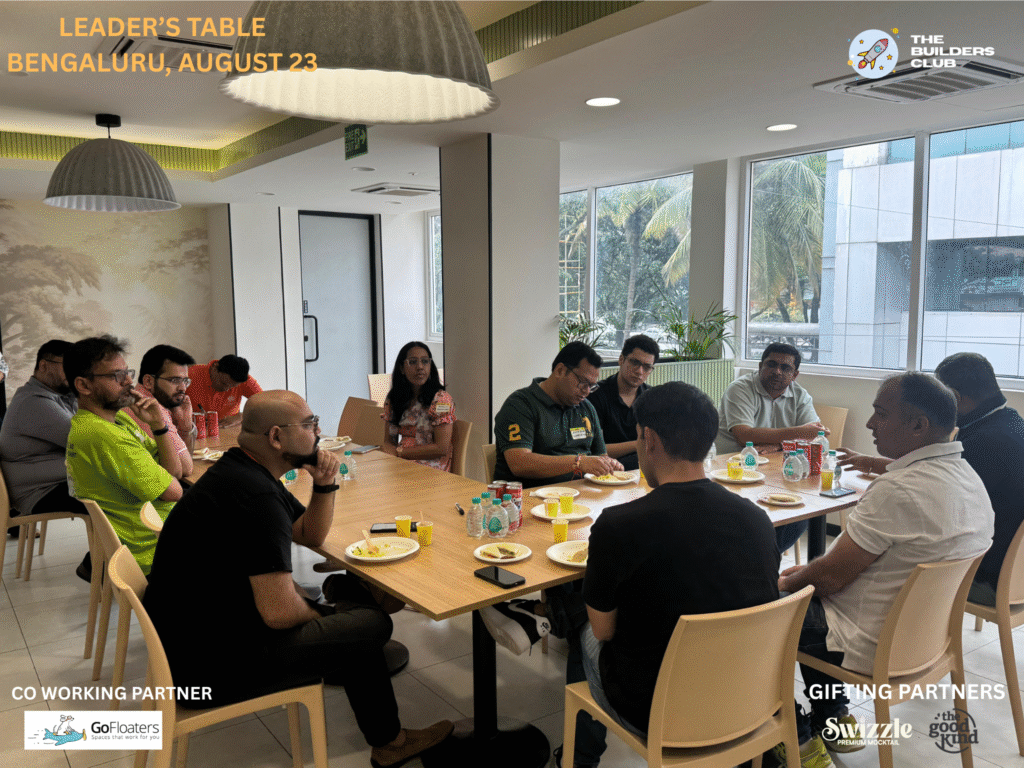
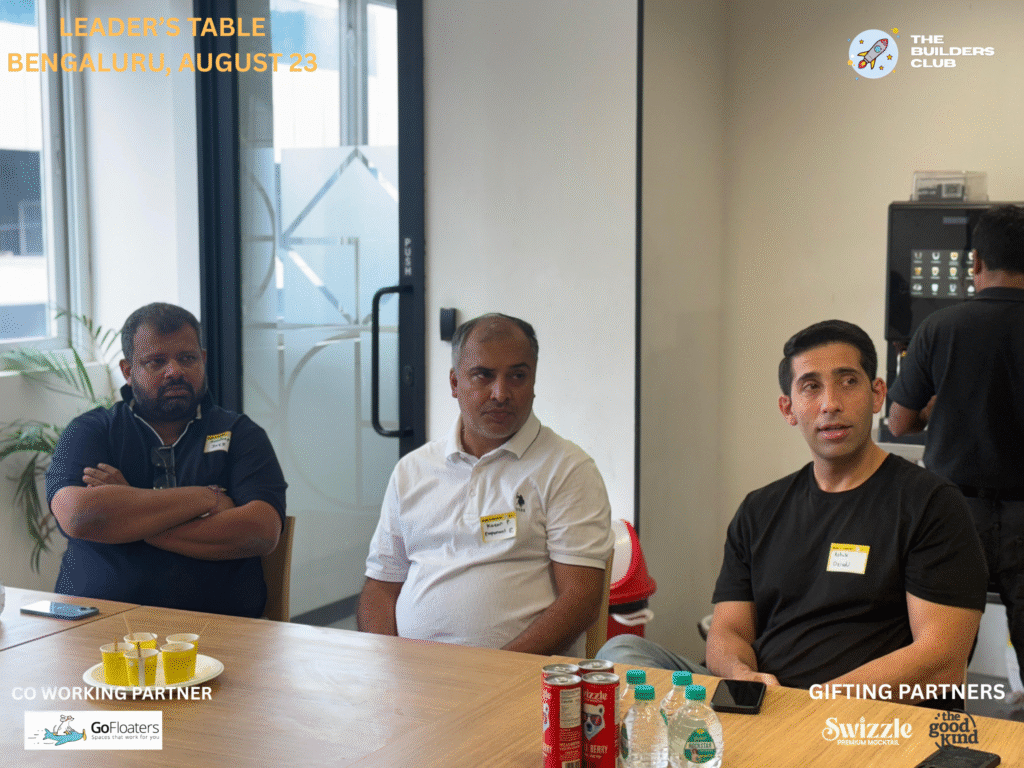
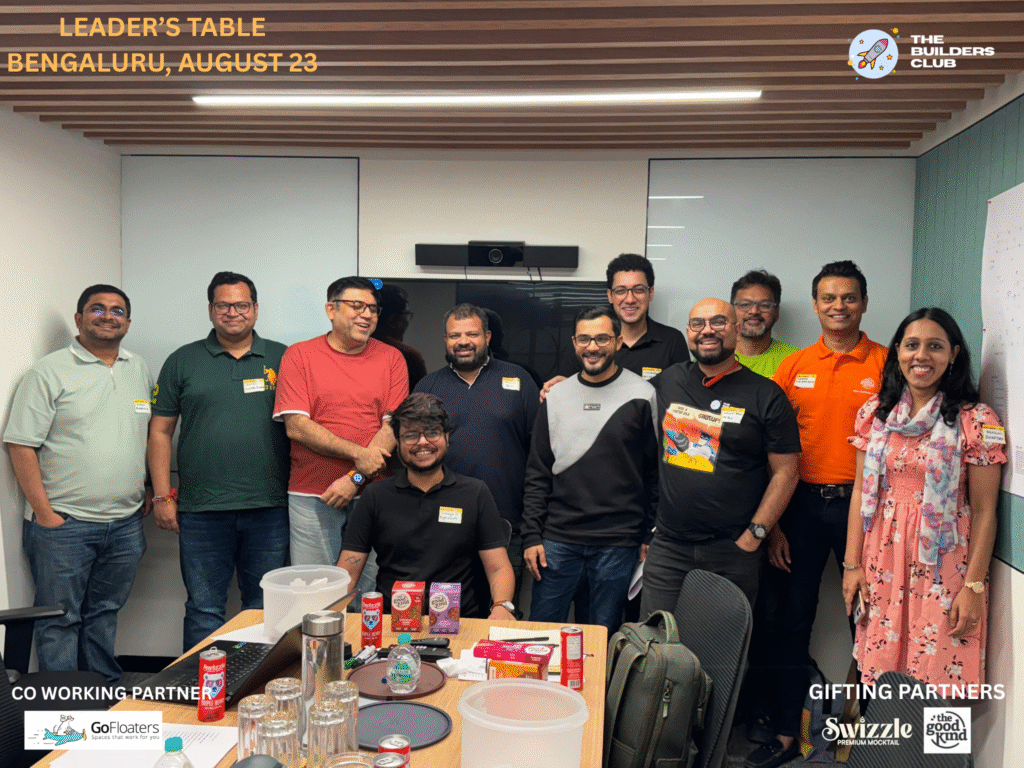
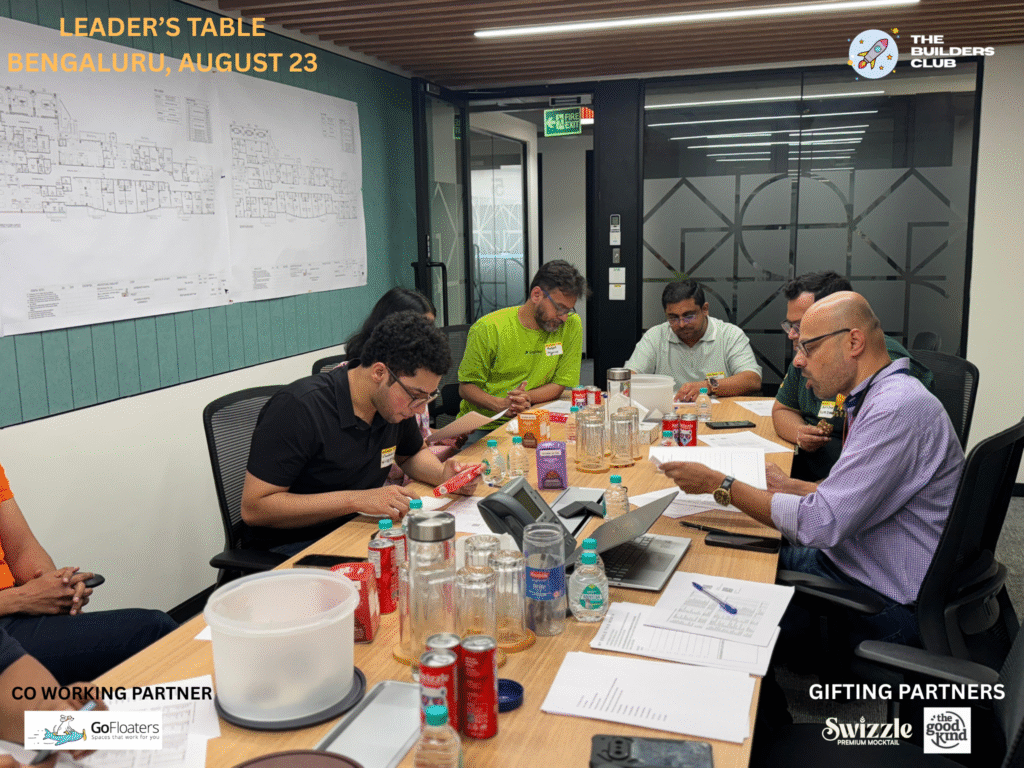
The Builderโ€™s Circle Leaderโ€™s Table | 23rd August, Bangalore

The Builderโ€™s Circle Leaderโ€™s Table | 23rd August, Bangalore

, , , , , ,

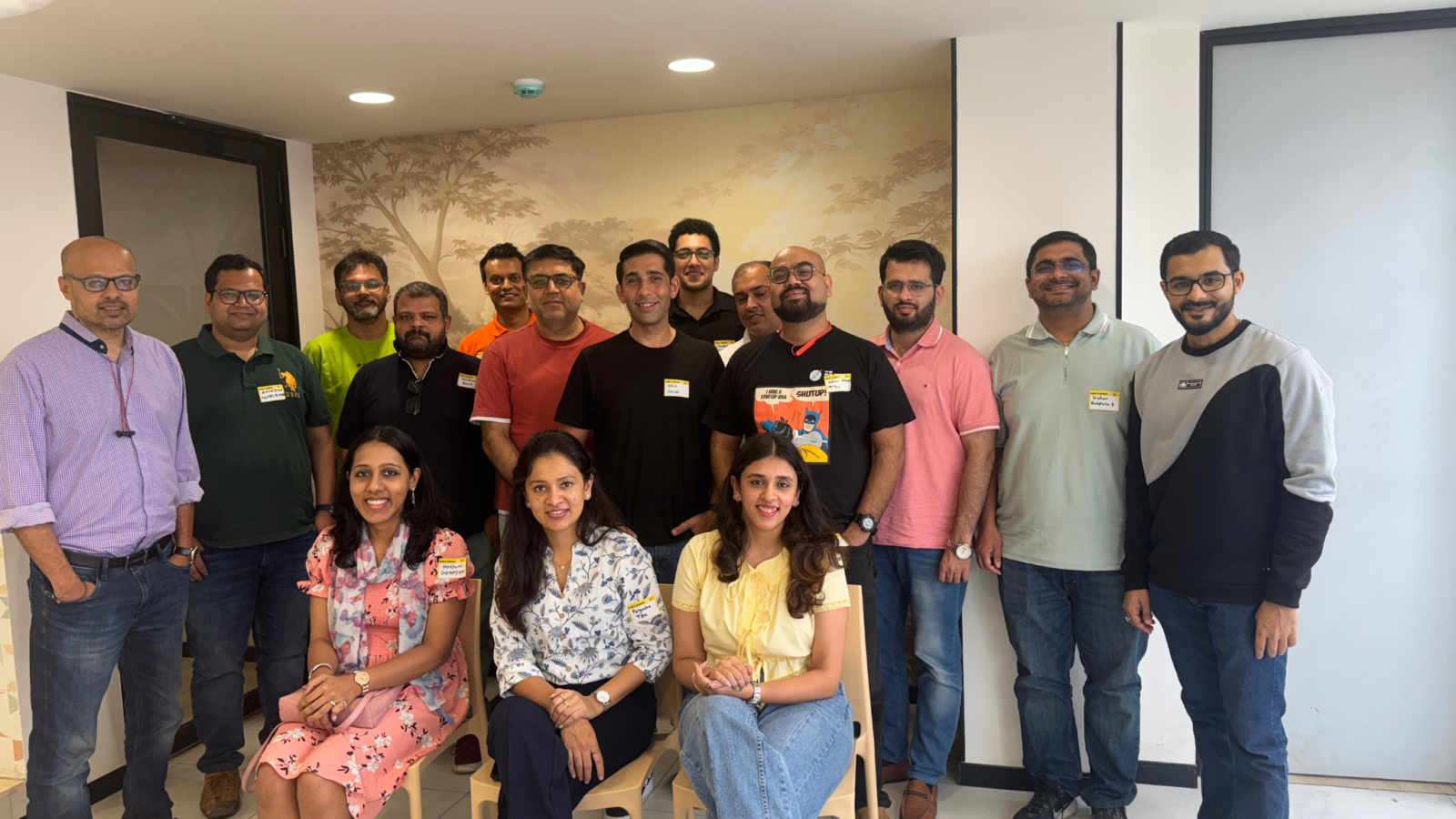
On 23rd August in Bangalore, The Builders Circle hosted a high-impact edition of the Leaderโ€™s Table, designed exclusively for founders, operators, and ecosystem leaders to engage in candid conversations, problem-solving, and peer learning.

This wasnโ€™t another surface-level networking event โ€” it was a working forum where ideas were challenged, strategies were sharpened, and founders walked away with clarity and actionable takeaways.


๐Ÿ’ฌ Conversations That Mattered


The morning began with an interactive AMA breakfast, setting the tone for open dialogue around fundraising, team building, and scaling in dynamic markets.

Post-breakfast, founders dove into focused boardroom-style roundtables, where discussions went beyond theory to solving real business challenges in real time.


๐ŸŒŸ Advisors Who Powered the Session

This edition was guided by three outstanding advisors who brought their diverse expertise to the table:

๐Ÿ’ก Rajat Mittal โ€“ Founding Member, POP UPI
๐Ÿ’ก Sandeep Balaji โ€“ CEO, IncX
๐Ÿ’ก Ashok Shastry โ€“ Co-Founder, DriveU

Their insights across fintech innovation, startup scaling, and operations strategy provided founders with practical frameworks and new perspectives.


๐Ÿ™Œ Community at the Core


The real strength of the Leaderโ€™s Table lies in its founder-first community. The energy in the room came from entrepreneurs who werenโ€™t there just to network, but to ask tough questions, share lessons learned, and learn from peers.

From raw stories of setbacks to strategies for scaling sustainably, the discussions reflected why Bangalore remains the beating heart of Indiaโ€™s startup ecosystem.


๐ŸŽ Partners Who Made It Possible


Weโ€™re grateful to our partners for their support:
โœจ Swizzle and The Good Kind Foods as gifting partners
โœจ GoFloaters as our co-working partner

Their contributions added a thoughtful touch to the experience.


๐Ÿ” Why The Leaderโ€™s Table is Different


Unlike most startup events in India, the Leaderโ€™s Table is built on depth, trust, and execution. Itโ€™s where founders connect meaningfully, gain direct access to advisors and investors, and leave with strategies they can immediately apply to their businesses.

With every edition, The Builders Circle continues to strengthen Indiaโ€™s founder ecosystem, helping entrepreneurs build with clarity, resilience, and community.

Dell Event -Easel Stand

An Evening in Tech Series

The Changing Landscape: How The Builders Club Is Redefining Tech Conversations

A three-part series on infrastructure, artificial intelligence, and the future of building โ€” in partnership with Dell Technologies and Intel


There are events that fill a room, and then there are events that shift a conversation. Over the course of three distinct gatherings, The Builders Club set out to do the latter. Through its Building and Tech Series, the club brought together founders, CTOs, investors, and operators to wrestle with the questions that actually keep builders up at night: How do you build infrastructure that doesn’t break you? What does AI genuinely mean for your company’s stack? And what separates the organizations that will lead the next decade from those that will simply survive it?

This is the story of those three events, the people who shaped them, and the ideas that came out of them.


Event One โ€” An Evening in Tech: On-Prem vs. Off-Prem

The first event in the series set the tone for everything that followed. Powered by Dell Technologies and Intel Corporation, An Evening in Tech drew over 30 founders and featured five trailblazing speakers. The format was deliberately open โ€” a roundtable rather than a stage, where attendees were participants, not audiences.

The central debate was one of the most enduring in enterprise technology: On-premises versus Off-premises infrastructure. It’s a question that sounds straightforward until you actually have to live with the answer. Building your own infrastructure gives you control, security, and potentially lower long-term costs โ€” but demands capital, expertise, and maintenance. Opting for cloud-based services offers agility and scale, but introduces dependencies and variable costs that can spiral as you grow.

The evening’s speakers brought lived experience to this debate from every angle โ€” venture capital, operator, CTO, and partnership.

Murali Krishna Gunturu, Principal at Inflexor Ventures, offered the investor’s vantage point โ€” how infrastructure decisions at an early stage can shape a startup’s trajectory and fundability. Rishikesh SR, Co-founder of Rapido, brought the operator’s lens: what it actually looks like to scale a consumer technology platform and make real-time infrastructure choices under pressure. Rohan Bajaj, an angel investor with investments including OpenAI, spoke to the broader trends shaping where money is flowing and what founders building for the future need to think about from day one.

On the enterprise and CTO side, Suryaprakash Konanuru, CTO at Ideaspring Capital, unpacked how technology leaders think about architecture โ€” not just for today’s workloads, but for the unknowns of tomorrow. Sourabh Mishra, Director of Global Alliances at Dell Technologies, grounded the conversation in the practical: what solutions are available, what trade-offs are real, and how companies can make infrastructure decisions that age well.

One line from the discussion became a defining takeaway of the evening: “Even if you do not have the infrastructure yet, the architecture should be there.” It’s a simple principle with profound implications โ€” that the thinking has to precede the building, and that scalability is a design decision before it’s an engineering one.

The roundtable format proved its worth. Rather than a succession of prepared remarks, the evening unfolded as a genuine exchange โ€” founders pushing back, speakers recalibrating, and the audience finding themselves not just learning but contributing. It was exactly the kind of collision the series was built for.


Event Two โ€” Evening in Tech: AI Edition

As the series continued, the conversation in tech had shifted โ€” or more accurately, it had been consumed. Artificial intelligence was no longer a sidebar topic; it was the central axis around which every infrastructure and product decision was now turning. The Builders Club’s second event in the series responded directly to that reality.

Again in partnership with Dell and Intel, the Evening in Tech: AI Edition gathered 20 curated founders, CTOs, and tech leaders for what organizers described as “power-packed conversations on the future of AI.” This was a smaller, more intimate gathering by design โ€” the kind of room where status disappears and real dialogue replaces polished presentations.

The speaker lineup reflected the full stack of the AI ecosystem. Anush Prem, Principal at Inflexor Ventures, brought the capital perspective โ€” how investors are now evaluating AI-native companies differently, and what it means for founders to be building in this moment. Harshal Gupta, Principal at Arali Ventures, added another investor dimension, looking at where the real opportunities lie as the market separates genuine AI value creation from the noise.

From the operator and product world, Amar Srivastava, SVP of Product at Scaler, addressed the practical challenge that most AI builders eventually face: how do you actually ship AI-powered products at scale, and what infrastructure decisions make or break that journey? Pradeep Rao, Director at Kyndryl, brought an enterprise services perspective โ€” a crucial reminder that most AI deployments don’t happen in greenfield environments but inside organizations with complex, legacy technology estates.

Anchoring the conversation on the infrastructure side was Vivek Shastry, CTO for Global Alliances at Dell Technologies, who walked the room through what purpose-built AI infrastructure actually looks like and why the old assumptions about compute, storage, and networking need to be fundamentally reconsidered for AI workloads.

The discussions ranged across the AI infrastructure landscape, the emerging opportunities in the space, and the specific decisions founders and technical leaders need to make as they build. What emerged wasn’t a consensus, exactly โ€” it was a richer map of the terrain, drawn by people who are actively navigating it.


Event Three โ€” Building in Tech Conference

The third chapter in the series was the most ambitious. What began as an intimate evening had evolved into a full conference โ€” the Building in Tech Conference, hosted with Dell Technologies and Intel, with The Reward Store joining as gifting partner.

The tagline said it plainly: AI, Infra & Insight โ€” All in One Room. The goal, as organizers put it, was to “bring together the people actually building in AI and tech โ€” and spark real, raw, valuable conversations.” With eight speakers across founders, CTOs, investors, and enterprise leaders, the room had genuine diversity of experience and perspective.

Adam Forro, Global Tech Leader at Dell Technologies, took on the question of what it really means to build an AI-first business from the ground up. His core argument: traditional businesses and AI-first startups don’t just use different tools โ€” they operate on completely different wavelengths when it comes to tech and infrastructure. AI doesn’t merely need faster processors; it needs infrastructure that is modular by design, built to support use cases that don’t yet exist. Whether a company is deploying a simple chatbot or integrating AI across its entire operations, the architecture decisions made today will determine what’s possible tomorrow. He pointed to frameworks like Dell’s AI Factory as examples of what future-ready, scalable AI infrastructure looks like in practice.

Himanshu Upreti, Co-founder of AI Palette, brought the founder’s perspective on building AI products in a sector โ€” food and consumer goods โ€” where the stakes of getting it wrong are tangible and immediate. Jithin George, CTO of Lyzr, spoke to the technical realities of building AI agent infrastructure, a space that is moving faster than most organizations can absorb.

The investor voices at the conference added critical context to the builder conversations. Dhruvin Mehta from Pravega Ventures and Madhusmita Das, Vice President at Leo Capital, offered their views on how capital is flowing in the AI-infra space and what separates investable companies from interesting experiments. Milan Roy, AVP at Pi Ventures, added a further layer of nuance on where the long-term value will accrete in an ecosystem that is still being defined.

On the operator side, Mayank Prasoon, Co-founder & CEO of Datavio, addressed one of the most persistent challenges in enterprise AI: data โ€” how to structure it, govern it, and turn it from a liability into a genuine competitive asset. Joshua Gautham, Group Deputy COO of The Reward Store, brought a cross-sector perspective on how AI is reshaping operations and consumer experience even in industries that aren’t traditionally seen as technology-first.

The conference after-movie captured what words often can’t โ€” the energy of a room where everyone had skin in the game, where the conversations didn’t stop when the formal sessions ended, and where the connections made were the kind that actually move things forward.


The Through-Line: What the Series Is Really About

Across three events, in two distinct phases of the technology cycle, a consistent thread runs through the Building and Tech Series: the gap between those who think about infrastructure and those who don’t is widening, and it matters more than ever.

In the first event, the debate was about control versus convenience โ€” whether to own your stack or rent it, and what the long-term implications of each choice are. By the second, AI had reframed that question entirely. The issue was no longer just efficiency or cost; it was whether your infrastructure could support workloads that were fundamentally different from anything that came before. And by the third, with the Building in Tech Conference, the conversation had matured again โ€” from “should we do AI?” to “how do we build organizations that are AI-native from the foundation up?”

The speakers who have shaped this series โ€” investors like Murali Krishna Gunturu, Anush Prem, Harshal Gupta, Dhruvin Mehta, Madhusmita Das, and Milan Roy; founders and operators like Rishikesh SR, Himanshu Upreti, Mayank Prasoon, and Joshua Gautham; CTOs and tech leaders like Suryaprakash Konanuru, Jithin George, and Vivek Shastry; and enterprise partners like Sourabh Mishra and Adam Forro โ€” don’t agree on everything. But they share a conviction that the decisions being made right now, in boardrooms and engineering standups and founder one-on-ones, will determine who builds what’s next.

That’s what The Builders Club is here for. Not to hand out answers, but to create the conditions where the right questions get asked โ€” by the right people, in the same room, at the right time.

The series continues. If you want to be in that room, watch this space.


The Building and Tech Series is produced by The Builders Club in partnership with Dell Technologies and Intel. Follow @inthebuildersclub for upcoming events.

WhatsApp Image 2025-04-30 at 12.40.44

Meet the Founders of Atlas HRT: Redefining HR for the Modern Business

Meet the Founders of Atlas HRT: Redefining HR for the Modern Business

, ,

In a time when businesses are scaling faster than ever, the need for strategic, scalable, and tech-enabled HR solutions has never been more critical. Atlas HR Technologies was born out of this very needโ€”founded by three seasoned HR leaders whoโ€™ve each spent nearly two decades shaping talent and people strategy at some of Indiaโ€™s most dynamic companies.

Steve Francis โ€“ CEO & Co-Founder

With 20+ years of HR leadership under his belt, Steve Francis is the strategic anchor of Atlas HRT. His diverse industry experience spans retail, healthcare, and tech, with stints at Amazon, Licious, Firstsource, and Practo. Steve is known for building resilient, high-performing teams and aligning HR with business outcomes.

As CEO, he brings a bold, modern vision to HR consultingโ€”focused on people-centric growth, digital enablement, and execution excellence. His leadership

Bharat Joshi โ€“ CPTO & Co-Founder

With over 18 years of experience in HR strategy, digital transformation, and people operations, Bharat Joshi brings the perfect blend of analytical depth and user-centric thinking. At industry leaders like Infosys, ITC Infotech, and Practo, Bharat was known for applying design thinking to employee experience and enabling scale through systems.

At Atlas HRT, he leads product and tech innovation, building intuitive, insight-driven platforms that make HR processes more effective and future-ready for businesses on the move.

Shuhaib P I โ€“ COO & Co-Founder

Shuhaib brings 17+ years of hands-on experience in talent acquisition and people strategy across fast-paced sectors such as mobility, e-commerce, and edtech. His journey includes leading HR at Ola, Udaan, Unacademy, Firstsource, and Practo, where he developed a reputation for building agile HR teams that move with business speed.

At Atlas, Shuhaib drives operations and client delivery, ensuring each engagement is tailored, responsive, and aligned with client goals. His strengths in HR consulting and talent frameworks are foundational to Atlasโ€™s impact-first approach.

ensures that Atlas isnโ€™t just solving HR problems, but enabling business evolution through people.


The Birth of Atlas HRT

Having worked together in different capacities over the years, Bharat, Shuhaib, and Steve saw a consistent pattern: scaling businesses were struggling to build strong people foundations. Many didnโ€™t have the resources or need for full-time HR teams but still faced pressing challengesโ€”designing org structures, hiring strategically, and ensuring compliance.

This insight led to the founding of Atlas HRTโ€”a company designed to embed HR strategy into the growth DNA of modern businesses, offering flexibility, senior expertise, and tech-enabled execution from day one.


What Atlas HRT Offers Today

Atlas HRT partners with growth-focused businesses, particularly those between Seed and Series B, to help them set up and scale their people operations. Their services include:

  • Fractional CHRO support to align HR with business strategy
  • Org design and leadership planning for growth
  • Strategic hiring at key organizational nodes
  • Lean, scalable people processes (performance, goal-setting, engagement)
  • A la carte HR ops (contracts, policies, documentation, onboarding)

Rather than taking a one-size-fits-all approach, Atlas HRT operates as a true strategic partner, adapting to each businessโ€™s stage, sector, and culture.


Enabling Businesses to Scale, Sustainably

Today, Atlas HRT is trusted by names like Practo, ClayWorks, Vikram Aura Hospitals, Peoplebox, and Kipploโ€”companies that chose Atlas not just to “manage HR”, but to build it as a strategic lever for scale.

In a world where execution speed is critical and every hire counts, Atlas HRT helps businesses grow with confidence, clarity, and continuityโ€”without needing a full-fledged HR department from day one.

Whether you’re hiring your first 50 people or planning your next 500, Atlas is the partner that helps you scale your business by scaling your people.


11 - Ad hoc

Making the Most of the Builders Club: A Guide

Making the Most of the Builders Club: A Guide

Hereโ€™s a simple and friendly guide to help you unlock all the awesome opportunities waiting for you here. Whether youโ€™re a growth-stage founder, a CXO, or someone helping businesses thrive, thereโ€™s something for everyone.


The Builders Club Philosophy

Here at the Builders Club, we believe that the challenges you face are a variable of the phase of your journey than the industry youโ€™re building in. Thatโ€™s why weโ€™ve grouped members based on their current phase:

  1. ๐Ÿ’ก Idea Stage
  2. ๐Ÿš€ MVP Stage
  3. ๐Ÿ“ˆ Early Traction
  4. ๐ŸŒŸ Growth
  5. ๐Ÿข Corporates and CXOs

This way, we can offer you tailored resources, networks, and opportunities that really make sense for where you are right now.


How to Get the Most Out of the Club

1. Idea Stage

  • ๐Ÿ’ก Validation and MVP Creation: Need help building your MVP? Weโ€™ll connect you with partners who can make it happen.
  • ๐Ÿ“š Resources: Check out our handy guides, tutorials, and videos on YouTube and LinkedInโ€”perfect for getting started.

2. MVP Stage

  • ๐Ÿ–ฅ๏ธ Product Demos and Launch Tips: Use our discovery calls to Demo your product in front of the right audience and get qualified leads.
  • ๐Ÿค Agency Connect: Weโ€™ve got a list of top-notch vendors to help with your launch and product needs.
  • ๐ŸŽฏ Sampling Opportunities: Show your product to CXOs and investors for valuable feedback. Get in touch.

3. Early Traction

  • ๐Ÿ’ฐ Fundraising Opportunities: Looking to raise funds? Your pitch deck can be shared with our network of 250+ co-investors. Register for our fundraising track to know more. We also have a date with an investor where you get to meet the investors in a closed door setting.
  • ๐Ÿง  Advisory Support: Over 50 amazing CXOs are ready to give you advice and guidance.
  • ๐Ÿ› ๏ธ Vendor Connections: From finance to legal to marketing, weโ€™ve got 50+ agencies in our database to help.
  • ๐Ÿ—“๏ธ Curated Events: Join industry-specific events to expand your network and discover new opportunities.
  • ๐ŸŽ‰ Product Sampling: Get your product in front of the right people for discovery and feedback.

4. Growth Stage

  • ๐ŸŒŸ The Builders Circle: Join this exclusive offline community where growth-stage founders and CXOs meet, share, and support each other. Itโ€™s all about building lifelong relationships and learning together.
  • ๐Ÿ’ธ Fundraising Support: Tap into our co-investor network to make your fundraising journey smoother. Register for our fundraising track to know more. We also have a date with an investor where you get to meet the investors in a closed door setting.
  • ๐Ÿ“ž 1:1 Introductory Calls: Weโ€™ll connect you with the right people for partnerships and growth. Get in touch here.
  • ๐Ÿง‘โ€๐Ÿซ Advisory Panel: Get insights and advice from our curated set of advisors who are domain experts founders investors and industry leaders from across industries and domains.
  • ๐Ÿ‘ซ Events and Networking: Meet like-minded people at our curated events and roundtables.

5. Corporates and CXOs

  • ๐ŸŒŸ The Builders Circle: Join this exclusive offline community where growth-stage founders and CXOs meet, share, and support each other. Itโ€™s all about building lifelong relationships and learning together.
  • ๐Ÿง‘โ€๐Ÿ’ผ Advisory Opportunities: Join our advisory and contribute back to people who want more information about your industry or domain.
  • ๐ŸŒ Network Growth: Connect with professionals from different industries and stay on top of the latest innovations.
  • ๐ŸŒŸ Personal Branding: Get featured in articles, social posts, and speaking opportunities at our events.
  • ๐ŸŽŸ๏ธ Event Access: Enjoy exclusive CXO events and partner perks.

Special Opportunities for Specific Groups

Investors

  • ๐Ÿ’ผ Co-Investor Network: Get access to filtered deals and investment opportunities. Join our co-investor network.
  • ๐Ÿ“Š Curated Deal Flow: Receive tailored pitch decks from promising startups.
  • ๐ŸŽค Speaking Opportunities: Share your knowledge at community events.

Enablers & Partners

  • ๐Ÿค Event Partnerships: Partner with us for domain-specific roundtables and events.
  • ๐Ÿ–ฅ๏ธ Product Showcases: Demo your products or services to potential clients.
  • ๐Ÿ“‹ Service Listings: Get listed as a preferred partner in our vendor database.
  • ๐Ÿค Strategic Partnerships: Be part of initiatives like The Builders Circle.

Get in touch with the team.


How You Can Contribute

  • ๐ŸŒ Follow us on YouTube and LinkedIn
  • โœ๏ธ Share your testimonials: Share your stories and experiences with the club. here is one we got from Vasanth from Ariro Toys.
  • ๐Ÿ™Œ Make Referrals: Introduce us to great founders, CXOs, and advisors whoโ€™d love to join. Ask your network to join The Builders Club here.

Exciting Updates Coming Soon

Weโ€™re always working on new ways to bring you more value. Stay tuned for announcements and updates that will make your Builders Club experience even better!

By aligning with your current phase and taking advantage of everything the Builders Club offers, youโ€™ll find the support, connections, and opportunities you need to grow. Letโ€™s build something amazing together!

INDIAN STARTUP WEEKLY REPORT - August WEEK #3

Indian Startup Weekly Report August 2024 Week #3

This past week, Indian startups collectively raised approximately $432 million in funding through 25 deals. Of these, 6 were growth-stage deals that accounted for $350 million, while 16 early-stage startups secured $82.09 million in total. Notably, three early-stage startupsโ€”Adukale, CricHeroes, and Flamโ€”chose not to disclose their funding amounts.

Growth-Stage Deals

Among the growth-stage deals, six startups raised a combined $350 million:

  • Oyo: Hospitality platform spearheaded its $175 million Series G round.
  • Ather Energy: Electric scooter manufacturer joined the unicorn club with $71 million in a Series E round.
  • Neo: Wealth and asset management firm secured $48 million.
  • Syfe: Wealthtech startup raised $27 million in equity funding.
  • Vayana: Trade credit infrastructure platform secured $20.5 million.
  • Innoviti: Payment gateway and PoS provider raised $8.5 million in a mix of equity and debt.

Early-Stage Deals

Sixteen early-stage startups secured a total of $82.09 million in funding:

  • Kinetic Green: Electric vehicle maker secured $25 million from Greater Pacific Capital.
  • Fresh Bus: Electric intercity bus startup raised $10.5 million in a Series A round.
  • Beco: D2C home, kitchen, and personal care brand raised $10 million.
  • Kazam: E-mobility startup secured $8 million.
  • 4baseCare: Healthcare startup raised $6 million led by Yali Capital.

Additionally, three startupsโ€”Adukale, CricHeroes, and Flamโ€”chose not to disclose their funding details.

City-Wise Breakdown

Bengaluru remained the epicenter of startup activity with 9 deals, followed by Delhi-NCR, Mumbai, Pune, Chennai, Kochi, and Ahmedabad. The strong showing of both growth and early-stage startups indicates a continued investor confidence in India’s thriving startup ecosystem.

Indian Startup Weekly Report August 2024 Week #2

Here are the fundings of the week.
In the second week of August 2024, Indian startups collectively raised around $177.68 million in funding. The deals include 8 growth-stage investments and 19 early-stage rounds, with 2 early-stage startups choosing to keep their funding details undisclosed. This follows the previous weekโ€™s impressive $334 million raised by 32 startups across similar stages.

๐Ÿ”ฐGrowth-stage deals๐Ÿ”ฐ
This weekโ€™s growth-stage deals saw 8 startups securing $104.8 million in total. Key highlights include:

Visit Health: The telehealth and wellness platform raised $30 million in a combination of primary funding and a secondary stake purchase from Docprime Technologies.

Neo: The wealth and asset management company secured $26.5 million in a Series B round led by Crystal Investment.

ShareChat: The vernacular social media platform expanded its debt round to $65 million with an additional $16 million infusion from Singapore-based EDBI.

Country Delight: The D2C dairy and daily essentials brand raised $8.45 million in debt funding from Alteria Capital.

ShopDeck: The e-commerce solution provider, under Blitzscale Technology, closed a $7.85 million Series B funding round.

๐Ÿ”ฐEarly-Stage deals๐Ÿ”ฐ
In the early-stage segment, 19 startups raised a total of $9.8 million. Notable early-stage deals include:

Agrizy: The B2B agri-processing platform raised $9.8 million in Series A funding co-led by Accion and Omnivore.

Scimplify: The specialty chemicals sourcing and manufacturing platform secured $9.5 million in Series A funding led by Omnivore.

Kindlife: Beauty platform Kindlife, co-founded by Radhika Ghai, raised $8 million from South Korean private equity firm JB-Dooeun TK Fund and Japanese venture capital firm Mixi Global Investments.

Punch: The stock broking platform received $7 million in seed funding from Stellaris Venture Partners, Susquehanna Asia VC, and Prime Venture Partners.

Metadome.ai: The extended reality (XR) startup raised $6.5 million in a funding round led by Siana Capital and existing investor Chiratae Ventures.

Two startups, IppoPay and FlexiBees, did not disclose their funding amounts.

City and Segment Insights๐Ÿ”ฐ
Bengaluru emerged as the leading city with the highest number of funding deals, recording 11 deals this week. This was followed by Delhi-NCR, Mumbai, Chennai, Pune, Udaipur, and Chandigarh, reflecting a broad geographic spread of funding activity.

maxresdefault

Game Changing Tech in India๐Ÿ“ˆ

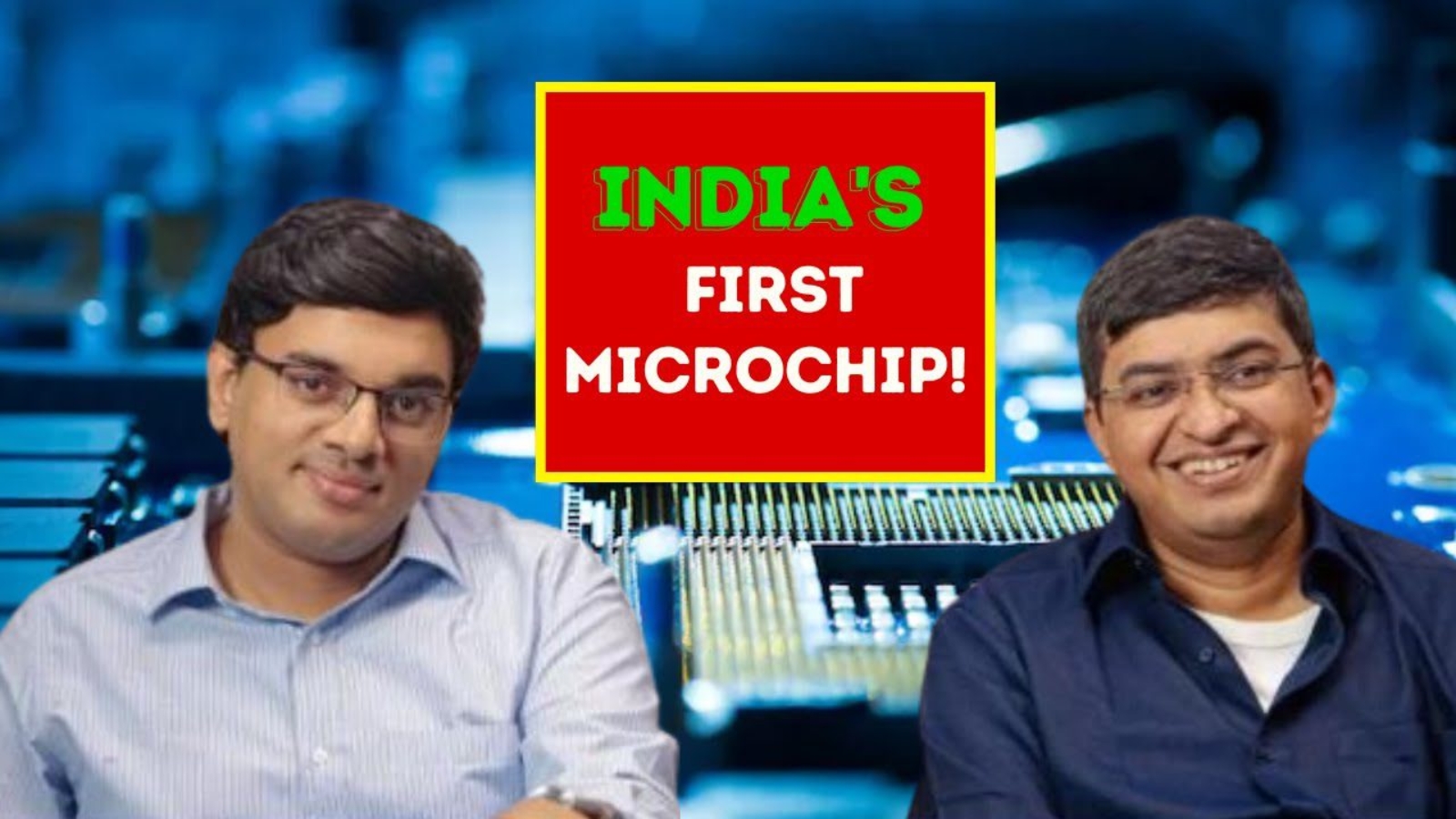
๐Ÿ“ˆ๐Ÿ”Deeptech Startup Mindgrove Rolls Out First India-Made Microcontroller Chip Mindgrove Launches India’s First Microcontroller Chip | Game-Changing Tech!๐Ÿค” ๐ŸŽฏ

In our Thursday livestream we discussed India’s First Microcontroller Chip

๐Ÿ’ก In our analysis, we discussed:๐Ÿ”๐Ÿ”

โœ…How does Mangrove’s launch of India’s first microcontroller chip signify a milestone for the country’s Deeptech industry?

โœ…How might Mindgrove’s new microcontroller chip disrupt the Indian electronics market and empower local OEMs?