TBC 2026 Logo

A New Road Ahead.

5 years ago, I started The Builders Club with a simple belief –
builders need builders.

Not cold intros.
Real conversations.
Real context. Real trust.

Over time, something became very clear to me.

While D2C founders have plenty of networks, playbooks, and distribution paths, B2B companies selling to mid-market and enterprise struggle quietly.

Great products.
Strong teams.
But no real access to decision-makers.

Enterprise GTM is not a lead problem.
It’s a connection problem.

That insight is shaping the next chapter of The Builders Club.

Today, we’re evolving our identity – new logo, clearer focus – and launching TBC GTM Services.

Before
After

TBC B2B GTM Services

This is our consulting and execution arm for B2B companies selling to mid-market and enterprise clients.

What we help with:

  • Designing and executing enterprise-ready GTM strategies
  • Getting you connected to the right buyers in US, Dubai, Singapore, and India
  • Community-driven GTM through:
    • Content-led authority building
    • Account-Based Marketing
    • Curated event and roundtable activations

No spray-and-pray.
Only relevance, relationships, and repeatability.

You can explore this here:
https://thebuildersclub.me/services/

TBC Councils

Alongside this, we’re also launching two focused leadership communities:

TBC CTO Council
For enterprise CTOs to exchange real-world insights, not theory.

TBC GTM Council
For CMOs and business heads navigating complex enterprise sales cycles.

These councils are intentionally small and high-trust, with access to:

  • Peer networking
  • Speaker opportunities
  • Industry report features and quotes
  • Personal branding workshops for leaders who want visibility without noise

And to be clear – we haven’t forgotten startups.

The Startups Club remains open to the global community.
We’ll continue running sessions, connections, and programs to support founders early in their journey.

https://thebuildersclub.me/membership

The Builders Club has always been about one thing:
Helping serious builders move forward – faster, together.

This is just the next, more focused version of that mission.

Onward.

Sohail
Chief Builder, TBC

Nagarro Delivery

The AI Inflection Point: Reshaping the Life Sciences Ecosystem

The AI Inflection Point: Reshaping the Life Sciences Ecosystem

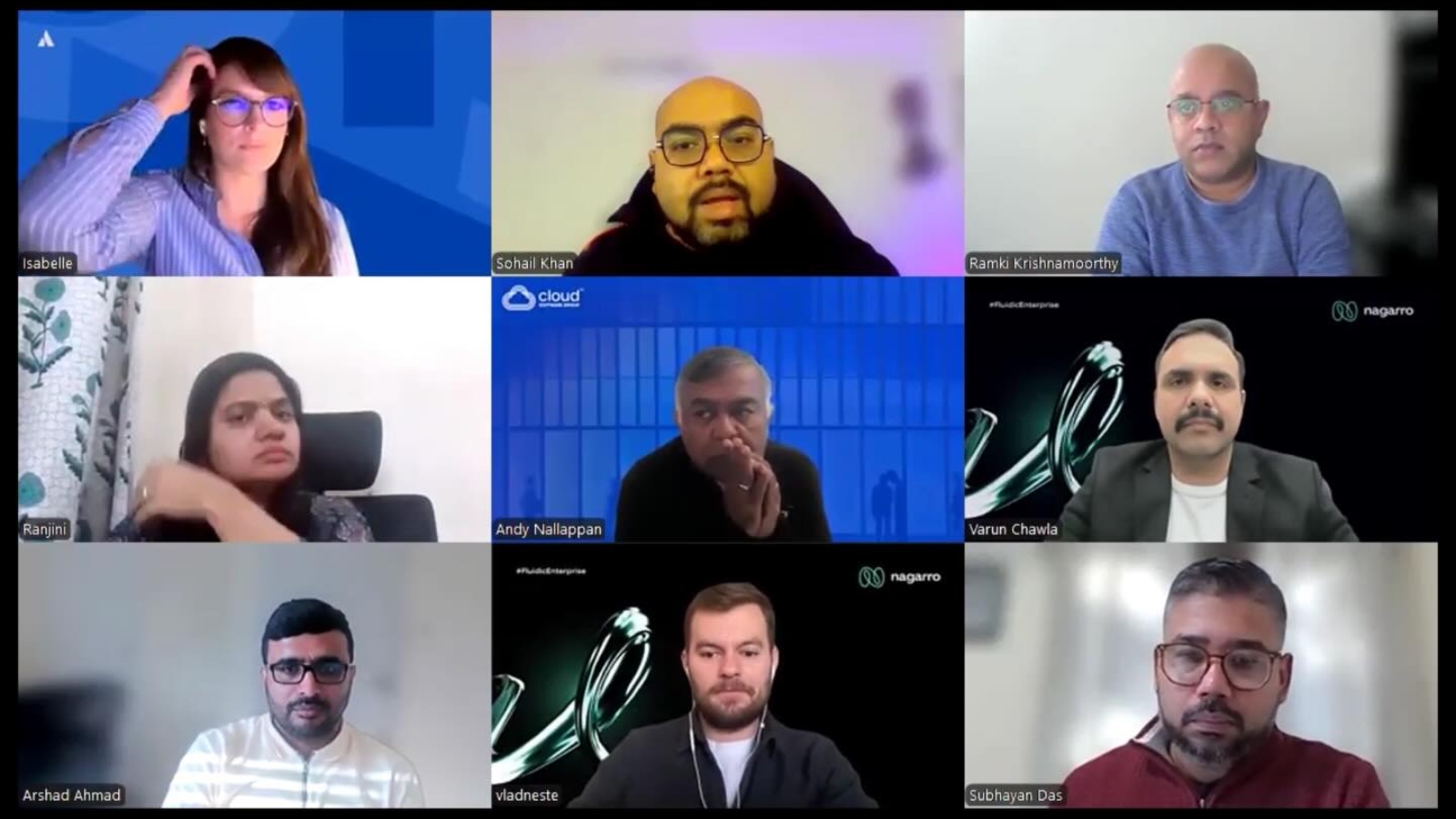
In a recent Life Sciences boardroom hosted by The Builder Club in partnership with Nagarro and Atlassian, a group of industry leaders convened to cut through the hype surrounding artificial intelligence. The session’s purpose was to foster a real conversation about how AI is tangibly reshaping discovery, delivery, and the operational rhythm of the life sciences, pharma, and healthcare industries. Against a backdrop of accelerating drug R&D, rising regulatory demands, and an intensifying drive for personalized patient care, this dialogue explored what is actually changing inside the labs, data centers, and boardrooms. The insights shared by this panel provide a high-fidelity map of an industry at a critical inflection point, moving beyond hype to execution where the convergence of human and artificial intelligence is now the primary force multiplier for innovation.

The Panel of Experts: Voices from the Forefront

The discussion was enriched by a diverse panel of experts, each pushing the boundaries of technology and science within their respective domains.

Expert & AffiliationDomain of Expertise
Ashwin Chandramouli, Portfolio Growth, BaxterDriving the integration of AI and digital health to connect clinical needs with technical innovation.
Asha Mahesh, Senior Director of R&D Data Science, J&J Innovative MedicineLeading the deployment of AI to convert biological insight into predictive models for discovery and clinical trials.
Kumudha Narayan, Director of IT, Thermo Fisher ScientificOverseeing the digital platforms and infrastructure that underpin R&D, ensuring IT systems enable agility and compliance.
Vinod Das, Associate Director, Bayer Healthcare PharmaceuticalsDriving an “AI literacy” movement within Bayer R&D to augment human expertise with digital and scientific transformation.
Arun Changamveetil, Head of Partner Solutions, Americas, AtlassianStrategizing how platform technologies can be extended through partnerships to solve complex team collaboration challenges.
Vlad Neste, Director, Life Sciences & Healthcare Practice, NagarroLeading Nagarro’s strategy to help pharma, biotech, and med-tech clients adopt AI and digital engineering.
Vivek Bhide, Director & Co-head, Global Atlassian Practice, NagarroLeading global delivery and partnerships to help enterprises achieve digital transformation through the Atlassian ecosystem.

The Market at a Tipping Point: Quantifying the Opportunity

The strategic conversations taking place across the industry are substantiated by powerful market indicators. In the United States, the AI and life sciences analytics market was estimated to be approximately 600 million in 2024**. It is projected to surge to almost **1.7 billion by 2034, reflecting a compound annual growth rate (CAGR) of 11.3%. The global picture is even more dramatic; the worldwide AI in life sciences market is forecasted to reach nearly $14.2 billion by 2024, expanding at a remarkable CAGR of 20.2%. These statistics provide undeniable evidence that the industry is at a significant inflection point where the tools are maturing and adoption is accelerating rapidly, moving AI from a theoretical advantage to a core competitive necessity.

AI in Action: From Strategic Imperative to Tangible Impact

While many organizations remain mired in AI theory, a clear pattern of practical application is emerging among industry leaders. The following examples are not isolated pilots but strategic deployments targeting the industry’s most persistent pain points: workforce strain, clinical trial inefficiency, and a sluggish innovation culture. These initiatives showcase how leading organizations are translating AI potential into operational reality, moving from experimentation to enterprise-scale impact.

Augmenting the Human Element: Alleviating Staff Burdens

A primary front for AI adoption is in alleviating workforce burdens, a theme echoed across different operational domains. At Baxter, for instance, the focus is on deploying voice technology in clinical settings to combat the cognitive overload, staff shortages, and burnout straining healthcare staff. In parallel, Thermo Fisher Scientific is applying AI to its internal IT organization, using it to streamline change management and guide users through complex systems—proving that augmenting the human element is as critical in the back office as it is at the patient’s bedside.

Accelerating Clinical Pathways: Precision in Patient and Site Selection

Johnson & Johnson Innovative Medicine has successfully operationalized AI for over five years to fundamentally enhance its clinical trial processes. As described by Asha Mahesh, J&J developed a sophisticated model that analyzes vast datasets, including real-world data and historical study performance, to identify specific patient populations and recommend the most optimal clinical sites and countries for a given trial. This AI-driven approach has a proven track record, having been instrumental in relaunching trials that were put on hold during the pandemic. By improving the probability of enrollment success, this initiative directly tackles one of the most significant challenges in drug development, demonstrating AI’s power to bring treatments to patients faster.

Fostering an Innovation Culture: The Power of Enterprise-Wide AI Access

In a bold move to embed an AI-native culture, Bayer rolled out its “myGenAI assist” platform in early 2023, as detailed by Vinod Das. This initiative provides all employees with direct access to a range of powerful Large Language Models (LLMs) like Gemini and Anthropic. The strategic rationale was to prioritize ease of use and accelerate experimentation across the entire organization, deliberately avoiding the delays associated with traditional, siloed pilot programs. By democratizing access to cutting-edge AI tools, Bayer is fostering a ground-up innovation movement, enabling teams across the business to discover and implement AI-driven efficiencies. This enterprise-wide cultural shift is creating the fertile ground needed to tackle AI’s most ambitious application: redefining the frontier of Research and Development itself.

The New R&D Frontier: Reimagining Discovery and Development

Research & Development stands as one of the most promising and complex arenas for AI-led transformation in the life sciences. The journey from a promising molecule to a market-ready therapeutic is fraught with challenges that AI is uniquely positioned to address. This section explores how AI is being deployed to augment the work of scientists, unify siloed institutional knowledge, and help organizations navigate the critical tension between the speed of innovation and the rigors of regulatory compliance. The insights from the panel reveal a new frontier where data-driven intelligence is becoming an indispensable partner in scientific discovery.

From Wet Lab to “Lab in the Loop”: The Reality of AI in Discovery

A realistic assessment of AI’s current role in drug discovery reveals it as a powerful augmentative tool rather than a wholesale replacement for traditional science. Vinod Das of Bayer noted that the industry is still “scratching the surface” and that today’s model is best described as “lab in the loop,” where the wet lab remains essential. AI’s primary function is to enhance the capabilities of scientists through:

  • Rapid hypothesis generation
  • Virtual screening of molecules
  • Predicting molecular properties to identify promising targets

Echoing the theme of incremental progress, Asha Mahesh of J&J issued a crucial call to action for greater industry collaboration. She highlighted the “Lilly Tune Lab” initiative—where a major pharmaceutical company has made billions of dollars’ worth of data available—as a new model for the industry. By sharing data and working collectively, organizations can accelerate the development of AI models that advance discovery for everyone.

Breaking Down Silos: The Strategic Value of a Unified Knowledge Fabric

One of the greatest barriers to R&D productivity is knowledge fragmentation, with genomic data, lab notebooks, and regulatory documents often existing in disconnected silos. Arun Changamveetil explained Atlassian’s approach to solving this with its Teamwork Graph. This technology acts as a metadata or knowledge layer, connecting disparate information sources to function as a “memory layer” for an organization’s R&D efforts. This concept of a unified knowledge fabric addresses what is arguably the costliest bottleneck in R&D: the inability to learn from an organization’s own collective history. Critically, this approach aims to solve a missing link in the innovation pipeline by translating AI outputs (like AlphaFold’s protein structure predictions) directly into actionable team workflows, such as automatically linking a prediction to a validation task in Jira.

The Race for Agility: Balancing Speed with Compliance

The life sciences industry operates under a unique tension between the need for speed and the non-negotiable requirement for regulatory adherence. Ashwin Chandramouli of Baxter asserted that in today’s landscape, speed will ultimately win, as being first-to-market provides invaluable learning cycles that compound over time. This drive for speed creates what Arun Changamveetil described as the industry’s core paradox: the need to “move fast but stay compliant.” Ultimately, the panel’s discussion framed this balance not as a trade-off but as the central strategic challenge that modern life sciences organizations must solve. Success depends on implementing integrated platforms that build traceability and governance directly into agile workflows. Achieving this difficult balance between agility and compliance, however, is not merely a matter of process; it depends entirely on the robust technical and data foundations that underpin the entire enterprise.

Building the Foundation: Navigating Infrastructure, Data, and Governance

Successful and scalable AI implementation depends entirely on a robust, well-governed technical foundation. The most sophisticated algorithms are rendered ineffective without the right infrastructure, clean data, and clear governance frameworks. This section examines the critical decisions leaders must make regarding infrastructure deployment, data management, and enterprise-wide governance, revealing the trade-offs and differing philosophies at play. Getting these foundational elements right is a prerequisite for unlocking the full transformative potential of AI.

The Infrastructure Trilemma: On-Premise, Cloud, and Hybrid Models

As Kumudha from Thermo Fisher explained, there is no “one-size-fits-all” solution for AI infrastructure. The choice between on-premise, cloud, or hybrid models is driven by a consistent set of trade-offs tailored to specific organizational needs and regulatory constraints. The primary drivers for these decisions include:

  • Data Residency and Privacy: In highly regulated sectors, on-premise infrastructure offers maximum physical control over where data resides and is processed, simplifying compliance with jurisdictional requirements.
  • Latency and Performance: Keeping compute power close to massive datasets—whether through on-premise centers, edge computing, or hybrid models—is critical to avoid network bottlenecks and ensure real-time performance.
  • Risk and Intended Use: As Asha Mahesh pointed out, a risk-based framework is essential to determine which compute workloads can operate at the edge versus those that must remain in a more controlled on-premise or private cloud environment.

The Governance Gauntlet: Security, Regulation, and Corporate Adoption

The adoption of powerful new AI tools, particularly generative LLMs, has revealed two distinct enterprise philosophies for managing risk and fostering innovation. The first is a cautious, controlled approach, with leaders like Asha Mahesh describing the challenges at J&J of identifying “AI-ready” data from legacy systems and navigating a restrictive security posture that limits access to external models. In stark contrast, Bayer represents a more open model. 

As detailed by Vinod Das, their strategy involved rapidly deploying a wide range of LLMs to an enterprise-wide experimental platform, relying on a security team to implement guardrails “behind the scenes” without constraining user access. 

The chasm between these two philosophies was palpable during the discussion, with J&J’s Asha Mahesh directly asking of Bayer’s open model, “how did you guys do that? I’d love to learn from you”—a clear indication of the real-world governance dilemmas leaders are facing. These foundational debates on infrastructure and governance set the stage for the next evolution, shaping the path forward for how AI will be deployed and scaled across the life sciences ecosystem.

The Path Forward: Charting the Future of AI in Life Sciences

As the life sciences industry moves beyond initial AI adoption, the trajectory of innovation is becoming clearer. The panel’s discussion provides a roadmap for what lies ahead, highlighting key shifts in technology, strategy, and organizational mindset. This concluding section synthesizes these predictions to outline the future of AI in the industry, focusing on evolving technological models, the transformation in organizational strategy, and the most critical takeaways for leaders aiming to navigate this new landscape successfully.

The Rise of Hybrid Intelligence: Learning Globally, Acting Locally

A dominant future trend identified by Vlad from Nagarro is the rise of hybrid AI, built on the principle of “systems that learn globally but act locally.” This model combines the power of cloud-based machine learning with the immediacy of edge computing, enabling intelligent action at the point of need. This paradigm will manifest in several concrete ways:

  • Pharma Manufacturing: Edge AI integrated into manufacturing devices will predict batch deviations in real-time, preventing costly errors.
  • Clinical Trials: Decentralized trials will become more intelligent through sensors and smart patient engagement tools that process data locally.
  • Care Delivery: Diagnostic devices with onboard AI will provide clinicians and patients with instant insights at the point of care.

As Nagarro envisions it, the future is one of “AI that learns in the cloud, acts at the edge, and stays compliant anywhere in between.”

From Point Solutions to Integrated Platforms

A fundamental shift is underway in how health systems and life sciences organizations procure and implement technology. Ashwin Chandramoulii observed that the market is decisively moving away from best-in-class but siloed point solutions that solve a single, narrow problem. Instead, organizations now demand integrated platforms that can solve a wide host of use cases. This shift reflects a new calculus where enterprise-wide connectivity and data flow are paramount. In this new environment, a solution that is “good enough” but fully integrated into a central platform is often preferable to a disconnected, single-purpose tool.

Conclusion: Key Strategic Takeaways for Industry Leaders

The rich discussion among the panelists distills into three clear strategic imperatives for leaders navigating the AI-driven transformation of the life sciences industry.

  1. Embrace Augmentation over Automation: The primary value of AI today lies in its ability to augment skilled professionals—from clinicians facing burnout to scientists tackling complex hypotheses. The focus should be on using AI to reduce cognitive load, accelerate insight, and free up human experts to perform higher-value work, not on replacing them.
  2. Prioritize a Unified Data & Collaboration Fabric: The single greatest accelerator for R&D and operational agility is the ability to break down historic data silos. Investing in platforms that connect disparate knowledge sources into a unified, traceable workflow is essential for unlocking deeper insights and translating them into action faster.
  3. Culture is the Catalyst for Adoption: Technological capability is only half the equation. The organizations that will lead the next wave of innovation will be those that foster a culture of rapid experimentation, governed by smart, enabling guardrails rather than prohibitive restrictions.

Ankitha

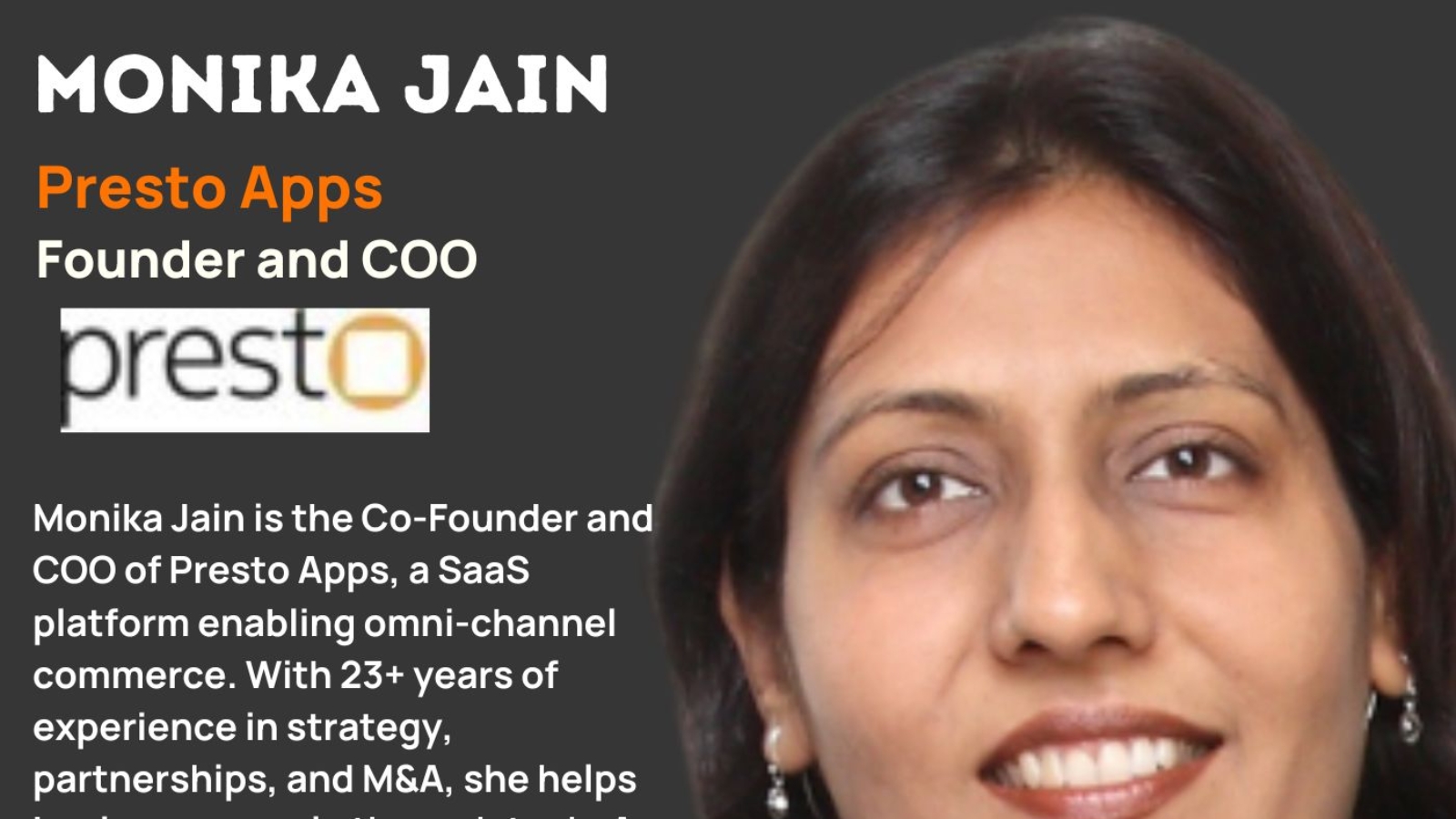
Monika Jain Joins The Builders Circle: A Trailblazer in Tech-Driven Growth

Monika Jain Joins The Builders Circle: A Trailblazer in Tech-Driven Growth

, ,

We are thrilled to welcome Monika Jain, Co-Founder and COO of Presto Apps, as the newest member of The Builders Circle—an exclusive offline community of the top 1% of rapidly growing startups in Bangalore.

🚀 A Global Strategist Turned Tech Entrepreneur

Monika’s journey from global corporate strategy to entrepreneurial leadership is both inspiring and impactful. With over two decades of experience, she has held significant roles in Mergers & Acquisitions at Nokia Siemens Networks in India and contributed to global marketing strategies at Nokia in Finland. Her academic credentials include being a Chartered Accountant and holding an MBA in Finance from the Helsinki School of Economics.

Before co-founding Presto Apps, Monika ran her own strategy consulting firm in Finland, advising companies on market entry, business development, and strategic planning.

💡 Building Presto Apps: Empowering Businesses Through Technology

At Presto Apps, Monika leads with a vision to democratize technology for businesses. The company offers comprehensive solutions for merchant onboarding, catalog management, delivery, promotions, and more, enabling businesses to scale efficiently.

Under her leadership, Presto Apps has become a trusted technology partner for businesses aiming to scale rapidly. Clients have praised the platform for its robustness and scalability, noting significant growth in their operations.

🌟 A Visionary Leader and Community Builder

Monika’s expertise extends beyond business operations; she is a thought leader in integrating technology with business strategies. She has shared her insights at various forums, including Cypher 2025, India’s largest AI summit, where she discussed harnessing AI to transform B2B commerce.

Her commitment to community building and knowledge sharing makes her a valuable addition to The Builders Circle.

🤝 Join The Builders Circle

If you’re a funded or growth-stage founder in Bangalore looking to connect with a community of like-minded entrepreneurs, consider joining The Builders Circle. It’s a space where top startup leaders collaborate, share experiences, and support each other in scaling their businesses.

Apply now to become part of this dynamic community and take your startup to new heights.

4

The First Board Room Meeting of Delhi is 🔥🔥

The First Board Room Meeting of Delhi is 🔥🔥

, , ,

The Builders Club hosted its first-ever Builders Circle Boardroom Meeting in Delhi, a landmark gathering that brought together top-tier founders, CXOs, and investors from the region. Designed as an intimate and high-impact evening, the Boardroom Meeting created a space where Delhi-based entrepreneurs could experience the magic of The Builders Circle for the first time — and it did not disappoint.


🏛️ A Room Full of Builders

The event delivered on its promise: real conversations, real collaboration. Founders didn’t just network — they served as sounding boards for each other, sharing tactical advice, real-life learnings, and generous support. The room buzzed with vulnerability and ambition — a rare mix only possible when you’re among true builders.

This was more than a meeting. It was a community in action.


🔦 Highlights from the Day

  • Intimate, high-context conversations around product growth, scaling challenges, and hiring strategies
  • Multiple spontaneous collaborations and intros emerged right from the table
  • Delhi founders got a glimpse into what makes The Builders Circle more than just a network

👥 Attendee Roster

NameCompanyRole
Rahul GandhiTelbaan Cosmetics India LLPCo-founder
Palansh AgarwalEventgraphiaCTO
Paurush PanditWattmonk TechnologiesVP – Tech & Product
Ankit DwivediMerown Electric Pvt LtdFounder
Sorabh GargAxisclinics / Asking Healthcare Pvt LtdFounder
Rahul MaroliTap HealthFounder
Amit SinghLisnersCEO
Sajal GuptaFexo GenAI Technologies Pvt LtdCo-founder and Director
Shantanu SahaThe RecruitersFounder & CEO
Vishal RastogiDhn Agritech (Happy Nature)Founder
Ishita AgghiCLiKD.aiFounder
Shuchi GunwantAnhad Diamonds Pvt. Ltd.Founder
Dhruv MadanIndia AcceleratorVenture Partner

🌐 Be a Part of the Circle

If you’re a founder, CXO, or investor and want to experience what it’s like to build with a tribe that truly gets it, then you belong inside The Builders Circle.

Our community spans Delhi, Bangalore, Mumbai and beyond — with monthly Boardroom Meetings, private founder spaces, and a high-trust support system.

👉 Join The Builders Circle and experience the future of founder communities.


Let me know if you want this formatted as a LinkedIn post, blog article, or newsletter section too.

WhatsApp Image 2025-04-30 at 12.40.44

Meet the Founders of Atlas HRT: Redefining HR for the Modern Business

Meet the Founders of Atlas HRT: Redefining HR for the Modern Business

, ,

In a time when businesses are scaling faster than ever, the need for strategic, scalable, and tech-enabled HR solutions has never been more critical. Atlas HR Technologies was born out of this very need—founded by three seasoned HR leaders who’ve each spent nearly two decades shaping talent and people strategy at some of India’s most dynamic companies.

Steve Francis – CEO & Co-Founder

With 20+ years of HR leadership under his belt, Steve Francis is the strategic anchor of Atlas HRT. His diverse industry experience spans retail, healthcare, and tech, with stints at Amazon, Licious, Firstsource, and Practo. Steve is known for building resilient, high-performing teams and aligning HR with business outcomes.

As CEO, he brings a bold, modern vision to HR consulting—focused on people-centric growth, digital enablement, and execution excellence. His leadership

Bharat Joshi – CPTO & Co-Founder

With over 18 years of experience in HR strategy, digital transformation, and people operations, Bharat Joshi brings the perfect blend of analytical depth and user-centric thinking. At industry leaders like Infosys, ITC Infotech, and Practo, Bharat was known for applying design thinking to employee experience and enabling scale through systems.

At Atlas HRT, he leads product and tech innovation, building intuitive, insight-driven platforms that make HR processes more effective and future-ready for businesses on the move.

Shuhaib P I – COO & Co-Founder

Shuhaib brings 17+ years of hands-on experience in talent acquisition and people strategy across fast-paced sectors such as mobility, e-commerce, and edtech. His journey includes leading HR at Ola, Udaan, Unacademy, Firstsource, and Practo, where he developed a reputation for building agile HR teams that move with business speed.

At Atlas, Shuhaib drives operations and client delivery, ensuring each engagement is tailored, responsive, and aligned with client goals. His strengths in HR consulting and talent frameworks are foundational to Atlas’s impact-first approach.

ensures that Atlas isn’t just solving HR problems, but enabling business evolution through people.


The Birth of Atlas HRT

Having worked together in different capacities over the years, Bharat, Shuhaib, and Steve saw a consistent pattern: scaling businesses were struggling to build strong people foundations. Many didn’t have the resources or need for full-time HR teams but still faced pressing challenges—designing org structures, hiring strategically, and ensuring compliance.

This insight led to the founding of Atlas HRT—a company designed to embed HR strategy into the growth DNA of modern businesses, offering flexibility, senior expertise, and tech-enabled execution from day one.


What Atlas HRT Offers Today

Atlas HRT partners with growth-focused businesses, particularly those between Seed and Series B, to help them set up and scale their people operations. Their services include:

  • Fractional CHRO support to align HR with business strategy
  • Org design and leadership planning for growth
  • Strategic hiring at key organizational nodes
  • Lean, scalable people processes (performance, goal-setting, engagement)
  • A la carte HR ops (contracts, policies, documentation, onboarding)

Rather than taking a one-size-fits-all approach, Atlas HRT operates as a true strategic partner, adapting to each business’s stage, sector, and culture.


Enabling Businesses to Scale, Sustainably

Today, Atlas HRT is trusted by names like Practo, ClayWorks, Vikram Aura Hospitals, Peoplebox, and Kipplo—companies that chose Atlas not just to “manage HR”, but to build it as a strategic lever for scale.

In a world where execution speed is critical and every hire counts, Atlas HRT helps businesses grow with confidence, clarity, and continuity—without needing a full-fledged HR department from day one.

Whether you’re hiring your first 50 people or planning your next 500, Atlas is the partner that helps you scale your business by scaling your people.


Listed Partners

Announcing Atlas HRT as Our Preferred HR Partner in Bangalore

Announcing Atlas HRT as Our Preferred HR Partner in Bangalore

At The Builders Club, we believe great businesses are built not just on product or capital—but on people, structure, and culture.

That’s why we’re excited to announce Atlas HRT as our preferred HR partner for Bangalore—an enabling partner for businesses that are scaling and looking to set up strong, strategic HR foundations from Day 1.

As more early-stage and growth-stage businesses move from founder-led hiring to building real organizational systems, the need for strategic HR guidance becomes critical.

Atlas HRT fills this need—not just as a service provider, but as a true growth partner.


Partnering for Long-Term Business Success

Atlas HRT isn’t just about policies and paperwork. Their model is designed around one mission:

To enable growing businesses to scale sustainably by aligning their HR practices with their business strategy.

Their Fractional CHRO service is especially powerful for businesses in the Seed to Series B journey who don’t yet have a full-time HR leader but still need:

  • Strategic clarity on org design
  • Guidance on leadership and talent planning
  • Systems to improve efficiency, accountability, and performance

What Atlas HRT Helps You Solve

Whether you’re building your first team or restructuring for scale, Atlas helps you:

🔍 Introspect & Align Your HR Function to Business Strategy

Through experienced Fractional CHRO support, Atlas dives deep into your business, helping you ask—and answer—the right questions:

  • Do we have the right people in the right roles?
  • Is our current org structure enabling or blocking growth?
  • What do we need to hire for over the next 6–18 months?

🚀 Elevate Existing HR Practices

If you already have basic people operations, Atlas helps optimize them:

  • Streamline hiring and onboarding
  • Upgrade performance reviews and goal setting
  • Create scalable HR frameworks with minimal overhead

⚙️ Improve Operational Efficiencies

From contracts to onboarding kits, they provide:

  • A la carte HR tools (offer letters, policies, contracts)
  • Ready-to-deploy processes and templates
  • Compliance and documentation support to reduce legal and operational risk

🧭 Provide Strategic Continuity

As your business evolves, Atlas stays aligned:

  • Supporting leadership hiring
  • Enabling cross-functional collaboration
  • Laying the groundwork for a culture that supports execution

📈 Support Long-Term Growth Objectives

With every engagement, the focus is not just short-term execution—but building a people foundation that supports your next stage of growth, whether that’s fundraising, market expansion, or hiring at scale.


Trusted by Growth-Focused Brands

Atlas HRT has partnered with several well-known and scaling businesses including:

  • Practo
  • ClayWorks
  • Vikram Aura Hospitals
  • Kipplo
  • Peoplebox

Their track record demonstrates a consistent ability to step into growing companies and bring order, structure, and alignment—all without requiring businesses to build a full in-house HR team.


Let’s Build Scalable Businesses, Together

We at The Builders Club are proud to endorse Atlas HRT as a strategic enabler for the businesses in our community.

If you’re a Bangalore-based or Bangalore-focused business looking to:

  • Design your org for growth
  • Bring strategic clarity to hiring
  • Build HR capabilities without full-time overhead

…we highly recommend speaking with the Atlas team.

As part of our community, we’ll happily facilitate direct connects. Share your current challenges, and they’ll guide you toward solutions that support your business objectives—not just HR checklists.

👉 Learn more at atlashrt.in
👉 DM us for a warm intro to the team


DELL - Social Creatives

An Evening in Tech – AI Edition!

An Evening in Tech – AI Edition!

🎉 A Special Curated Evening for Tech Founders, Investors, CTOs, and CIOs to discuss AI! 🎉

🌟 The Builders Club presents ‘An Evening in Tech – AI Edition’ powered by Dell Technologies and Intel. 🌟

Join us for a specially curated open roundtable to discuss about AI, the infrastructural aspects, opportunities and challenges in the field. 🚀

Speakers:


Anush Prem – Principal, Inflexor Ventures
Harshal Gupta – Principal, Arali Ventures
Pradeep Rao – Director, Kyndryl
Amar Srivastava – SVP Product, Scaler
Vivek Shastry – CTO, Global Alliances, Dell Technologies

🎯 Who is this for?

👩‍💻 Founders building in Tech

💰 Investors focusing on Tech-heavy companies

🛠️ CTOs

📊 CIOs

🛑 Limited to 20 slots only.

📍 MG Road, Bangalore

📅 8th April ( Tuesday)

⏰ 7 PM onwards

💥 Register Now! 💥

11 - Ad hoc

Leap to Unicorn Season 3

The Builders Club is thrilled to be onboard as ecosystem partners for Leap to Unicorn, Season 3.

Leap to Unicorn is a one-of-its-kind Founder Success Program by IDFC FIRST Bank, Moneycontrol and CNBCTV18 that provides mentoring, networking, and fundraising opportunities for India’s most promising startups through a meticulously planned journey.

Together, we aim to empower and support visionary founders on their journey to success.

Criteria - InstaLinkedIn Post

Prosus Tech FoundHER Challenge | Encubay

Prosus Tech FoundHER Challenge | Encubay

, ,

The Builders Club in association with Encubay invites you to apply for the Prosus Tech FoundHER Challenge!

The Prosus Tech FoundHER Challenge is a game-changing opportunity for women-led tech startups!

This is your chance to win an equity-free grant of up to $50,000, gain investor access, and get industry recognition.

Who can apply? 

Tech-enabled, revenue-generating startups (Pre-Series A to Pre-Series B) with at least one woman founder.

Applications close on April 4, 2025.

Learn more: https://www.prosusfoundherchallenge.com/