// ARTICLE

Inside the Circle: The Leader’s Table for Founders in Bangalore

Advertisement

Inside the Circle: The Leader’s Table for Founders in Bangalore

, , , ,

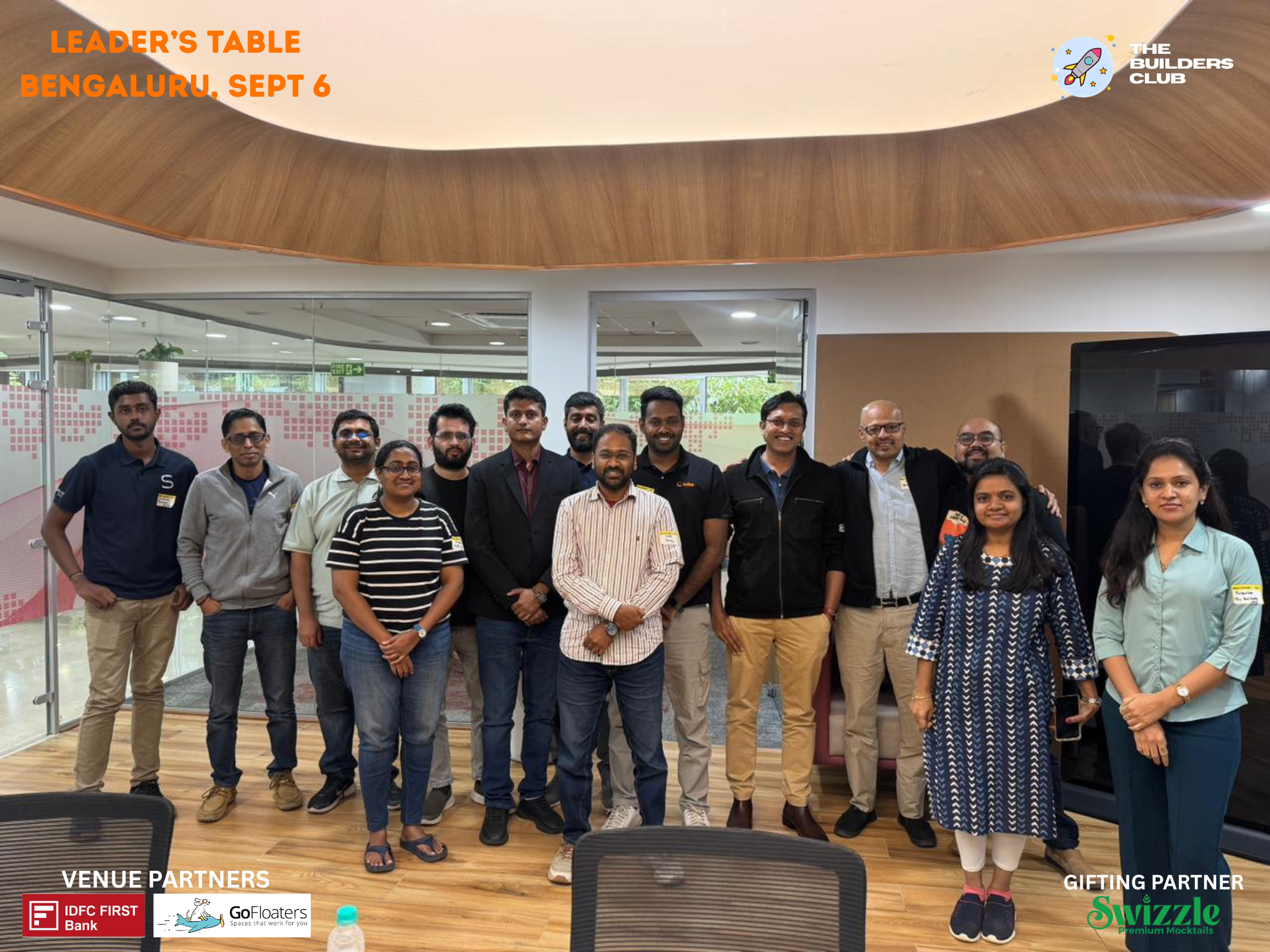
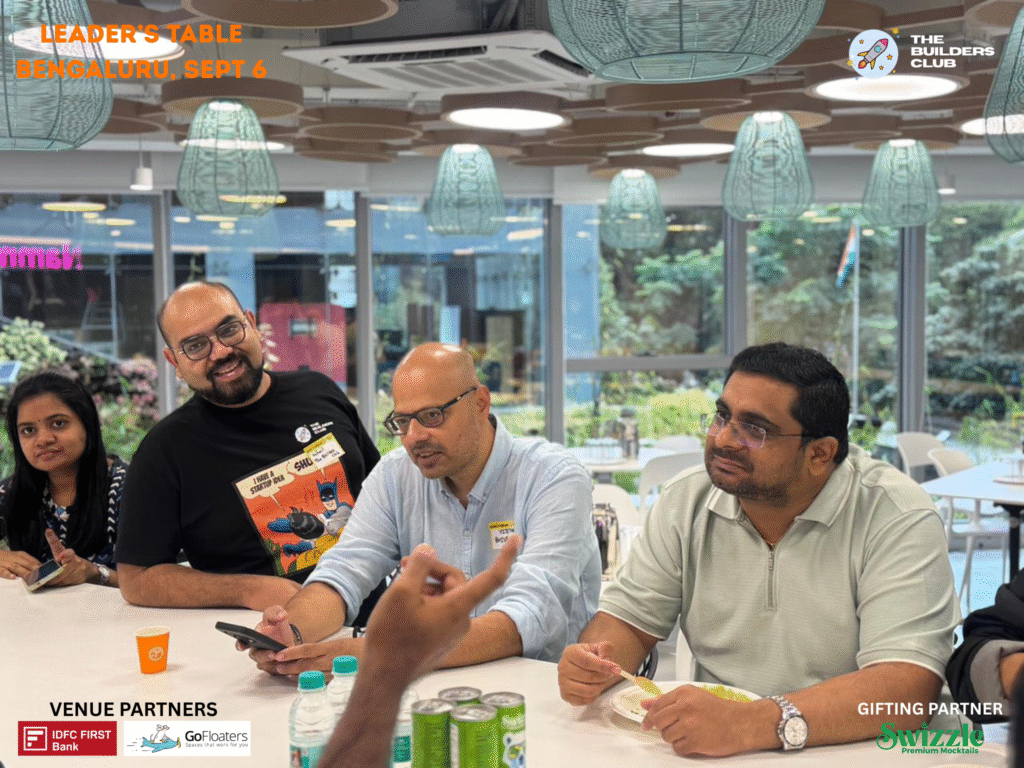
On 6th September, The Builders Circle hosted another high-impact edition of the Leader’s Table in Bangalore — a curated startup event designed to help founders move beyond networking and gain real, actionable insights on building and scaling businesses.

Unlike traditional startup meetups, this wasn’t about hype or pitches. It was about honest conversations, founder-first learning, and practical growth strategies.


💬 A Forum for Real Startup Conversations
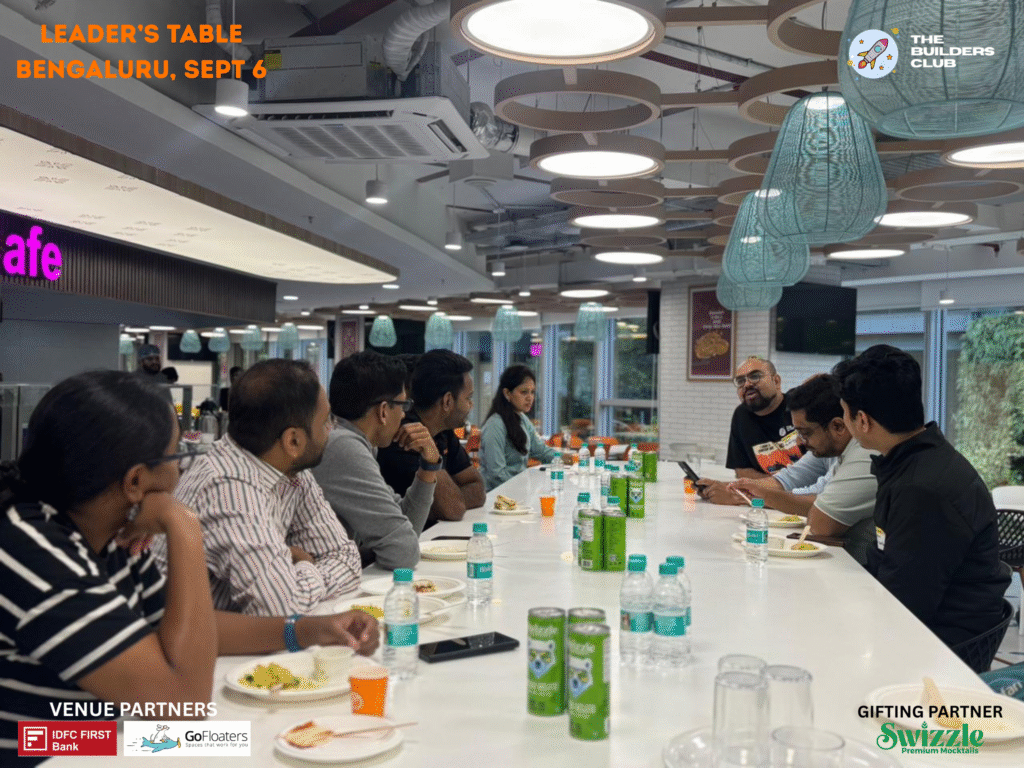

The morning began with a startup AMA session over breakfast, where founders received direct answers to pressing questions — from fundraising in today’s market to building sustainable growth engines and leading resilient teams.

This was followed by boardroom-style roundtables, where founders collaborated with experts to solve real challenges in real time. The intimate format encouraged dialogue, problem-solving, and peer-to-peer learning — something often missing in larger startup networking events in Bangalore.


🌟 Advisors Who Made an Impact
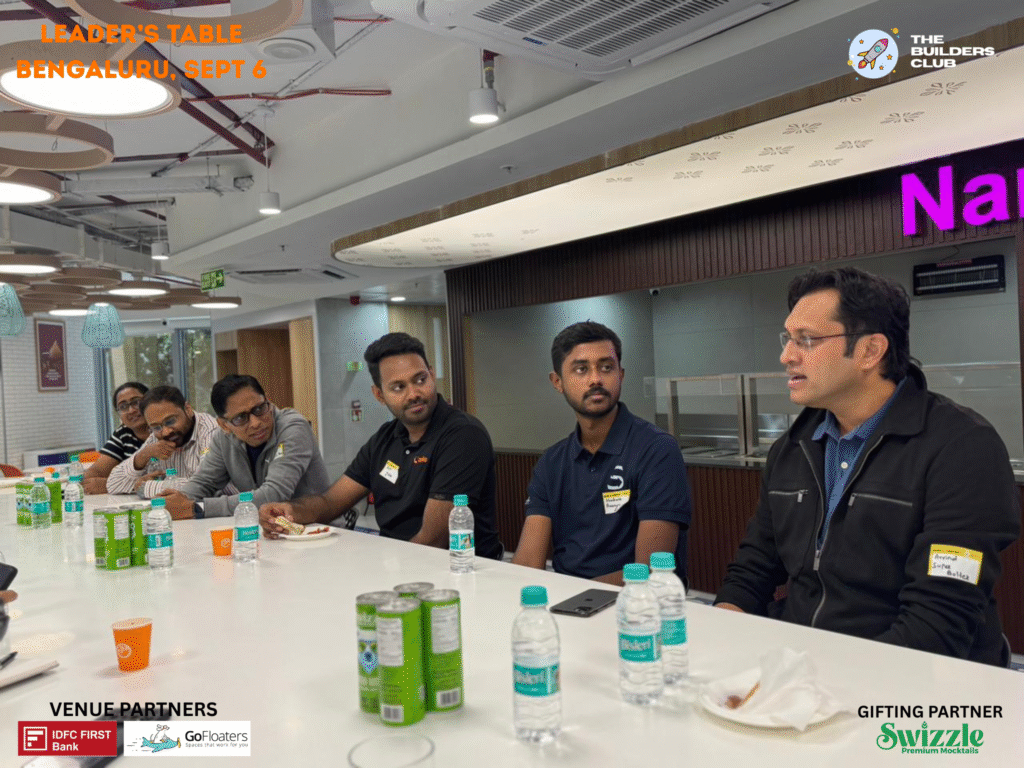
The session was powered by three distinguished leaders who brought deep expertise across product, growth, and venture capital:

💡 Arvind Prakash Singh — Founder & CEO, Superbolter®
💡 Arpit Joseph — Director, Growth & Operations, Zoko
💡 Azhar Yakkundi — Investments Team, Arali Ventures

Their combined experience gave founders a 360° perspective on startup growth strategies, product scaling, and investor readiness.


🙌 A Founder Community That Builds Together
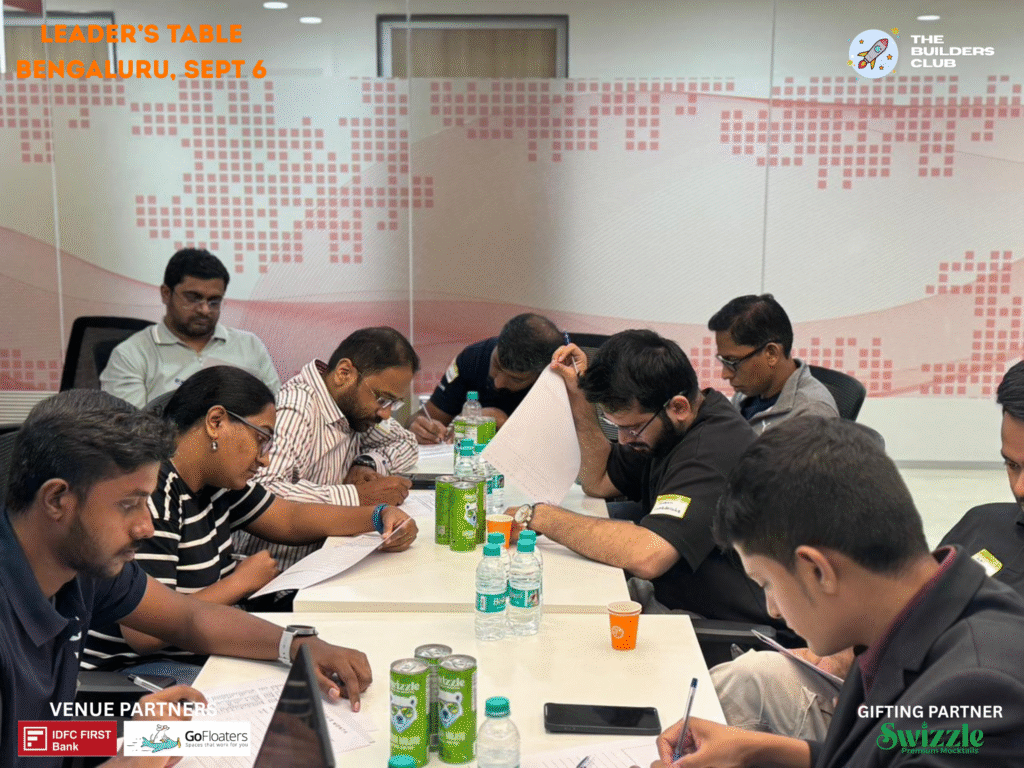
The energy in the room came from the founders themselves — entrepreneurs who arrived ready to share challenges, exchange ideas, and co-create solutions.

From candid stories about startup failures to discussions on scaling SaaS products and securing venture capital, it was a reminder that the best growth happens when founder communities come together with openness and trust.


🎁 Partners Who Powered the Experience

This edition was made possible thanks to:
✨ IDFC FIRST Bank and GoFloaters as venue partners
✨ Swizzle as our gifting partner

Their support ensured a seamless and enriching experience for all participants.


🔍 Why The Leader’s Table Matters for Startups in India

Many startup events in India prioritize noise over substance. The Builders Circle is different. The Leader’s Table is designed as a leadership roundtable for founders, where depth, trust, and execution take center stage.
If you’re a founder seeking:
✅ Practical guidance on scaling startups
✅ Direct access to experienced operators & investors
✅ A trusted founder community in India

Then this is the table you need to be at.

With more editions coming up across cities, The Leader’s Table is fast becoming one of India’s most impactful startup networking forums — where conversations turn into strategies, and strategies turn into growth.


Advertisement
Advertisement
Facebook
X
LinkedIn

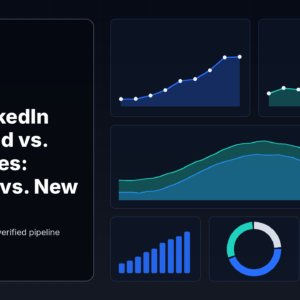
Cold LinkedIn Outbound vs. Relationship-Driven Field Sales: What Actually Drives Verified Pipeline in Mumbai vs. New York?

Cold LinkedIn outbound can fill a calendar. Relationships fill a pipeline you can actually forecast. In New York, where buyers are used to inbound sequences from vendors, outbound is a volume game with falling returns. In Mumbai, where trust usually comes through people, relationship-driven selling tends to produce the deals that close. This post compares the two models, shows where each one works, and explains how to blend them so that your “pipeline” is verified rather than just a list of meetings. What is the difference between cold outbound LinkedIn loops and relationship-driven field sales? Cold outbound loops are repeatable sequences: connection request, message, follow-up, call or email, with automation and templates doing most of the work. Relationship-driven field sales rely on introductions, in-person meetings, events and reputation. The seller’s credibility is the main asset, and each account gets personal attention. Neither is better in general. The question is which model matches how your buyer builds trust. Why is New York tougher for cold outbound than it used to be? Saturation. Senior buyers receive many similar messages, so average response rates drop and filtering rises. Template fatigue. Personalised-looking messages that follow a visible pattern are quickly recognised and ignored. Platform limits. LinkedIn restricts aggressive automation, so volume has a ceiling and accounts can be restricted. Review LinkedIn’s User Agreement before building sequences. Still effective when specific. Outbound works best when tied to a clear trigger, such as a funding round, a hire or a product launch, with a narrow offer. Why do relationships still dominate in Mumbai and other Indian business hubs? Trust travels through people. A recommendation from a peer or investor carries more weight than a well-written message. Proximity matters. In-person meetings, dinners, industry gatherings and roundtables still accelerate trust. Groups and networks. Introductions across business families, alumni groups and industry associations can unlock entire accounts. Cold outreach is not useless. It works when it references a mutual connection, a shared event or a specific problem, and when a human follows up quickly. Which model drives verified pipeline: a side-by-side comparison Factor Cold LinkedIn loops (New York pattern) Relationship field sales (Mumbai pattern) Speed to first meeting Fast when it works Slower to start Meeting quality Variable; many early-stage chats Often higher intent and better access to decision-makers Scalability High, within platform limits Limited by founder and team time Cost pattern Tool and SDR cost, low per touch Travel and time cost, high per touch Forecast reliability Needs strict qualification Higher once the relationship is real Main risk Vanity meetings Over-dependence on a few relationships How do you define “verified pipeline” so you can compare fairly? A meeting is not pipeline. A verified opportunity has all of the following: A named problem the buyer admits to having. An identified budget owner or a path to one. A defined next step with a date. Agreement on how the decision will be made. Track conversion from “meeting booked” to “verified opportunity” for each channel. That ratio, not the meeting count, tells you which model deserves more investment in each city. How do you blend both models? Use outbound to find, relationships to close. Start with targeted outreach, then move high-fit accounts into warm introductions and in-person conversations. Warm every message. Reference a mutual contact, shared community or event. Even one common connection raises reply quality. Host the room. Roundtables and curated dinners convert strangers into familiar names without a single cold message. Respect each market’s rhythm. Short, specific, value-first messages work better in New York. Patience and follow-through matter more in Mumbai. FAQ Does cold LinkedIn outreach work for Indian enterprise sales? It can, particularly for first contact and research, but it converts best when connected to a warm element such as a mutual connection, an event or a specific business trigger. Treat it as the start of a relationship, not the whole sales motion. How many LinkedIn messages can you send safely? LinkedIn changes its limits and enforcement over time, and heavy automation can put your account at risk. Check the current rules in LinkedIn’s help centre and prioritise quality and relevance over volume. What is the best way to measure pipeline from each channel? Measure by verified opportunities and, later, closed revenue per hour or rupee invested. Compare meeting-to-opportunity conversion by channel, and review it quarterly. Conclusion Neither model wins everywhere. New York rewards precision and persistence in outbound, while Mumbai rewards trust built through people. The strongest teams use outbound to open doors and relationships to walk through them, and they judge success by verified pipeline, not by meetings booked. Want warm access to Indian CXOs? The Builders Club hosts curated roundtables and events with founders and decision-makers. Join The Builders Club. About the author: Sohail Khan is Founder and Director of The Builders Club, a professional community of 35,000+ founders and CXOs across India, UAE, Singapore and the US.

Read More »
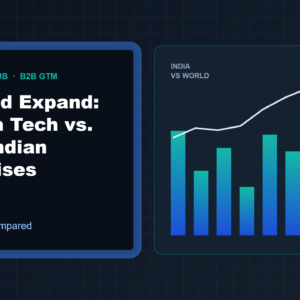
Land and Expand: Western Tech vs. Tier-1 Indian Enterprises

Dissecting the ‘Land and Expand’ Thesis: Upsell Velocities Inside Western Tech Companies vs. Tier-1 Indian Enterprises

Land and expand works in both markets, but the engine is different. In Western tech companies, expansion follows usage and seat growth. In Tier-1 Indian enterprises, expansion follows trust and new approvals. Forecasting both with the same upsell curve will overstate one and understate the other. This post explains the mechanics so you can plan a realistic expansion path. What is the land and expand model? Land and expand means winning a small initial deal, proving value, then growing contract value through more users, modules or business units. Its success is measured by net revenue retention, discussed in McKinsey’s research on NRR in B2B tech. Note: public benchmarks on upsell velocity by geography are scarce. Treat the comparisons below as structural patterns and use your own cohort data. How does expansion happen inside Western tech companies? Usage-triggered growth. Teams add seats or tiers as adoption spreads. Budgets are often held by team leads. Self-serve upgrades. Smaller expansions may not need a new procurement cycle. Faster internal referrals. Peer teams within the same company often adopt tools they see colleagues using. How does expansion happen inside Tier-1 Indian enterprises? Approval-triggered growth. Each new business unit may need its own sponsor, budget and sometimes a fresh security review. Relationship-led referrals. A senior leader introducing you to another division is worth more than usage data alone. Group-level frameworks. Once you are an approved group vendor, onboarding additional entities can become faster, which is where the expansion curve steepens. Lumpy rather than linear. Expansion often arrives as a step change after a successful quarter or leadership review. Expansion velocity compared: Western tech vs Tier-1 Indian enterprises Factor Western tech company Tier-1 Indian enterprise Expansion trigger Usage and seat growth New sponsor, new division, new approval Early pace Faster, often incremental Slower, often step-wise Long-run potential Capped by company size and seat count Can be large across group entities Main accelerator Product adoption Executive sponsorship and group vendor approval Main risk Downgrades and consolidation Stalled approvals between divisions How do you build an expansion plan that fits the market? Define the expansion map at landing. List every division, entity and use case that could adopt the product. Turn the first win into a reference. A short, approved case study is portable across divisions. Get group-level approval where possible. A master agreement or empanelment can shorten later onboarding. Assign an expansion owner. Do not leave growth to support staff. Forecast in stages. Model Indian expansion as step changes tied to approvals, not as a smooth monthly curve. When should you stop investing in an account? If, after two quarters, you still have only one sponsor, no group-level visibility and no referral, expansion is unlikely. Shift effort to accounts with multiple advocates. FAQ What is land and expand in enterprise SaaS? It is a model where a vendor wins a small first contract, proves value and then grows revenue through more users, modules or business units. Success is measured by net revenue retention. Is land and expand slower in India? Early expansion is often slower because each division may need separate approvals, but it can accelerate sharply once you are an approved group vendor with senior sponsors. How do I plan an upsell forecast for Indian enterprises? Model expansion as step changes linked to specific approvals, new divisions and executive reviews. Use your own historical cohorts rather than a generic monthly growth rate. Conclusion Land and expand is a durable strategy in both markets, but the triggers differ. Western accounts grow with adoption. Indian enterprise accounts grow with trust and approvals. Plan the expansion map before you land, and forecast in steps. Want to learn how other founders expanded across Indian business groups? Join The Builders Club. References and further reading McKinsey: The net revenue retention advantage in B2B tech Harvard Business Review: The risks of prioritising short-term revenue over customer fit Harvard Business Review: Winning the right customers isn’t just a sales issue Gartner: The B2B buying journey and how to optimise it NASSCOM-Frost: Enterprise digital transformation About the author: Sohail Khan is Founder and Director of The Builders Club, a professional community of 35,000+ founders and CXOs across India, UAE, Singapore and the US.

Read More »