// ARTICLE

Divya Bajaj: The Visionary Bridging India and the UK

Advertisement

From Vision to Impact: The Inspiring Journey of Divya Bajaj

, ,

A Visionary with a Purpose

Every great leader starts with a vision—not just for personal success but for creating meaningful impact. Divya Bajaj’s journey is one of relentless focus, strategic foresight, and an unwavering commitment to bridging businesses across borders.

With over a decade of experience in strategic growth and international business development, Divya has built a career centered on fostering high-value connections between India and the UK. As the Vice President at London and Partners they Mayor of London’s Growth agency and Head of South and East India for London & Partners, she plays a pivotal role in shaping global business expansion strategies, helping companies navigate new markets with confidence.

Breaking Barriers and Building Bridges

Divya’s journey isn’t one of overnight success—it is a story of perseverance, deep industry understanding, and an innate ability to connect people and opportunities. Over the last six years, she has worked at the forefront of foreign direct investment (FDI), assisting Indian tech founders in expanding into London while guiding London-based entrepreneurs on their India market entry.

Her approach is not just transactional—it’s transformational. She doesn’t just facilitate deals; she builds ecosystems where businesses thrive, leveraging her extensive network to fast-track decision-making and global expansion.

As a sought-after speaker at business forums, she shares her expertise with government bodies, trade associations, and startups, shaping conversations that drive meaningful change. Her impact extends beyond advisory—she is a catalyst for growth.

Recognitions & Achievements

Divya’s contributions have not gone unnoticed. She has been recognized for her exceptional work in international business expansion, strategic advisory, and fostering cross-border collaborations. Some of her notable achievements include:

Key driver in bringing FDI to London by helping Indian startups establish a global presence.
Recognized speaker at global business forums for government and trade bodies.
Advisor to numerous high-growth startups navigating market expansion.
A well-respected name in the India-UK business corridor, known for fostering impactful business relationships.

Her accolades reflect her dedication to empowering businesses and shaping the future of global entrepreneurship.

Becoming a Part of Builder Circle – Shaping the Future of Advisory

Divya’s passion for mentorship and strategic guidance makes her an invaluable part of Builder Circle—a space where industry leaders and advisors come together to empower businesses. Her deep understanding of international expansion, combined with her global network, enables her to provide unmatched insights to founders looking to scale.

Why Join Builder Circle?

Success isn’t achieved in isolation—it thrives in a community of experts, advisors, and visionaries who push boundaries and challenge the status quo. Builder Circle is more than just a network; it’s a movement of like-minded individuals committed to building the future of business.

If you’re looking to learn from top industry advisors like Divya Bajaj, expand your reach, and gain strategic insights that can transform your business, Builder Circle is where you need to be.

Join today and be part of a powerful advisory network shaping the next generation of global leaders.

Advertisement
Advertisement
Facebook
X
LinkedIn

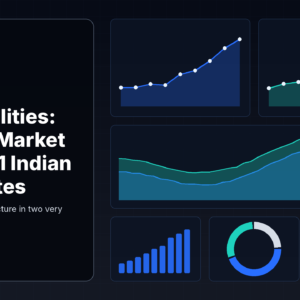
ACV Realities: Selling Core Infrastructure to Mid-Market UK Firms vs. Tier-1 Indian Corporate Houses

A UK mid-market firm and a Tier-1 Indian corporate house will both buy core infrastructure from you, but they will not pay, decide or expand the same way. UK mid-market deals tend to be smaller, faster and process-led. Indian group deals tend to start with a modest first contract and grow through relationships across divisions. Founders who price both markets with one ACV assumption end up mispricing one of them. Here is how to think about the difference. What is ACV, and why does it vary so much by market? Annual Contract Value (ACV) is the average yearly revenue from a customer contract, excluding one-time fees. It is shaped by company size, buying authority, budget structure and how the buyer prefers to commit spend. Two companies of similar revenue can have very different ACVs for the same product, because the buying behaviour, not the product, decides how much they sign at once. Note: the comparisons below describe structural patterns, not published statistics. Validate every number against your own deal history before using it in a plan. How do UK mid-market firms buy core infrastructure? The buyer group in a UK mid-market company is usually smaller, with a CTO, head of IT or operations lead holding most of the authority. Procurement follows a defined process, and contracts are generally standardised. Compliance first. Data protection under UK GDPR, supplier due diligence and security questionnaires are routine gates. Clear scope. Buyers expect a defined package, a fixed term and a predictable renewal. Faster decisions, smaller contracts. Fewer approvers usually shorten the cycle, but the initial ACV is often constrained by mid-market budgets. How do Tier-1 Indian corporate houses buy the same infrastructure? Large Indian groups often operate as a portfolio of businesses under a shared brand. Technology decisions can sit with a central IT team, a group CIO, or the individual business heads, and sometimes all three. Wider committee. IT infrastructure, security, finance, legal and the business owner may each have a say. Land small, expand across entities. A first deal in one division can become a group-wide relationship once trust is established. Heavier customisation and negotiation. Expect requests on terms, integration, support models and pricing structure. Regulatory overlays. Sector regulators and India’s phased data protection rollout may shape requirements. UK mid-market vs Tier-1 Indian groups: what changes for ACV? Factor UK mid-market Tier-1 Indian corporate house Buying committee Smaller, role-defined Larger, spans IT, business, finance, legal Sales cycle Usually shorter once process starts Often longer and less linear Initial ACV Capped by mid-market budgets Often a small first step, such as one unit or pilot Expansion path Seats, modules, upgrades Additional divisions, group entities, geographies Negotiation focus Compliance, SLAs, term length Commercial structure, customisation, support Biggest risk Price pressure and churn Stalled approvals and scope creep How should you price and structure deals in each market? For UK mid-market Lead with a clear package, a compliance pack and a defined onboarding plan. Aim for annual contracts with a visible upgrade path, since expansion is usually module-based. Use references from similar-sized companies; they matter more than brand names. For Tier-1 Indian corporate houses Design a first contract small enough to approve quickly, but linked to a roadmap for broader rollout. Define what is standard and what is paid customisation from day one, to protect margins. Map the group structure and identify which entity signs, which pays and which uses the product. FAQ Is ACV higher in India or in the UK? It depends on the segment, product and contract structure, and there is no reliable universal figure. In general, UK mid-market deals may close faster at moderate sizes, while large Indian groups can grow into bigger relationships over time through multi-division expansion. Compare using your own deal data. Should I use the same pricing model in both markets? Keep the core pricing logic consistent, but adapt packaging. UK buyers often prefer clear tiers and fixed terms. Indian enterprises may need flexible rollout phases, with the commercial structure explained in terms of business outcomes. Which market is better for a first enterprise customer? Choose based on your strengths. If you have a compliance-ready product and a repeatable process, UK mid-market can offer quick validation. If you have strong relationships and room to customise, a Tier-1 Indian group can become a long-term anchor account. Conclusion ACV is shaped by how a buyer commits, not just by what they buy. Plan UK mid-market deals around process and compliance, and Indian group deals around relationships and staged expansion. Use one pricing logic, but two go-to-market playbooks. Selling across borders? Compare notes with founders and CXOs who sell in both markets. Join The Builders Club and get invited to our next roundtable. About the author: Sohail Khan is Founder and Director of The Builders Club, a professional community of 35,000+ founders and CXOs across India, UAE, Singapore and the US.

Read More »