// ARTICLE

From Startup Struggles to Strategic Vision: The Remarkable Journey of Aakash Sinha

Advertisement

From Startup Struggles to Strategic Vision: The Remarkable Journey of Aakash Sinha

, ,

In the ever-evolving world of startups, where ambition meets relentless challenges, there are few leaders as adept at navigating the complexities of growth and global expansion as Aakash Sinha. A seasoned marketing strategist with an impressive portfolio, Aakash’s journey is one of grit, determination, and an unwavering focus on results.

A Mastermind in Marketing and US Market Expansion

Currently a Founding Member of Marketing at Clazar, Aakash has carved a niche for himself in the competitive domain of B2B marketing. But his prowess extends far beyond conventional strategies. His expertise lies in developing and executing go-to-market (GTM) strategies tailored specifically for the US market—a critical yet challenging endeavor for startups aiming to scale internationally.

Aakash understands that cracking the US market requires more than just a product; it demands a deep understanding of cultural nuances, customer behavior, competitive landscapes, and regulatory frameworks. From identifying high-value target segments to designing impactful field marketing campaigns and outbound strategies, Aakash has consistently delivered results that matter.

During his tenure at companies like SpotDraft, Belong, and Cashfree, Aakash demonstrated an uncanny ability to align marketing efforts with business goals. He not only led demand generation initiatives but also facilitated seamless market entry for startups eyeing global dominance. His strategies don’t just open doors—they establish lasting footholds.

The Path to Success: Resilience and Expertise

Aakash’s journey hasn’t been devoid of challenges. The startup ecosystem, notorious for its unpredictability, has taught him the value of adaptability and strategic focus. His ability to navigate these challenges with poise is what sets him apart.

From driving customer acquisition for mid-market players to building robust pipelines for enterprise clients, Aakash’s approach to marketing is both innovative and grounded in data-driven decision-making. He thrives on turning complex problems into opportunities, always keeping an eye on the bigger picture.

Powering Founders Through The Builder Circle

Today, Aakash shares his wealth of experience as part of the CXO Advisory Panel of The Builder Circle. This exclusive community of growth-stage founders is more than just a network—it’s a thriving ecosystem where entrepreneurs come together to learn, grow, and succeed.

In his role, Aakash advises founders on US market expansion and go-to-market strategies, equipping them with the tools and insights they need to succeed in one of the world’s most competitive markets. His guidance is invaluable for founders looking to crack the intricacies of the US landscape, from scaling operations to building brand equity in a foreign market.

A Community Built for Growth

The Builder Circle is a unique platform where founders gain access to a “band of brothers”—fellow entrepreneurs, advisors, agencies, and partners—committed to collective growth. With seasoned advisors like Aakash in their corner, members benefit from personalized guidance, goal tracking, and powerful connections that fast-track their success.

Why You Should Join The Builder Circle

If you’re a founder with a vision to scale globally, particularly in the US market, there’s no better place to be than The Builder Circle. With Aakash’s proven expertise in B2B marketing and US GTM strategies, and the support of a curated network of peers and advisors, this community offers everything you need to achieve exponential growth.

Don’t wait—join The Builder Circle today. With only 10 spots open for funded founders or those with an ARR of over ₹1 crore, the opportunity to transform your business is now.

Be Inspired. Take Action.

Aakash Sinha’s story is a reminder that success is a blend of strategy, perseverance, and collaboration. If his journey resonates with you, imagine what being part of The Builder Circle can do for your startup.


Click here to register and start your growth journey now!

Advertisement
Advertisement
Facebook
X
LinkedIn

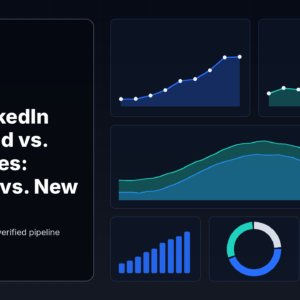
Cold LinkedIn Outbound vs. Relationship-Driven Field Sales: What Actually Drives Verified Pipeline in Mumbai vs. New York?

Cold LinkedIn outbound can fill a calendar. Relationships fill a pipeline you can actually forecast. In New York, where buyers are used to inbound sequences from vendors, outbound is a volume game with falling returns. In Mumbai, where trust usually comes through people, relationship-driven selling tends to produce the deals that close. This post compares the two models, shows where each one works, and explains how to blend them so that your “pipeline” is verified rather than just a list of meetings. What is the difference between cold outbound LinkedIn loops and relationship-driven field sales? Cold outbound loops are repeatable sequences: connection request, message, follow-up, call or email, with automation and templates doing most of the work. Relationship-driven field sales rely on introductions, in-person meetings, events and reputation. The seller’s credibility is the main asset, and each account gets personal attention. Neither is better in general. The question is which model matches how your buyer builds trust. Why is New York tougher for cold outbound than it used to be? Saturation. Senior buyers receive many similar messages, so average response rates drop and filtering rises. Template fatigue. Personalised-looking messages that follow a visible pattern are quickly recognised and ignored. Platform limits. LinkedIn restricts aggressive automation, so volume has a ceiling and accounts can be restricted. Review LinkedIn’s User Agreement before building sequences. Still effective when specific. Outbound works best when tied to a clear trigger, such as a funding round, a hire or a product launch, with a narrow offer. Why do relationships still dominate in Mumbai and other Indian business hubs? Trust travels through people. A recommendation from a peer or investor carries more weight than a well-written message. Proximity matters. In-person meetings, dinners, industry gatherings and roundtables still accelerate trust. Groups and networks. Introductions across business families, alumni groups and industry associations can unlock entire accounts. Cold outreach is not useless. It works when it references a mutual connection, a shared event or a specific problem, and when a human follows up quickly. Which model drives verified pipeline: a side-by-side comparison Factor Cold LinkedIn loops (New York pattern) Relationship field sales (Mumbai pattern) Speed to first meeting Fast when it works Slower to start Meeting quality Variable; many early-stage chats Often higher intent and better access to decision-makers Scalability High, within platform limits Limited by founder and team time Cost pattern Tool and SDR cost, low per touch Travel and time cost, high per touch Forecast reliability Needs strict qualification Higher once the relationship is real Main risk Vanity meetings Over-dependence on a few relationships How do you define “verified pipeline” so you can compare fairly? A meeting is not pipeline. A verified opportunity has all of the following: A named problem the buyer admits to having. An identified budget owner or a path to one. A defined next step with a date. Agreement on how the decision will be made. Track conversion from “meeting booked” to “verified opportunity” for each channel. That ratio, not the meeting count, tells you which model deserves more investment in each city. How do you blend both models? Use outbound to find, relationships to close. Start with targeted outreach, then move high-fit accounts into warm introductions and in-person conversations. Warm every message. Reference a mutual contact, shared community or event. Even one common connection raises reply quality. Host the room. Roundtables and curated dinners convert strangers into familiar names without a single cold message. Respect each market’s rhythm. Short, specific, value-first messages work better in New York. Patience and follow-through matter more in Mumbai. FAQ Does cold LinkedIn outreach work for Indian enterprise sales? It can, particularly for first contact and research, but it converts best when connected to a warm element such as a mutual connection, an event or a specific business trigger. Treat it as the start of a relationship, not the whole sales motion. How many LinkedIn messages can you send safely? LinkedIn changes its limits and enforcement over time, and heavy automation can put your account at risk. Check the current rules in LinkedIn’s help centre and prioritise quality and relevance over volume. What is the best way to measure pipeline from each channel? Measure by verified opportunities and, later, closed revenue per hour or rupee invested. Compare meeting-to-opportunity conversion by channel, and review it quarterly. Conclusion Neither model wins everywhere. New York rewards precision and persistence in outbound, while Mumbai rewards trust built through people. The strongest teams use outbound to open doors and relationships to walk through them, and they judge success by verified pipeline, not by meetings booked. Want warm access to Indian CXOs? The Builders Club hosts curated roundtables and events with founders and decision-makers. Join The Builders Club. About the author: Sohail Khan is Founder and Director of The Builders Club, a professional community of 35,000+ founders and CXOs across India, UAE, Singapore and the US.

Read More »
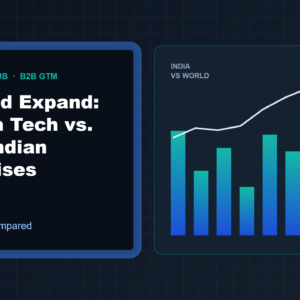
Land and Expand: Western Tech vs. Tier-1 Indian Enterprises

Dissecting the ‘Land and Expand’ Thesis: Upsell Velocities Inside Western Tech Companies vs. Tier-1 Indian Enterprises

Land and expand works in both markets, but the engine is different. In Western tech companies, expansion follows usage and seat growth. In Tier-1 Indian enterprises, expansion follows trust and new approvals. Forecasting both with the same upsell curve will overstate one and understate the other. This post explains the mechanics so you can plan a realistic expansion path. What is the land and expand model? Land and expand means winning a small initial deal, proving value, then growing contract value through more users, modules or business units. Its success is measured by net revenue retention, discussed in McKinsey’s research on NRR in B2B tech. Note: public benchmarks on upsell velocity by geography are scarce. Treat the comparisons below as structural patterns and use your own cohort data. How does expansion happen inside Western tech companies? Usage-triggered growth. Teams add seats or tiers as adoption spreads. Budgets are often held by team leads. Self-serve upgrades. Smaller expansions may not need a new procurement cycle. Faster internal referrals. Peer teams within the same company often adopt tools they see colleagues using. How does expansion happen inside Tier-1 Indian enterprises? Approval-triggered growth. Each new business unit may need its own sponsor, budget and sometimes a fresh security review. Relationship-led referrals. A senior leader introducing you to another division is worth more than usage data alone. Group-level frameworks. Once you are an approved group vendor, onboarding additional entities can become faster, which is where the expansion curve steepens. Lumpy rather than linear. Expansion often arrives as a step change after a successful quarter or leadership review. Expansion velocity compared: Western tech vs Tier-1 Indian enterprises Factor Western tech company Tier-1 Indian enterprise Expansion trigger Usage and seat growth New sponsor, new division, new approval Early pace Faster, often incremental Slower, often step-wise Long-run potential Capped by company size and seat count Can be large across group entities Main accelerator Product adoption Executive sponsorship and group vendor approval Main risk Downgrades and consolidation Stalled approvals between divisions How do you build an expansion plan that fits the market? Define the expansion map at landing. List every division, entity and use case that could adopt the product. Turn the first win into a reference. A short, approved case study is portable across divisions. Get group-level approval where possible. A master agreement or empanelment can shorten later onboarding. Assign an expansion owner. Do not leave growth to support staff. Forecast in stages. Model Indian expansion as step changes tied to approvals, not as a smooth monthly curve. When should you stop investing in an account? If, after two quarters, you still have only one sponsor, no group-level visibility and no referral, expansion is unlikely. Shift effort to accounts with multiple advocates. FAQ What is land and expand in enterprise SaaS? It is a model where a vendor wins a small first contract, proves value and then grows revenue through more users, modules or business units. Success is measured by net revenue retention. Is land and expand slower in India? Early expansion is often slower because each division may need separate approvals, but it can accelerate sharply once you are an approved group vendor with senior sponsors. How do I plan an upsell forecast for Indian enterprises? Model expansion as step changes linked to specific approvals, new divisions and executive reviews. Use your own historical cohorts rather than a generic monthly growth rate. Conclusion Land and expand is a durable strategy in both markets, but the triggers differ. Western accounts grow with adoption. Indian enterprise accounts grow with trust and approvals. Plan the expansion map before you land, and forecast in steps. Want to learn how other founders expanded across Indian business groups? Join The Builders Club. References and further reading McKinsey: The net revenue retention advantage in B2B tech Harvard Business Review: The risks of prioritising short-term revenue over customer fit Harvard Business Review: Winning the right customers isn’t just a sales issue Gartner: The B2B buying journey and how to optimise it NASSCOM-Frost: Enterprise digital transformation About the author: Sohail Khan is Founder and Director of The Builders Club, a professional community of 35,000+ founders and CXOs across India, UAE, Singapore and the US.

Read More »