// ARTICLE

How to Clear the Indian Enterprise Procurement Gate: The Security, Legal and Compliance Roadmap for B2B Tech Founders

A step-by-step roadmap for B2B tech founders to clear security reviews, legal vetting and compliance checks inside Indian enterprise procurement.
How to Clear the Indian Enterprise Procurement Gate
Advertisement

You have won the business sponsor. The demo went well. Then an email arrives with a 120-question security questionnaire, a vendor registration form and a request for your “standard legal terms.” Welcome to the Indian enterprise procurement gate.

The short answer: procurement in large Indian companies is a sequence of three parallel reviews: information security, legal and commercial, and compliance and vendor onboarding. Founders who prepare a single evidence pack for all three before the first formal request typically clear the gate in weeks instead of quarters.

This roadmap breaks the gate into steps you can run in order, with the documents each team usually asks for.

What does the Indian enterprise procurement gate actually consist of?

Think of it as three desks that rarely sit in the same room. Each has a veto, and each runs on its own clock.

GateWho owns itWhat they checkTypical evidence
SecurityCISO or IT security teamData handling, hosting, access control, incident responseSecurity questionnaire, architecture diagram, pen-test summary, ISO 27001 or SOC 2 report
Legal and commercialLegal counsel, finance, procurementContract terms, liability, IP, payment, data protectionMSA draft, DPA, insurance, company documents
Compliance and onboardingVendor management, compliance, riskVendor credibility and regulatory fitKYC documents, GST and PAN, references, sector-specific attestations

Step 1: How do you map the stakeholders before the paperwork starts?

Ask your champion, in writing, three questions: who signs off on security, who reviews the contract, and who onboards vendors. Then request a named contact at each desk.

  • Security: ask whether a standard questionnaire exists and whether an existing certification can replace it.
  • Legal: ask whether you will contract on their paper or yours.
  • Vendor onboarding: ask for the vendor registration checklist on day one, not at PO stage.

Step 2: How do you pass the security review?

Build a standing security pack

Prepare one pack and reuse it: a data-flow and hosting diagram, an access-control and encryption summary, a vulnerability and penetration-testing summary, and your incident response and business continuity outline. An ISO/IEC 27001 certificate or a SOC 2 report will answer a large share of questionnaire items on its own.

Answer the India-specific questions

Indian security teams often ask where data is stored, who can access it, and how quickly you report incidents. Know your position on CERT-In incident reporting and log retention directions, and be ready to state your hosting region clearly.

Prepare for regulated-sector add-ons

If the buyer is a bank, insurer or listed company, expect extra scrutiny. The Reserve Bank of India expects regulated entities to manage outsourcing and IT vendor risk, and the buyer will push those obligations down to you through audit rights and exit clauses.

Step 3: How do you get through legal and commercial vetting?

Legal teams rarely reject a vendor. They slow down because the first draft puts every clause in dispute. Reduce the surface area.

  1. Offer a short, plain-language MSA or order form with clearly marked negotiable clauses.
  2. Pre-decide your positions on liability cap, indemnity, IP ownership, termination and data return.
  3. Attach a data processing addendum aligned with the Digital Personal Data Protection Act, 2023 and its rules.
  4. Confirm payment terms and invoicing format with finance early, including GST details.
  5. Keep your company documents, authorised signatory and insurance certificates ready.

Step 4: How do you finish vendor onboarding and compliance?

This stage fails on small things. Missing PAN or GST certificates, an unsigned code of conduct, a bank detail mismatch or an unavailable reference can each add weeks.

  • Company registration, PAN, GST registration and cancelled cheque
  • Signed vendor code of conduct, anti-bribery and conflict-of-interest declarations
  • Two or three customer references the buyer can actually call
  • Sector attestations where relevant, such as regulator-specific cloud or data-localisation confirmations

What mistakes slow founders down at the procurement gate?

  • Starting the questionnaire only after the commercial discussion ends.
  • Letting the sales lead answer technical security questions without engineering input.
  • Sending different answers to different departments.
  • Treating the business sponsor’s approval as a purchase approval.

Frequently Asked Questions

How long does Indian enterprise procurement usually take?

It varies by sector and deal size, but founders should plan for weeks to a few months after business approval. Regulated buyers and large groups take longer. Having a ready security pack and standard legal terms is the biggest lever for shortening it.

Do I need ISO 27001 or SOC 2 to sell to Indian enterprises?

Not always, but a recognised certification removes many questionnaire items and reassures security teams. If you do not have one yet, offer a detailed security overview, a penetration-test summary and a remediation timeline.

Should I use my contract or the enterprise’s contract?

Large Indian enterprises usually prefer their own paper. Offer your terms as a starting point, but be ready to work from theirs, with your pre-decided positions on liability, IP and data protection.

Conclusion

Clearing the Indian enterprise procurement gate is a process problem, not a persuasion problem. Map the three desks early, keep one reusable evidence pack for security, legal and compliance, and agree the paperwork timeline before the commercial discussion closes. Founders who treat procurement as part of the sales motion close faster and keep their champions credible inside the company.

Next step: Selling to Indian enterprises? Join the founders and CXOs in The Builders Club community at thebuildersclub.me to share playbooks and get introductions.

Advertisement
Advertisement
Facebook
X
LinkedIn
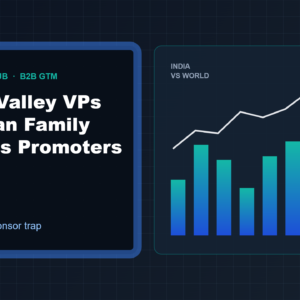
Silicon Valley VPs vs. Indian Family Business Promoters

The Executive Sponsor Trap: Selling to Silicon Valley VPs vs. Securing Commitments from Indian Family Business Promoters

A Silicon Valley VP can usually sign inside a budget they own. An Indian family business promoter often holds the final say but delegates the evaluation, and that gap is where deals stall. Treating a friendly mid-level sponsor as the decision-maker is the most common mistake in cross-border enterprise sales. Here is how the two models differ and how to secure a commitment that survives promoter review. What is the executive sponsor trap? It is the assumption that the person championing your product has the authority to buy it. In US enterprise sales, a VP or director often does hold budget. In many Indian family-run groups, authority sits with the promoter or family council, while managers and professional CEOs run evaluations. How do US VPs make buying decisions? Delegated authority. A VP typically owns a departmental budget with a defined spending limit. Process-led approval. Procurement and legal run a standard path once a business case is approved. Rep-free research. Buyers do much of their research independently, as shown in Gartner’s 2026 sales survey, so your first call is rarely the start of their evaluation. How do Indian family business promoters make buying decisions? Final say at the top. The promoter or a small family circle may approve significant spend, even when a professional CEO handles daily operations. For context, see Business Today on professional CEOs in Indian business families. Trust over process. A recommendation from a known peer, advisor or existing vendor carries heavy weight. Group thinking. Decisions consider the whole group, not only one business unit, which can slow or accelerate a deal sharply. Tech caution. Research on Indian family businesses by Inc42 describes growth-driven but technology-cautious attitudes, which means proof and references matter. Academic work such as the Indian School of Business research on family business groups offers background on how these groups are structured. Sponsor authority compared: Silicon Valley vs family-run Indian groups Factor Silicon Valley VP Indian family business promoter Budget ownership Often in the VP’s own budget Often approved at group or promoter level Who evaluates The VP’s team Managers, CIO or professional CEO What builds trust Data, ROI case, peer reviews Personal credibility, references, introductions Typical blocker Competing priorities and budget timing No access to the final decision-maker Commitment signal Signed order form Promoter or senior leadership endorsement, then paperwork How do you secure a real commitment from a promoter-led company? Ask the authority question early. “Who gives the final nod on a decision of this size?” is polite and effective. Arrange a senior-to-senior meeting. Your founder or most senior leader meets the decision-maker with the sponsor’s backing. Use a trusted introducer. A mutual contact, existing client or advisor opens doors more reliably than outreach. Give the sponsor a promoter-ready summary. One page covering outcome, risk, cost, and references in plain language. Confirm the paperwork route. Once approval is verbal, ask who triggers legal, security and procurement. What if you cannot reach the promoter? Work through the professional CEO or CIO, and ask them to describe what the promoter will want to see. Prepare that material in advance. FAQ Who makes the final software buying decision in an Indian family-owned business? It varies, but for significant spend the final approval often rests with the promoter or a small family group, while managers and a professional CEO run the evaluation. Ask early who gives the final nod. How is selling to a US VP different from selling to an Indian business promoter? US VPs typically own a budget and follow a defined buying process. Promoters weigh trust, references and group-level considerations, so you need senior access and credible introductions. How do I get a meeting with a promoter or business owner? Use warm introductions from mutual contacts, existing customers, advisors or community events. Ask your internal sponsor to request the meeting and prepare a short, outcome-focused briefing. Conclusion Do not mistake enthusiasm for authority. In the US, test whether your VP owns the budget. In Indian family groups, find the person who gives the final nod, and get there through trusted introductions and a promoter-ready summary. Need warm introductions to promoter-led enterprises? Join The Builders Club. References and further reading Gartner Sales Survey: 67% of B2B buyers prefer a rep-free experience (2026) Gartner: The B2B buying journey and how to optimise it Business Today: Why Indian business families are hiring professional CEOs Inc42: Indian family businesses are growth-driven but tech-cautious Indian School of Business: Family business groups in India About the author: Sohail Khan is Founder and Director of The Builders Club, a professional community of 35,000+ founders and CXOs across India, UAE, Singapore and the US.

Read More »

Why the Self-Serve PLG Playbook Fails with Indian Enterprise CXOs (And the High-Touch Assisted Model That Actually Wins)

Self-serve PLG works when the user is also the buyer. In Indian enterprises, they almost never are. A product-led funnel can get your tool into a team’s hands, but it rarely gets a CXO to sign. The model that wins is a high-touch, assisted motion that uses product usage as proof, not as the whole sales strategy. Here is why the standard playbook stalls in India’s large organisations, and what to run instead. Why does the self-serve PLG playbook fail with Indian enterprise CXOs? Product-led growth, as described by pioneers such as OpenView, assumes that users discover, try and adopt the product themselves, and that revenue follows usage. That assumption holds for tools with low risk, low price and individual buyers. Enterprise buying in India breaks all three conditions at once. The user is not the buyer. An analyst may love your tool. The budget sits with a CIO, CFO or business head who has never opened it. Risk is organisational. A CXO signs against security, vendor-continuity and reputational risk, none of which a free trial answers. Trust is personal. Decisions often move on credibility, references and conversations with someone they respect, not on a sign-up flow. Does a free trial or freemium plan ever work in Indian enterprises? It can work for teams, departments and SMB-sized units, where one manager has a card or small discretionary budget. It rarely scales to the top accounts without a human who turns usage into a business case. What does the high-touch assisted model actually look like? Assisted does not mean old-fashioned. It means every stage of the product experience is paired with a person who removes a specific obstacle. Stage Pure self-serve PLG Assisted model for Indian enterprises Discovery Organic search, product trial Warm introduction, peer room, referral Evaluation Self-guided trial Guided pilot with named success criteria Decision User upgrades with a card Business case built for the CXO and the committee Contracting Click-through terms Negotiated MSA, security review, procurement Expansion In-app prompts Account lead plans rollout across divisions How do you turn product usage into a signed enterprise contract? Use the product as the evidence, and a person as the translator. A practical sequence: Find your champion. Identify the user who gets the most value and ask them to explain the problem in their own words. Quantify the result. Convert usage into time saved, errors avoided or revenue influenced, in a one-page summary the CXO can read in two minutes. Map the buying committee. Ask your champion who else must say yes: IT, security, finance, legal, and the business owner. Run an executive conversation. A founder or senior lead speaks to the CXO about outcomes and risk, not features. Offer a scoped commitment. A defined pilot or first-division rollout with clear exit and expansion terms reduces perceived risk. When should you still invest in self-serve? Do not abandon it. Use self-serve as the top of the funnel and as a signal engine. Track which accounts have several active users, which teams invite colleagues, and which admins explore security settings. Those are the accounts your sales team should call first. Think of it as product-qualified leads feeding a human-led close. Many global companies now run exactly this hybrid, and it fits Indian enterprise buying better than a pure self-serve approach. FAQ Is PLG dead for B2B SaaS in India? No. PLG is useful for building awareness, usage data and champions inside accounts. It fails as the only motion for large enterprises, where committees, security reviews and relationships decide the contract. A hybrid model works better. What is a product-qualified lead (PQL)? A PQL is an account or user whose in-product behaviour suggests buying intent, such as multiple active teammates or admin-level exploration. Sales teams use PQLs to prioritise who to approach with a human conversation. How many people does an assisted enterprise sale need? It depends on deal size, but you typically need one senior owner for the relationship, one technical resource for security and integration questions, and a customer success lead after signing. Founders often cover the first two roles in early deals. Conclusion PLG gets you into the room, but it does not get a CXO to sign. In Indian enterprises, winning sales pair product evidence with human trust: a champion, a business case, a guided pilot and a senior conversation. Building an assisted enterprise motion? Meet founders and CXOs who have done it at The Builders Club, and bring your toughest sales question to our next roundtable. Join The Builders Club. About the author: Sohail Khan is Founder and Director of The Builders Club, a professional community of 35,000+ founders and CXOs across India, UAE, Singapore and the US.

Read More »