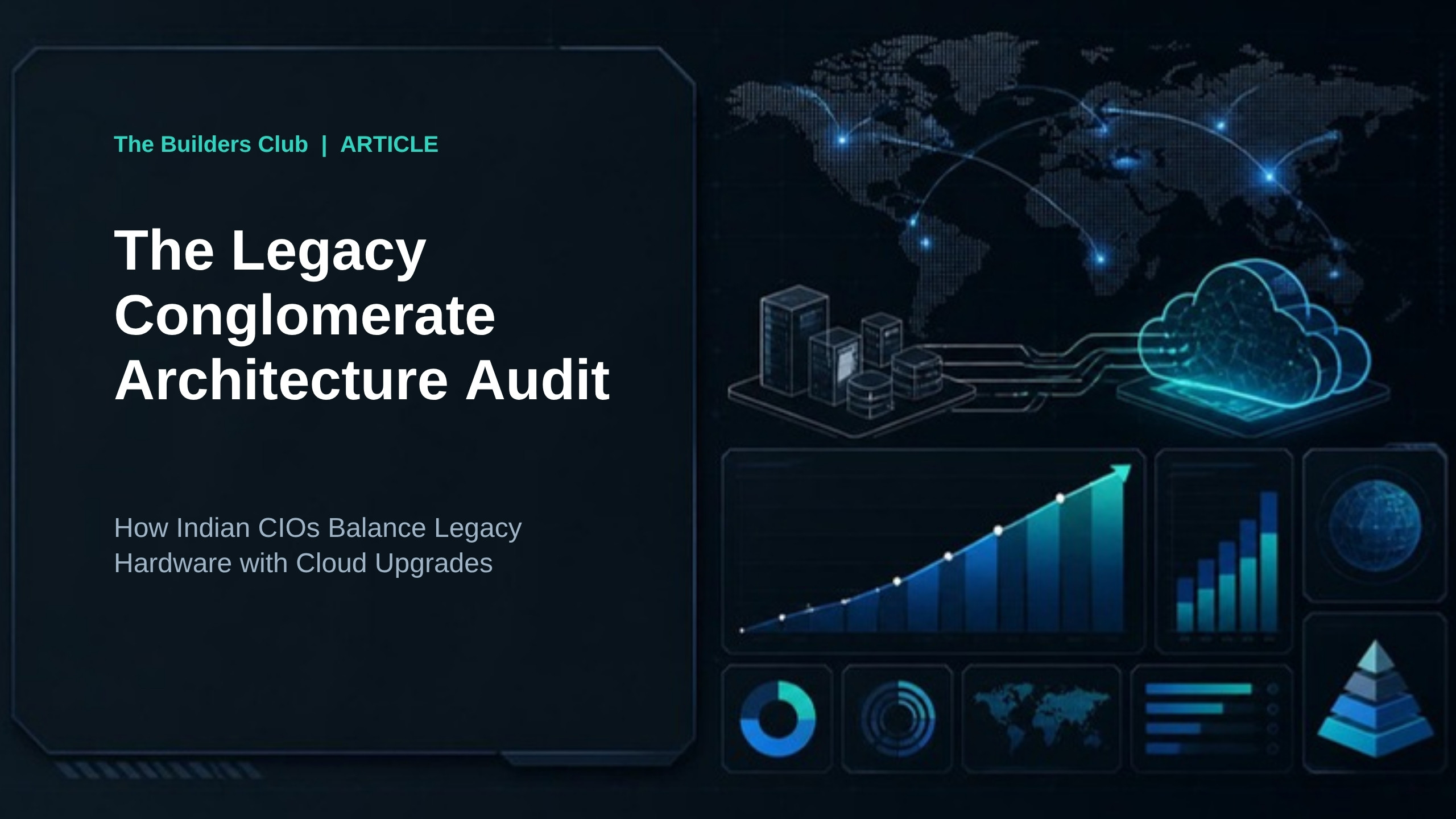
Walk into the data centre of an established Indian conglomerate and you may find a mainframe, an ERP from two decades ago, a modern analytics platform and three SaaS tools bought by different business units. None of it is an accident. It is the visible history of how the group grew.
The short answer: Indian enterprise CIOs balance legacy hardware and cloud upgrades by running a structured architecture audit: inventory every system, score each on business criticality, risk and cost, then assign it one of a few migration paths. Vendors who understand this audit sell into it instead of against it.
This guide walks through how the audit works so B2B tech founders can position their product correctly.
Why do Indian conglomerates still run legacy hardware?
- Stability. Core finance, manufacturing and logistics systems that work are expensive to touch.
- Group structure. Each company in the group may have different systems, vendors and budgets.
- Regulation and data residency. Some workloads must stay on-premise or in a specific region.
- Integration debt. Dozens of interfaces depend on the old system behaving exactly as it does today.
How does a CIO run a legacy architecture audit?
Step 1: Inventory applications, infrastructure and interfaces
List every application, server, database and integration. Include shadow IT bought by business units. Without this baseline, no cloud roadmap is credible.
Step 2: Score each system
A simple scorecard works. Rate each system on business criticality, security and compliance risk, technical health, integration complexity and run cost. Systems with high criticality and high risk are priority conversations.
Step 3: Assign a migration path
Most CIOs use a variation of the well-known “R” framework popularised by cloud providers such as AWS.
| Path | What it means | Typical Indian enterprise use |
|---|---|---|
| Retain | Keep as is for now | Stable core systems with no urgent risk |
| Rehost | Move to cloud with minimal change | Servers nearing end of hardware life |
| Replatform | Small changes to use managed services | Databases and middleware |
| Refactor or replace | Rebuild or move to SaaS | Customer-facing and analytics workloads |
| Retire | Switch off | Duplicated or unused applications |
How do CIOs sequence cloud upgrades without disrupting operations?
- Start with low-risk, high-visibility workloads to build internal confidence.
- Run a hybrid model, keeping regulated or latency-sensitive systems on-premise or in private cloud.
- Fix integration and data quality before moving the application that depends on them.
- Plan hardware refresh cycles so that end-of-life equipment dictates the migration calendar.
- Set a governance forum across group companies to avoid each unit buying separately.
What does this mean for B2B tech founders selling in?
Your product will be evaluated against the audit, not in isolation. Be ready to answer these questions:
- Does it integrate with the legacy systems we keep, and how?
- Can it run in a hybrid or in-region deployment?
- What is the migration path for our data, and who does the work?
- How does it reduce run cost or risk on the scorecard?
For regulated sectors, buyers also track guidance from bodies such as the Ministry of Electronics and Information Technology on cloud and data practices. Position your architecture accordingly.
Frequently Asked Questions
What is a legacy architecture audit?
It is a structured review of an organisation’s applications, infrastructure and integrations, scored on criticality, risk and cost, so leadership can decide which systems to keep, move, replace or retire.
Do Indian enterprises move fully to the cloud?
Most take a hybrid approach. Core and regulated workloads often remain on-premise or in private cloud, while new and customer-facing workloads move to public cloud or SaaS.
How should a vendor sell into a legacy-heavy environment?
Lead with integration, hybrid deployment options and a clear migration plan. Show how your product improves a specific line on the CIO’s scorecard rather than asking them to replace everything.
Conclusion
The CIO of an Indian conglomerate is not choosing between old and new. They are sequencing a portfolio. A vendor who understands the audit, supports hybrid deployment and makes integration painless becomes part of the roadmap instead of a disruption to it.
Next step: Want to meet CIOs and CXOs navigating these decisions? Join The Builders Club community at thebuildersclub.me.