BabyChakra started as a single Facebook page run by a founder with no team and no budget. A landing page later, 9,000 parents signed up within 24 hours.
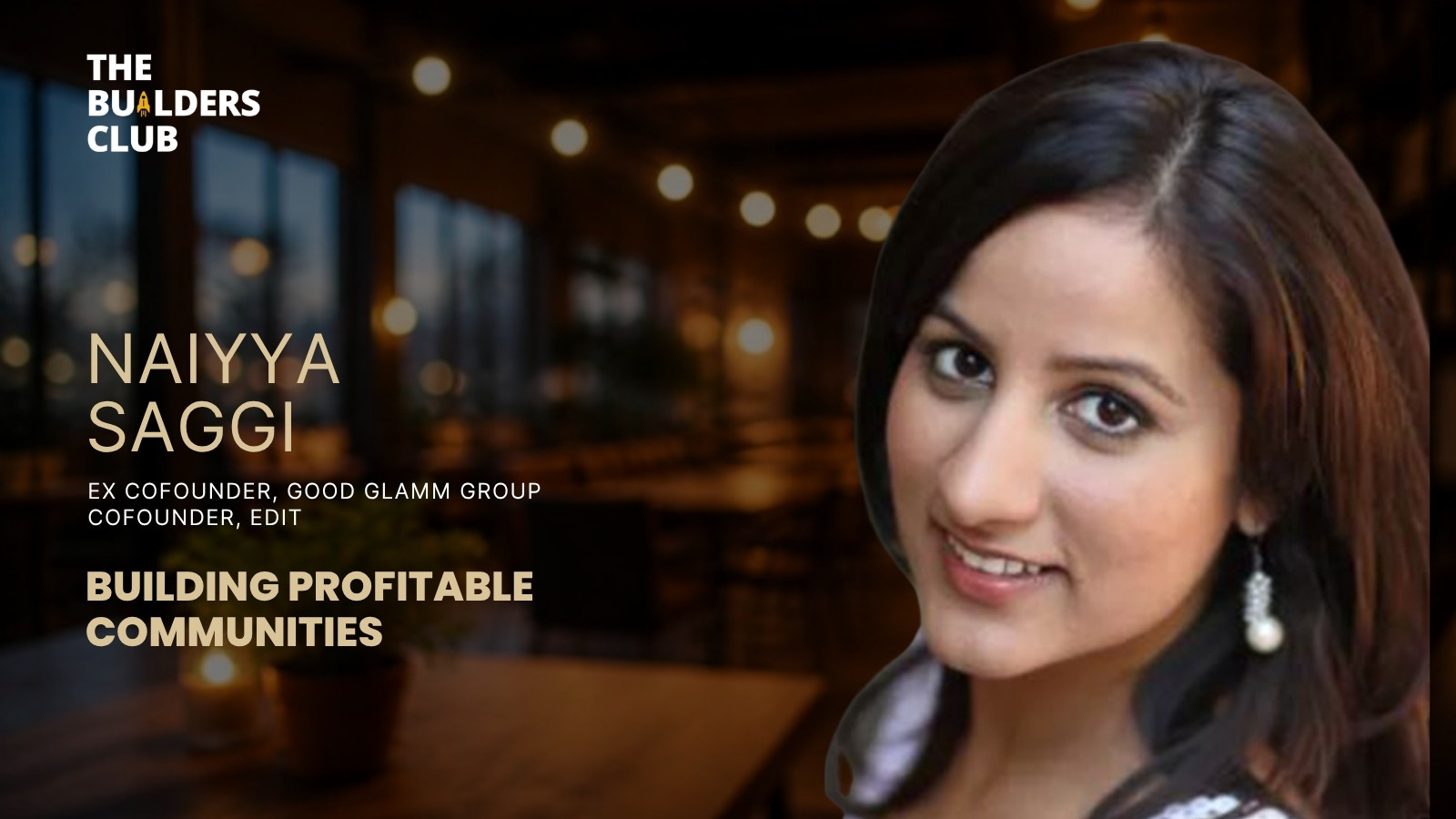
Naiyya Saggi, co-founder of BabyChakra and group co-founder of The Good Glamm Group, joins The Builders Club Startup Founders Podcast to explain what building a community really takes, and how content, community and commerce fit together.
How do you build a community that actually monetizes? Naiyya Saggi’s core thesis
Naiyya’s answer starts with purpose. Define your mission, communicate it clearly at every touchpoint, and back it with action, because members can tell quickly whether a community is authentic. She says to say no more often than yes, so the community stays true to its brand.
Monetization comes second and should follow the mission. When it is transparent, it can mean repeat purchases, community-created content and products co-created with members.
- Mission first. A clear purpose and community values decide who joins and who stays.
- Community is not audience. In a community, members are the heroes and conversations run many to many.
- Keep community brands distinct. If a community grows from a product brand, give it its own identity and do not pitch products there.
- Monetize with transparency. Retention, user content and co-creation can matter as much as direct sales.
How did BabyChakra go from a Facebook page to a community?
Naiyya says BabyChakra did not start as a community. The first idea was a discovery platform for parenting services, covering prenatal, postnatal and early childhood care, something like a review site for parents.
While reading reviews, the team noticed parents chatting with each other and asking providers questions. That pointed to a bigger need: peer-led groups and expert-led conversations to reduce information gaps.
- Start with a Facebook page sharing insights from doctors and mothers.
- Launch a mobile web version with a waiting list and three promises: answers, access to experts and local services.
- Build an app for personalised, localised and real-time conversations.
- Meet users where they are, including WhatsApp, as the group grew.
What is the difference between a community and an audience?
Naiyya disagrees that a following across platforms is a community. In an audience, a brand or influencer is the hero and speaks one to many.
A community is many to many, where members talk, create and shape the content together. Content or events can spark the conversation, but members carry it.
How do you monetize a community without losing trust?
Naiyya describes two phases of her own journey. At BabyChakra, the community co-created products with doctors and mothers. At the group, communities now grow from product brands, with early members often being customers.
Her rule is to keep the community brand distinct from the product brand, keep the mission tight, and avoid turning the space into a sales pitch. She says direct-to-consumer brands benefit when members repeat purchases and share content.
- Repeat purchase: retention rises when members trust the brand.
- User-generated content: it can outperform regular influencer ads when used in CRM and social ads.
- Co-creation: surveys of members and customers shape new products, which raises launch success.
Should monetization be figured out on day one?
Naiyya says it helps, but she would not build a public company on brand endorsement deals. She prefers a product suite, and says the monetization plan must match the mission and members.
What is The Good Glamm Group and how does it combine content, community and commerce?
Naiyya joined Darpan as group co-founder after a conversation that ran six hours instead of one. The shared idea was to build content, community and commerce at scale across several verticals, with Indian product companies aiming to go global. The group’s own site, The Good Glamm Group, describes its portfolio.
She says the group has acquired about 12 companies across product, media and creator businesses, and that it launched Good Communities with partners including WhatsApp.
- Product brands across beauty, wellness and parenting.
- Media brands that bring top-of-funnel reach.
- Creator network serving more than 1.5 million creators.
- Good Communities for deep-interest groups.
How do you scale a team and manage a group of strong founders?
Naiyya names two ingredients: process and informal trust. Process includes org structure, team off-sites and incentives aligned to group outcomes. Trust comes from honest conversations and celebrating collaboration.
She describes her team as a sports team: people coach each other, trust is non-negotiable, and exits should be graceful. At BabyChakra, departures were marked with a celebration.
- Define a first scale goal and break it into building blocks.
- Give people time to prove themselves, but part ways where trust is broken.
- Treat alumni as long-term relationships.
What does she advise on angel investing and accelerators?
Naiyya has made around ten angel investments, mostly in health and consumer businesses. She suggests founders talk to potential angels early to learn their thesis, and approach funds later while still focusing on the business.
On accelerators, she suggests judging credibility, what you will learn and the quality of the peer group. For BabyChakra, these programmes opened doors with doctors, customers and capital.
Further reading and sources
Frequently asked questions
How do you start building an online community from scratch?
Naiyya Saggi suggests starting small and defining a clear mission. BabyChakra began as a Facebook page sharing insights from doctors and mothers, then moved to a mobile web page, an app and later WhatsApp. Stay authentic, because members quickly notice if a community is not.
Can a product brand run its own community?
Yes, but Naiyya advises giving the community its own brand identity and a tight mission, and not pitching the products inside it. Early members are often customers, and monetization shows up through repeat purchases, user content and co-created products.
What is the difference between an audience and a community?
In an audience, a brand or influencer is the hero and speaks to many people. In a community, members are the heroes and conversations run many to many. Naiyya argues that real communities create content together, rather than just following a face.
Conclusion
Naiyya Saggi’s message is that community, content and commerce work together only when purpose leads. Be clear about why the community exists, protect its values and let monetization follow in a transparent way.
If you are building one, write down your community mission and the three behaviours you will not tolerate, then decide how members will help shape what you sell.
Want more conversations like this? Join The Builders Club, our community of 35,000+ founders and CXOs, and explore more episodes of the Startup Founders Podcast.