Cold LinkedIn Outbound vs. Relationship-Driven Field Sales: What Actually Drives Verified Pipeline in Mumbai vs. New York?
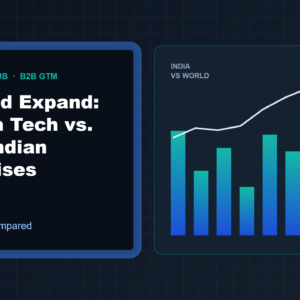
Cold LinkedIn outbound can fill a calendar. Relationships fill a pipeline you can actually forecast. In New York, where buyers are used to inbound sequences from vendors, outbound is a volume game with falling returns. In Mumbai, where trust usually comes through people, relationship-driven selling tends to produce the deals that close. This post compares the two models, shows where each one works, and explains how to blend them so that your “pipeline” is verified rather than just a list of meetings. What is the difference between cold outbound LinkedIn loops and relationship-driven field sales? Cold outbound loops are repeatable sequences: connection request, message, follow-up, call or email, with automation and templates doing most of the work. Relationship-driven field sales rely on introductions, in-person meetings, events and reputation. The seller’s credibility is the main asset, and each account gets personal attention. Neither is better in general. The question is which model matches how your buyer builds trust. Why is New York tougher for cold outbound than it used to be? Saturation. Senior buyers receive many similar messages, so average response rates drop and filtering rises. Template fatigue. Personalised-looking messages that follow a visible pattern are quickly recognised and ignored. Platform limits. LinkedIn restricts aggressive automation, so volume has a ceiling and accounts can be restricted. Review LinkedIn’s User Agreement before building sequences. Still effective when specific. Outbound works best when tied to a clear trigger, such as a funding round, a hire or a product launch, with a narrow offer. Why do relationships still dominate in Mumbai and other Indian business hubs? Trust travels through people. A recommendation from a peer or investor carries more weight than a well-written message. Proximity matters. In-person meetings, dinners, industry gatherings and roundtables still accelerate trust. Groups and networks. Introductions across business families, alumni groups and industry associations can unlock entire accounts. Cold outreach is not useless. It works when it references a mutual connection, a shared event or a specific problem, and when a human follows up quickly. Which model drives verified pipeline: a side-by-side comparison Factor Cold LinkedIn loops (New York pattern) Relationship field sales (Mumbai pattern) Speed to first meeting Fast when it works Slower to start Meeting quality Variable; many early-stage chats Often higher intent and better access to decision-makers Scalability High, within platform limits Limited by founder and team time Cost pattern Tool and SDR cost, low per touch Travel and time cost, high per touch Forecast reliability Needs strict qualification Higher once the relationship is real Main risk Vanity meetings Over-dependence on a few relationships How do you define “verified pipeline” so you can compare fairly? A meeting is not pipeline. A verified opportunity has all of the following: A named problem the buyer admits to having. An identified budget owner or a path to one. A defined next step with a date. Agreement on how the decision will be made. Track conversion from “meeting booked” to “verified opportunity” for each channel. That ratio, not the meeting count, tells you which model deserves more investment in each city. How do you blend both models? Use outbound to find, relationships to close. Start with targeted outreach, then move high-fit accounts into warm introductions and in-person conversations. Warm every message. Reference a mutual contact, shared community or event. Even one common connection raises reply quality. Host the room. Roundtables and curated dinners convert strangers into familiar names without a single cold message. Respect each market’s rhythm. Short, specific, value-first messages work better in New York. Patience and follow-through matter more in Mumbai. FAQ Does cold LinkedIn outreach work for Indian enterprise sales? It can, particularly for first contact and research, but it converts best when connected to a warm element such as a mutual connection, an event or a specific business trigger. Treat it as the start of a relationship, not the whole sales motion. How many LinkedIn messages can you send safely? LinkedIn changes its limits and enforcement over time, and heavy automation can put your account at risk. Check the current rules in LinkedIn’s help centre and prioritise quality and relevance over volume. What is the best way to measure pipeline from each channel? Measure by verified opportunities and, later, closed revenue per hour or rupee invested. Compare meeting-to-opportunity conversion by channel, and review it quarterly. Conclusion Neither model wins everywhere. New York rewards precision and persistence in outbound, while Mumbai rewards trust built through people. The strongest teams use outbound to open doors and relationships to walk through them, and they judge success by verified pipeline, not by meetings booked. Want warm access to Indian CXOs? The Builders Club hosts curated roundtables and events with founders and decision-makers. Join The Builders Club. About the author: Sohail Khan is Founder and Director of The Builders Club, a professional community of 35,000+ founders and CXOs across India, UAE, Singapore and the US.