
// ARTICLE

Meet the Founders of Atlas HRT: Redefining HR for the Modern Business

Advertisement

Meet the Founders of Atlas HRT: Redefining HR for the Modern Business

,

In a time when businesses are scaling faster than ever, the need for strategic, scalable, and tech-enabled HR solutions has never been more critical. Atlas HR Technologies was born out of this very need—founded by three seasoned HR leaders who’ve each spent nearly two decades shaping talent and people strategy at some of India’s most dynamic companies.

Steve Francis – CEO & Co-Founder

With 20+ years of HR leadership under his belt, Steve Francis is the strategic anchor of Atlas HRT. His diverse industry experience spans retail, healthcare, and tech, with stints at Amazon, Licious, Firstsource, and Practo. Steve is known for building resilient, high-performing teams and aligning HR with business outcomes.

As CEO, he brings a bold, modern vision to HR consulting—focused on people-centric growth, digital enablement, and execution excellence. His leadership

Bharat Joshi – CPTO & Co-Founder

With over 18 years of experience in HR strategy, digital transformation, and people operations, Bharat Joshi brings the perfect blend of analytical depth and user-centric thinking. At industry leaders like Infosys, ITC Infotech, and Practo, Bharat was known for applying design thinking to employee experience and enabling scale through systems.

At Atlas HRT, he leads product and tech innovation, building intuitive, insight-driven platforms that make HR processes more effective and future-ready for businesses on the move.

Shuhaib P I – COO & Co-Founder

Shuhaib brings 17+ years of hands-on experience in talent acquisition and people strategy across fast-paced sectors such as mobility, e-commerce, and edtech. His journey includes leading HR at Ola, Udaan, Unacademy, Firstsource, and Practo, where he developed a reputation for building agile HR teams that move with business speed.

At Atlas, Shuhaib drives operations and client delivery, ensuring each engagement is tailored, responsive, and aligned with client goals. His strengths in HR consulting and talent frameworks are foundational to Atlas’s impact-first approach.

ensures that Atlas isn’t just solving HR problems, but enabling business evolution through people.


The Birth of Atlas HRT

Having worked together in different capacities over the years, Bharat, Shuhaib, and Steve saw a consistent pattern: scaling businesses were struggling to build strong people foundations. Many didn’t have the resources or need for full-time HR teams but still faced pressing challenges—designing org structures, hiring strategically, and ensuring compliance.

This insight led to the founding of Atlas HRT—a company designed to embed HR strategy into the growth DNA of modern businesses, offering flexibility, senior expertise, and tech-enabled execution from day one.


What Atlas HRT Offers Today

Atlas HRT partners with growth-focused businesses, particularly those between Seed and Series B, to help them set up and scale their people operations. Their services include:

  • Fractional CHRO support to align HR with business strategy
  • Org design and leadership planning for growth
  • Strategic hiring at key organizational nodes
  • Lean, scalable people processes (performance, goal-setting, engagement)
  • A la carte HR ops (contracts, policies, documentation, onboarding)

Rather than taking a one-size-fits-all approach, Atlas HRT operates as a true strategic partner, adapting to each business’s stage, sector, and culture.


Enabling Businesses to Scale, Sustainably

Today, Atlas HRT is trusted by names like Practo, ClayWorks, Vikram Aura Hospitals, Peoplebox, and Kipplo—companies that chose Atlas not just to “manage HR”, but to build it as a strategic lever for scale.

In a world where execution speed is critical and every hire counts, Atlas HRT helps businesses grow with confidence, clarity, and continuity—without needing a full-fledged HR department from day one.

Whether you’re hiring your first 50 people or planning your next 500, Atlas is the partner that helps you scale your business by scaling your people.


Advertisement
Advertisement
Facebook
X
LinkedIn
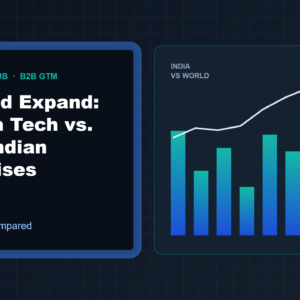
Land and Expand: Western Tech vs. Tier-1 Indian Enterprises

Dissecting the ‘Land and Expand’ Thesis: Upsell Velocities Inside Western Tech Companies vs. Tier-1 Indian Enterprises

Land and expand works in both markets, but the engine is different. In Western tech companies, expansion follows usage and seat growth. In Tier-1 Indian enterprises, expansion follows trust and new approvals. Forecasting both with the same upsell curve will overstate one and understate the other. This post explains the mechanics so you can plan a realistic expansion path. What is the land and expand model? Land and expand means winning a small initial deal, proving value, then growing contract value through more users, modules or business units. Its success is measured by net revenue retention, discussed in McKinsey’s research on NRR in B2B tech. Note: public benchmarks on upsell velocity by geography are scarce. Treat the comparisons below as structural patterns and use your own cohort data. How does expansion happen inside Western tech companies? Usage-triggered growth. Teams add seats or tiers as adoption spreads. Budgets are often held by team leads. Self-serve upgrades. Smaller expansions may not need a new procurement cycle. Faster internal referrals. Peer teams within the same company often adopt tools they see colleagues using. How does expansion happen inside Tier-1 Indian enterprises? Approval-triggered growth. Each new business unit may need its own sponsor, budget and sometimes a fresh security review. Relationship-led referrals. A senior leader introducing you to another division is worth more than usage data alone. Group-level frameworks. Once you are an approved group vendor, onboarding additional entities can become faster, which is where the expansion curve steepens. Lumpy rather than linear. Expansion often arrives as a step change after a successful quarter or leadership review. Expansion velocity compared: Western tech vs Tier-1 Indian enterprises Factor Western tech company Tier-1 Indian enterprise Expansion trigger Usage and seat growth New sponsor, new division, new approval Early pace Faster, often incremental Slower, often step-wise Long-run potential Capped by company size and seat count Can be large across group entities Main accelerator Product adoption Executive sponsorship and group vendor approval Main risk Downgrades and consolidation Stalled approvals between divisions How do you build an expansion plan that fits the market? Define the expansion map at landing. List every division, entity and use case that could adopt the product. Turn the first win into a reference. A short, approved case study is portable across divisions. Get group-level approval where possible. A master agreement or empanelment can shorten later onboarding. Assign an expansion owner. Do not leave growth to support staff. Forecast in stages. Model Indian expansion as step changes tied to approvals, not as a smooth monthly curve. When should you stop investing in an account? If, after two quarters, you still have only one sponsor, no group-level visibility and no referral, expansion is unlikely. Shift effort to accounts with multiple advocates. FAQ What is land and expand in enterprise SaaS? It is a model where a vendor wins a small first contract, proves value and then grows revenue through more users, modules or business units. Success is measured by net revenue retention. Is land and expand slower in India? Early expansion is often slower because each division may need separate approvals, but it can accelerate sharply once you are an approved group vendor with senior sponsors. How do I plan an upsell forecast for Indian enterprises? Model expansion as step changes linked to specific approvals, new divisions and executive reviews. Use your own historical cohorts rather than a generic monthly growth rate. Conclusion Land and expand is a durable strategy in both markets, but the triggers differ. Western accounts grow with adoption. Indian enterprise accounts grow with trust and approvals. Plan the expansion map before you land, and forecast in steps. Want to learn how other founders expanded across Indian business groups? Join The Builders Club. References and further reading McKinsey: The net revenue retention advantage in B2B tech Harvard Business Review: The risks of prioritising short-term revenue over customer fit Harvard Business Review: Winning the right customers isn’t just a sales issue Gartner: The B2B buying journey and how to optimise it NASSCOM-Frost: Enterprise digital transformation About the author: Sohail Khan is Founder and Director of The Builders Club, a professional community of 35,000+ founders and CXOs across India, UAE, Singapore and the US.

Read More »