You closed the deal. The contract is signed. Then your first invoice sits in a vendor portal for 60 days with the status “under verification.” For many B2B startups, the billing system of an Indian enterprise is the real sales cycle.
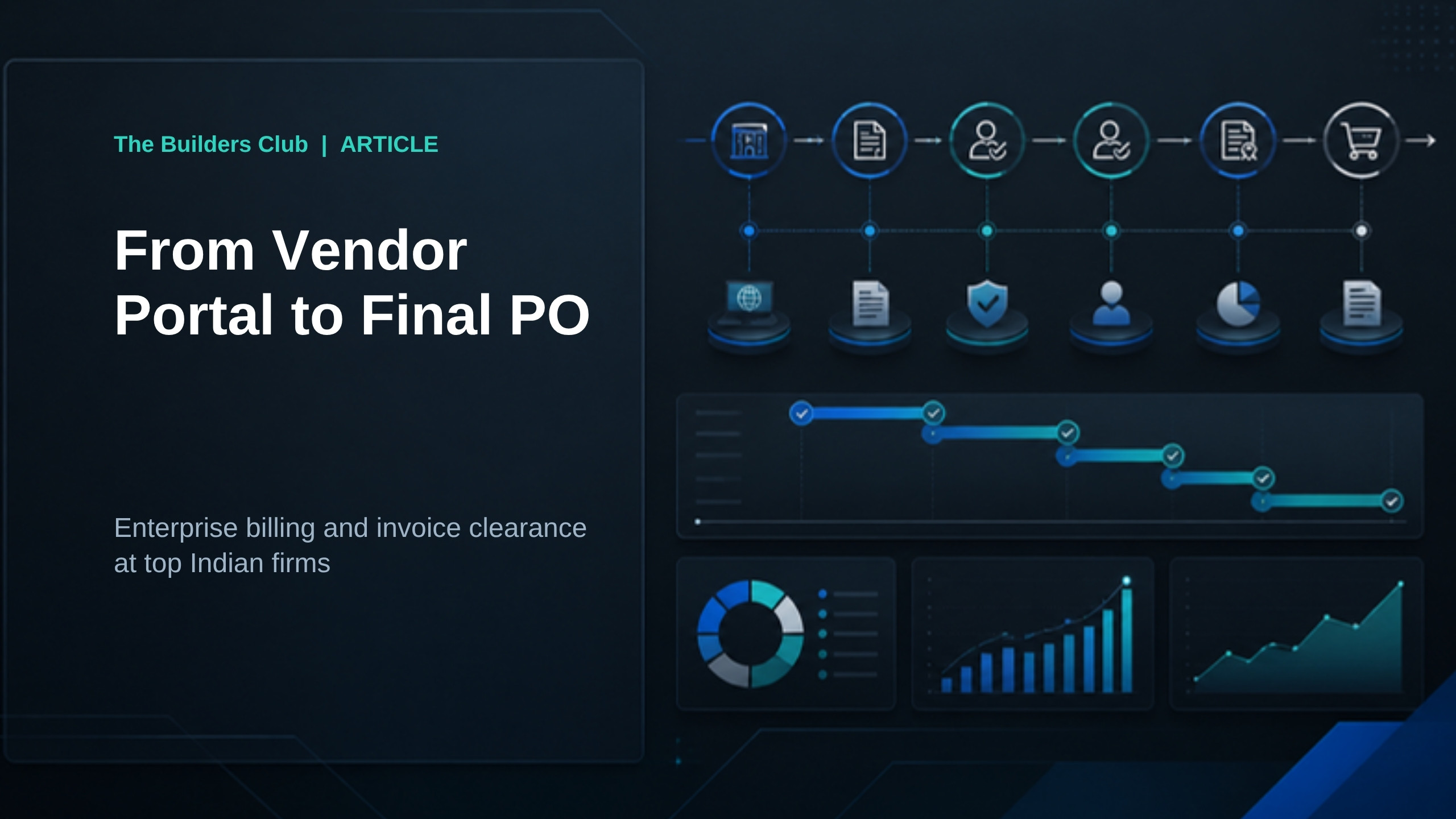
The short answer: large Indian firms run billing as a controlled chain: vendor onboarding, purchase order (PO), goods or service receipt, invoice submission and three-way matching, then payment approval. Startups that understand each checkpoint and send clean, PO-referenced, GST-compliant invoices get paid faster and avoid being stuck in a queue.
This breakdown follows the typical path. Each enterprise differs, so treat it as a framework and confirm details with the buyer’s accounts payable team.
What is the typical path from vendor portal to payment?
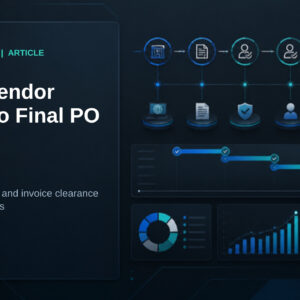
Most large Indian enterprises use a vendor management or procure-to-pay system. A vendor is registered, approved, issued a PO, delivers, submits an invoice against that PO, and is paid after internal verification. A break at any step stops the chain.
| Stage | Who owns it | What can go wrong |
|---|---|---|
| Vendor registration | Procurement or vendor management | Missing PAN, GST, bank or MSME details |
| Purchase order | Business unit and procurement | Work starts before PO is issued |
| Receipt or acceptance | Business owner | No sign-off on delivery or milestone |
| Invoice submission and matching | Accounts payable | Invoice does not match PO, rate or GST details |
| Payment approval | Finance | Approval delays, TDS or credit-note issues |
How do you clear vendor registration without delays?
Prepare one document set before you begin and submit it complete. Incomplete forms are the most common reason new vendors wait weeks. Use the same legal name and details across every document.
- Company registration certificate and PAN
- GST registration certificate
- Cancelled cheque or bank letter with account details
- MSME registration, if applicable
- Signed code of conduct and vendor declarations
- Authorised signatory details
Why does the purchase order matter so much?
A PO is the buyer’s authority to pay. Without it, invoices often cannot be matched or approved in the system. Never begin billable work, or invoice, without a PO number, even if the business sponsor gives verbal approval.
How does three-way matching work, and how do you pass it?
Accounts payable compares your invoice to the PO and to proof of receipt. If quantities, rates, taxes or descriptions differ, the invoice is rejected or parked. Mirror the PO exactly and reference its number on every invoice.
- Quote the PO number and line items exactly as issued.
- Use GST-compliant invoices, including e-invoicing where it applies to your turnover under the GST system.
- Attach acceptance evidence, such as a signed milestone note or system approval.
- Submit through the buyer’s portal, and keep the acknowledgment.
- Follow up with the named accounts payable contact before the due date, not after.
What payment timelines should you expect?
Commercial terms vary, and enterprise cycles can run from 30 to 90 days or more from approved invoice. If you are a registered micro or small enterprise, Section 43B(h) of the Income Tax Act ties a buyer’s tax deduction to paying within 45 days, which has changed buyer behaviour. Agree payment terms in the contract and confirm which date starts the clock.
What practical habits shorten invoice clearance?
Build a billing calendar with the buyer, assign one owner on each side, and track invoice status weekly. Treat accounts payable as a customer, not an obstacle.
- Send invoices on the agreed date, with a single PDF and structured data if requested
- Keep a log of invoice number, PO, submission date and status
- Escalate to the business sponsor only after the AP contact has been tried
- Raise credit notes and corrections quickly so they do not block later invoices
Frequently Asked Questions
Why do Indian enterprises reject startup invoices?
The most common reasons are a missing or wrong PO number, mismatched rates or quantities, incorrect GST details and missing acceptance evidence. A pre-submission checklist removes most rejections.
How long does invoice payment take at large Indian companies?
It depends on contract terms and the buyer’s process, but 30 to 90 days from invoice approval is common. Agreeing terms and the start date of the payment clock in the contract is the best protection.
What is Section 43B(h) and does it affect me?
It is a provision that limits a buyer’s tax deduction for payments owed to micro and small enterprises beyond the specified period, generally 45 days. It affects you only if you are a registered micro or small enterprise supplier, so check with your tax adviser.
Conclusion
Billing is part of the sale. Register cleanly, never work without a PO, send invoices that match line by line, and track every approval until the money lands. Founders who treat accounts payable as a process to master, not a surprise to endure, protect their cash flow and keep enterprise sponsors confident.
Next step: Want to compare notes on enterprise payment cycles? Join founders and CXOs at thebuildersclub.me.