
The security questionnaire has a simple-looking question: “Please confirm that all customer data is stored and processed within India.” Your cloud console shows a Mumbai region. That feels like an answer. The auditor wants evidence.
Data residency is rarely failed on the data itself. It is failed on the backups, logs, support access and sub-processors nobody mentioned.
What is the short answer on data residency proof for Indian compliance checks?
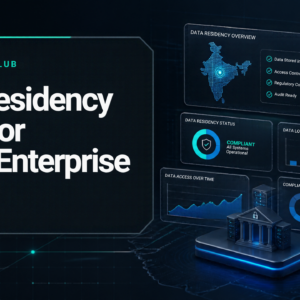
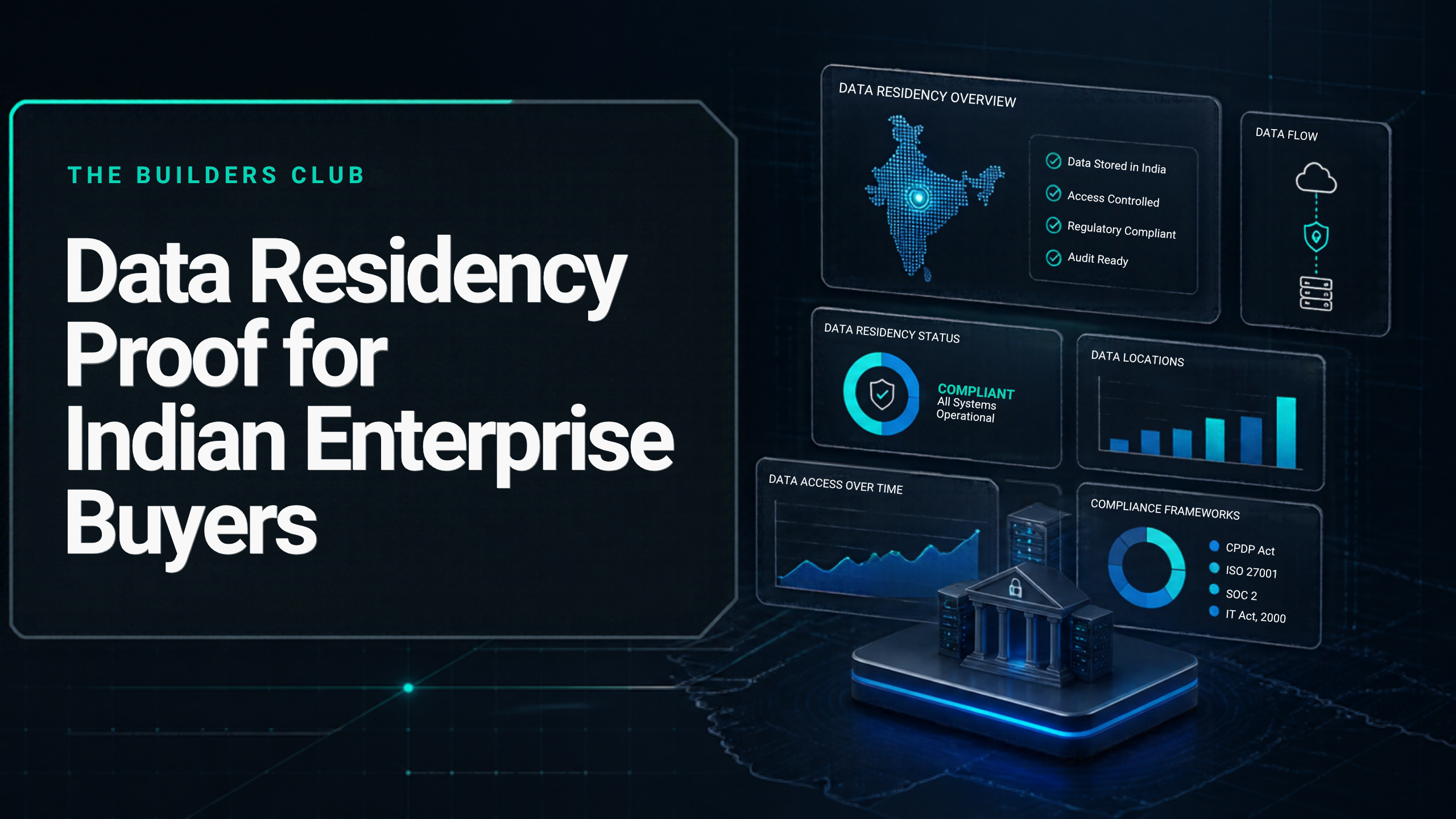
Provide an evidence pack, not a sentence. It should show where primary data, backups, disaster recovery copies, logs and analytics sit, which sub-processors can touch them, who can access them from where, and how all of this is bound by contract and audited. Pair architecture diagrams and region configuration with an independent attestation such as ISO 27001 or a SOC 2 report.
Which rules actually require data to stay in India?
There is no single law that applies to every vendor. The requirement depends on your customer’s sector and data type.
- Payments: RBI’s rules on storage of payment system data require payment data to be stored only in India, with limited processing abroad. See the RBI FAQs on storage of payment system data.
- Government: MeitY guidance requires government data on cloud to be held in India, and cloud offerings are empanelled by MeitY. See this Digit report on the MeitY requirement.
- Personal data generally: the DPDP Act allows cross-border transfer except to countries the government restricts, with sectoral rules continuing to apply. See this Mondaq analysis of the negative list approach and the Bar and Bench column on why contracts are being redrafted early.
- Logs: CERT-In directions require ICT logs for 180 days with a copy available in India.
Even when no law forces localisation, many enterprise buyers put it in their vendor policy. Confirm which rule applies to each customer.
What evidence should you put in the pack?
| Evidence | What it proves | Typical format |
|---|---|---|
| Hosting region statement | Primary data location | Signed letter or trust page naming the cloud provider and Indian region |
| Data flow diagram | Where data moves between systems | Diagram showing storage, backup, DR, logs and analytics locations |
| Backup and DR location | Copies do not leave India | Architecture note and configuration evidence |
| Sub-processor list | Who else can touch the data and where they are | Table with name, service, location and data type |
| Access controls for support staff | Remote access from abroad is controlled | Access policy, role matrix, approval and logging process |
| Independent attestation | Controls are audited | ISO 27001 certificate; SOC 2 report; ISO 27017 or 27018 if held |
| Contract clause | Legal commitment to stay in India | Data location clause with audit and notice rights |
| Log retention evidence | CERT-In log requirement is met | Logging policy and retention configuration |
Which hidden places break data residency promises?
Backups and disaster recovery
A common failure is a disaster recovery site in another country. If residency matters, keep DR in a second Indian region, and say so.
Logs, monitoring and support tools
Error tracking, analytics and ticketing tools often store snippets of customer data in overseas tenants. List them, then redact, replace or localise them.
Remote access by foreign teams
Data may be stored in India but viewed from abroad. Describe who can access production data, from where, under what approval, and with what logging. Many buyers treat remote viewing as a cross-border transfer.
Third-party sub-processors
Email delivery, payment, AI and SMS providers all process data. List each one with its location, and update the list when it changes.
How do you present it to a compliance team?
- Start with a one-page summary that answers the question directly.
- Attach the diagram, sub-processor list and certificates.
- Offer a call with your security lead and a walkthrough of the configuration.
- Offer audit rights in the contract and a notification duty if the location ever changes.
Cloud providers publish compliance resources too. For example, this IBM Cloud page on MeitY compliance shows the sort of documentation buyers expect.
References and Further Reading
- RBI FAQs: storage of payment system data (Reserve Bank of India)
- Government IT data on cloud must be stored in India: MeitY (Digit)
- From localisation debates to a negative list: cross-border data transfers under the DPDP Act (Mondaq)
- The DPDP cross-border transfer rules are not live yet (Bar and Bench)
- Reserve Bank of India catches the localised data bug (Freshfields)
- Cross-border data transfers after DPDP: a practical guide (Digio)
Frequently Asked Questions
What proof of data residency do Indian enterprises ask cloud vendors for?
Usually a written statement of where data is stored, an architecture and data-flow diagram, a sub-processor list with locations, evidence of backup and disaster recovery locations, access control details and an independent certification such as ISO 27001 or SOC 2. Many also want a contract clause that commits you to the Indian location.
Is data localisation mandatory for all software vendors in India?
No, there is no blanket rule. Requirements vary by sector, such as payments data under RBI rules or government data under MeitY guidance, and by the customer policy. Check the applicable rule for each customer and confirm with counsel.
Does hosting in an Indian cloud region count as data residency?
It is the starting point, not the full answer. Auditors also look at backups, logs, support tools, remote access and sub-processors. If any of these sit or operate outside India, say so and explain the controls, or move them.
Conclusion
Data residency is an evidence exercise. Map every place the data goes, close the gaps in backups, logs and access, and hand your buyer a short, documented pack. The vendors who prepare this once spend far less time in each audit afterwards.
This article is general information, not legal or compliance advice. Confirm requirements with your counsel and each customer.
If you are building a B2B company for Indian enterprise buyers, join The Builders Club community to compare notes with other founders and CXOs who are working through the same problems.
About the author: Sohail Khan is the Founder and Director of The Builders Club, a professional community of 35,000+ founders and CXOs across India, the UAE, Singapore and the US. He writes about enterprise go-to-market, sales and scaling for B2B founders.