// ARTICLE

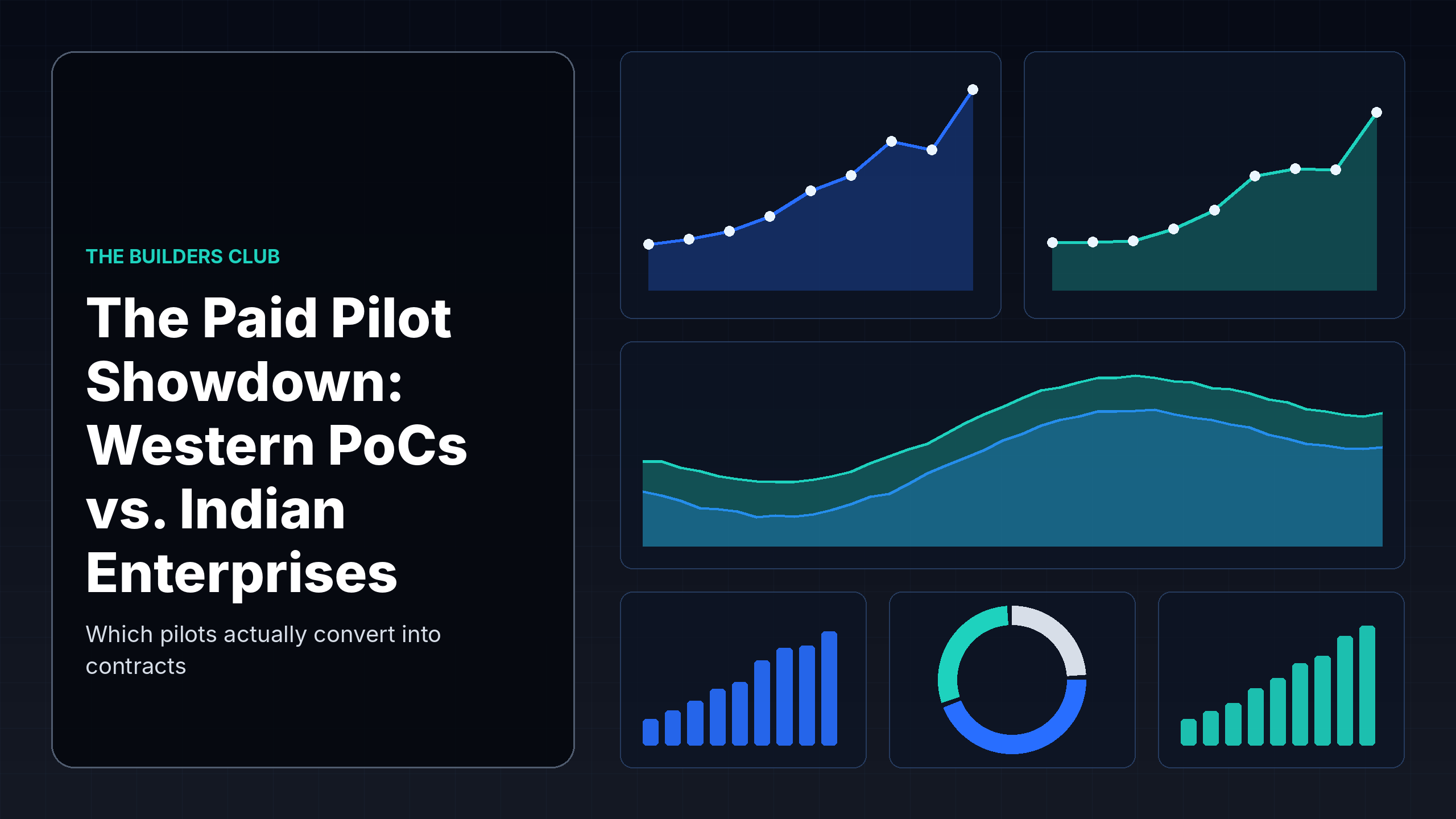
The Paid Pilot Showdown: Do Proof-of-Concepts Convert Better in Western Markets or Indian Enterprises?

Advertisement

A paid pilot is not a free trial with an invoice. It is a commercial test with a pre-agreed definition of success. In many Western markets, buyers are used to paying for pilots and expect a go or no-go decision at the end. In many Indian enterprises, pilots are still run as free evaluations that drift for months with no clear path to a contract.

Here is how the two approaches differ, why conversion rates are hard to compare, and how to run a pilot that actually ends in a signature.

What is a paid pilot, and how is it different from a PoC?

A proof of concept (PoC) tests whether something is technically possible. A paid pilot tests whether it creates business value in a real environment, with real users, under a commercial agreement.

The word “paid” matters because payment forces a budget owner, a scope and a decision date. Without those, a pilot becomes a long free service.

Note: there is no reliable public dataset comparing PoC-to-contract rates between Western and Indian enterprises. The patterns below come from how buying processes typically work, so measure your own conversion rate and treat it as your benchmark.

How do pilots typically run in Western markets?

  • Budget exists for experimentation. Innovation or departmental budgets often fund pilots, so charging a fee is accepted.
  • Success criteria are written down. Metrics, timelines and the decision-maker are agreed before kickoff.
  • Procurement has a pilot template. Many large buyers have standard pilot or evaluation agreements, which shortens legal time.
  • Outcome is a decision. Convert, extend with conditions, or stop.

How do pilots typically run in Indian enterprises?

  • Free evaluation is the default expectation. Teams often ask vendors to prove value before any money moves.
  • Sponsor is clear, budget is not. The business head may love the pilot, while the commercial approval sits elsewhere.
  • Scope expands quietly. Extra integrations, extra users and extra reports get added without changing the commercial terms.
  • Timeline is relationship-led. Decisions follow internal bandwidth, leadership changes and budget cycles, not just pilot results.

Western vs Indian pilots: where do conversion rates diverge?

Dimension Typical Western enterprise Typical Indian enterprise
Pilot fee Commonly accepted Often resisted; may be credited against the contract
Success criteria Documented up front Often verbal or evolving
Decision owner Named budget holder Sponsor plus a wider approval chain
Main failure mode Pilot succeeds but loses to priorities Pilot drags on without a decision
Best protection Clear exit criteria Commercial conversion terms signed first

The key insight is that conversion depends less on market and more on pilot design. A well-structured pilot in either country converts better than a loose one.

How do you design a pilot that converts in India?

  1. Agree on the business problem, not the feature list. Write the one metric the sponsor will defend internally.
  2. Set a fixed duration. Typically 4 to 12 weeks, depending on integration depth. Put an end date in writing.
  3. Charge something. If a full fee is not possible, charge a partial fee that is credited against the first-year contract. Even a nominal commitment signals seriousness.
  4. Pre-agree the conversion path. State the commercial terms that apply if success criteria are met, so the next step is a signature rather than a new negotiation.
  5. Name every approver early. Identify IT, security, finance and procurement stakeholders while the pilot is running, not after.
  6. Hold a formal readout. Present results to the sponsor and the decision-maker together, with a clear recommendation.

What are red flags that a pilot will not convert?

  • No budget owner has attended a single meeting.
  • The success metric keeps changing.
  • Requests for new features appear mid-pilot with no change in scope or fees.
  • The sponsor cannot name the next approval step.

FAQ

Should Indian startups charge for pilots?

Wherever possible, yes, even partially. A paid or credited pilot filters out casual evaluations and pushes the buyer to identify a budget and a decision-maker. If a fee is impossible, require a signed pilot agreement with success criteria and a conversion clause.

How long should an enterprise pilot last?

Most pilots work best between 4 and 12 weeks, based on integration complexity. Longer pilots often lose momentum. Set a fixed end date and a decision meeting in the calendar before you start.

What is a good PoC-to-contract conversion rate?

There is no universal benchmark. Track your own rate across your first 10 pilots, split by whether they were paid, credited or free. That internal comparison is more useful than any generic industry figure.

Conclusion

Pilots convert when they are designed as commercial decisions. Define success in writing, attach a fee or credit, fix the timeline, and agree on the conversion path before the first login. Do that, and the Western-versus-Indian gap narrows considerably.

Want pilot templates and peer advice? Join The Builders Club to learn how founders structure pilots with large enterprises. Join the community.


About the author: Sohail Khan is Founder and Director of The Builders Club, a professional community of 35,000+ founders and CXOs across India, UAE, Singapore and the US.

Advertisement
Advertisement
Facebook
X
LinkedIn

The Paid Pilot Showdown: Do Proof-of-Concepts Convert Better in Western Markets or Indian Enterprises?

A paid pilot is not a free trial with an invoice. It is a commercial test with a pre-agreed definition of success. In many Western markets, buyers are used to paying for pilots and expect a go or no-go decision at the end. In many Indian enterprises, pilots are still run as free evaluations that drift for months with no clear path to a contract. Here is how the two approaches differ, why conversion rates are hard to compare, and how to run a pilot that actually ends in a signature. What is a paid pilot, and how is it different from a PoC? A proof of concept (PoC) tests whether something is technically possible. A paid pilot tests whether it creates business value in a real environment, with real users, under a commercial agreement. The word “paid” matters because payment forces a budget owner, a scope and a decision date. Without those, a pilot becomes a long free service. Note: there is no reliable public dataset comparing PoC-to-contract rates between Western and Indian enterprises. The patterns below come from how buying processes typically work, so measure your own conversion rate and treat it as your benchmark. How do pilots typically run in Western markets? Budget exists for experimentation. Innovation or departmental budgets often fund pilots, so charging a fee is accepted. Success criteria are written down. Metrics, timelines and the decision-maker are agreed before kickoff. Procurement has a pilot template. Many large buyers have standard pilot or evaluation agreements, which shortens legal time. Outcome is a decision. Convert, extend with conditions, or stop. How do pilots typically run in Indian enterprises? Free evaluation is the default expectation. Teams often ask vendors to prove value before any money moves. Sponsor is clear, budget is not. The business head may love the pilot, while the commercial approval sits elsewhere. Scope expands quietly. Extra integrations, extra users and extra reports get added without changing the commercial terms. Timeline is relationship-led. Decisions follow internal bandwidth, leadership changes and budget cycles, not just pilot results. Western vs Indian pilots: where do conversion rates diverge? Dimension Typical Western enterprise Typical Indian enterprise Pilot fee Commonly accepted Often resisted; may be credited against the contract Success criteria Documented up front Often verbal or evolving Decision owner Named budget holder Sponsor plus a wider approval chain Main failure mode Pilot succeeds but loses to priorities Pilot drags on without a decision Best protection Clear exit criteria Commercial conversion terms signed first The key insight is that conversion depends less on market and more on pilot design. A well-structured pilot in either country converts better than a loose one. How do you design a pilot that converts in India? Agree on the business problem, not the feature list. Write the one metric the sponsor will defend internally. Set a fixed duration. Typically 4 to 12 weeks, depending on integration depth. Put an end date in writing. Charge something. If a full fee is not possible, charge a partial fee that is credited against the first-year contract. Even a nominal commitment signals seriousness. Pre-agree the conversion path. State the commercial terms that apply if success criteria are met, so the next step is a signature rather than a new negotiation. Name every approver early. Identify IT, security, finance and procurement stakeholders while the pilot is running, not after. Hold a formal readout. Present results to the sponsor and the decision-maker together, with a clear recommendation. What are red flags that a pilot will not convert? No budget owner has attended a single meeting. The success metric keeps changing. Requests for new features appear mid-pilot with no change in scope or fees. The sponsor cannot name the next approval step. FAQ Should Indian startups charge for pilots? Wherever possible, yes, even partially. A paid or credited pilot filters out casual evaluations and pushes the buyer to identify a budget and a decision-maker. If a fee is impossible, require a signed pilot agreement with success criteria and a conversion clause. How long should an enterprise pilot last? Most pilots work best between 4 and 12 weeks, based on integration complexity. Longer pilots often lose momentum. Set a fixed end date and a decision meeting in the calendar before you start. What is a good PoC-to-contract conversion rate? There is no universal benchmark. Track your own rate across your first 10 pilots, split by whether they were paid, credited or free. That internal comparison is more useful than any generic industry figure. Conclusion Pilots convert when they are designed as commercial decisions. Define success in writing, attach a fee or credit, fix the timeline, and agree on the conversion path before the first login. Do that, and the Western-versus-Indian gap narrows considerably. Want pilot templates and peer advice? Join The Builders Club to learn how founders structure pilots with large enterprises. Join the community. About the author: Sohail Khan is Founder and Director of The Builders Club, a professional community of 35,000+ founders and CXOs across India, UAE, Singapore and the US.

Read More »