// ARTICLE

From Free Consultation to Annual Signed Contract: How Enterprise SaaS Scale-ups Package Technical Implementations to Close Top Indian Brands

How enterprise SaaS scale-ups turn free consultations into paid, annual contracts with leading Indian brands by packaging implementation as a clear commercial offer.
From Free Consultation to Annual Signed Contract
Advertisement

A senior leader at a large Indian brand invites your team in for a “consultation.” You map their systems, sketch an architecture and share a roadmap. Three weeks later they thank you, and nothing is signed. The free work was real. The commitment was not.

The short answer: scale-ups that convert consultations into annual contracts stop selling hours and start selling a packaged implementation: a fixed discovery phase, a defined first deployment, and a subscription that begins on a stated date. The package gives the buyer a decision to make, not a favour to accept.

Here is the step-by-step structure that works.

Why do free consultations rarely turn into signed contracts?

Free advice has no deadline, no owner and no price, so it sits in the buyer’s inbox. Three patterns repeat:

  • No commercial next step. The consultation ends with insights, not a proposal.
  • Scope creep by default. Each meeting adds one more requirement because it costs the buyer nothing.
  • No internal sponsor accountability. The executive who invited you has no budget line to defend.

How do you package a technical implementation into a sellable offer?

Phase 1: A paid discovery sprint

Replace open-ended consultation with a time-boxed sprint of two to four weeks. Define deliverables up front: a current-state assessment, an integration map, a prioritised use-case list and a costed implementation plan. Price it modestly and credit it against the annual contract if the buyer proceeds.

Phase 2: A defined first deployment

Scope one business unit, one workflow or one integration with measurable success criteria. Name the owner on the buyer’s side, the data you need and the date you go live.

Phase 3: The annual subscription

Make the annual term the natural continuation, not a separate negotiation. State the subscription start date, the user or usage tiers, the support level and the expansion path in the same document.

StageBuyer getsCommercial structureExit signal to convert
Discovery sprintAssessment, architecture, costed planFixed fee, credited laterSponsor reviews plan with finance
First deploymentLive use case with agreed metricsImplementation fee plus subscription start dateSuccess criteria met
Annual contractFull platform, support, roadmap input12-month term, tiered expansionBusiness case signed by budget owner

How do you make the offer easy for a CXO to approve?

  1. Write a one-page business case in the buyer’s language: cost today, cost after, payback period.
  2. Show a fixed price and a fixed timeline, with named change-request rules.
  3. Let the sponsor choose between two packages, not one, so the decision becomes which, not whether.
  4. Attach the standard legal and security documents at the proposal stage so procurement can start in parallel.
  5. Agree a review date for the subscription decision before the sprint begins.

What implementation pitfalls should scale-ups avoid?

  • Quoting open-ended time-and-material work that makes the buyer feel they are hiring an agency.
  • Giving away integrations that the product team will then have to maintain.
  • Skipping the finance conversation until the deal is already verbal.
  • Failing to document what the free phase delivered, which weakens the case for charging next time.

Industry analysts such as Gartner and McKinsey regularly point out that enterprise software value is realised in adoption, not licence signature. Packaging implementation around adoption milestones aligns your contract with that reality.

Frequently Asked Questions

Should enterprise SaaS companies charge for discovery in India?

Yes, in most cases. A modest, credited discovery fee filters out casual enquiries and gives the buyer’s sponsor a budget item to defend. Where a free pilot is unavoidable, limit its scope and set a written conversion date.

How long should an implementation package take before the annual contract starts?

Most scale-ups aim for a discovery sprint of two to four weeks and a first deployment within one to three months. The right length depends on integration complexity, but the subscription start date should always be written down early.

How do I stop a consultation from turning into free custom work?

Define deliverables and a change-request process in writing, and tie extra work to a priced change order. Keep roadmap requests separate from implementation scope.

Conclusion

A free consultation earns attention; a packaged implementation earns a signature. Give the buyer a paid discovery sprint, a defined first deployment and an annual subscription with a stated start date, and the conversation moves from advice to approval. Treat every phase as a commercial step with an owner, a price and a date.

Next step: Building enterprise relationships in India? Connect with founders and CXOs who have done it at thebuildersclub.me.

Advertisement
Advertisement
Facebook
X
LinkedIn
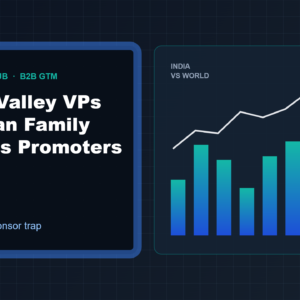
Silicon Valley VPs vs. Indian Family Business Promoters

The Executive Sponsor Trap: Selling to Silicon Valley VPs vs. Securing Commitments from Indian Family Business Promoters

A Silicon Valley VP can usually sign inside a budget they own. An Indian family business promoter often holds the final say but delegates the evaluation, and that gap is where deals stall. Treating a friendly mid-level sponsor as the decision-maker is the most common mistake in cross-border enterprise sales. Here is how the two models differ and how to secure a commitment that survives promoter review. What is the executive sponsor trap? It is the assumption that the person championing your product has the authority to buy it. In US enterprise sales, a VP or director often does hold budget. In many Indian family-run groups, authority sits with the promoter or family council, while managers and professional CEOs run evaluations. How do US VPs make buying decisions? Delegated authority. A VP typically owns a departmental budget with a defined spending limit. Process-led approval. Procurement and legal run a standard path once a business case is approved. Rep-free research. Buyers do much of their research independently, as shown in Gartner’s 2026 sales survey, so your first call is rarely the start of their evaluation. How do Indian family business promoters make buying decisions? Final say at the top. The promoter or a small family circle may approve significant spend, even when a professional CEO handles daily operations. For context, see Business Today on professional CEOs in Indian business families. Trust over process. A recommendation from a known peer, advisor or existing vendor carries heavy weight. Group thinking. Decisions consider the whole group, not only one business unit, which can slow or accelerate a deal sharply. Tech caution. Research on Indian family businesses by Inc42 describes growth-driven but technology-cautious attitudes, which means proof and references matter. Academic work such as the Indian School of Business research on family business groups offers background on how these groups are structured. Sponsor authority compared: Silicon Valley vs family-run Indian groups Factor Silicon Valley VP Indian family business promoter Budget ownership Often in the VP’s own budget Often approved at group or promoter level Who evaluates The VP’s team Managers, CIO or professional CEO What builds trust Data, ROI case, peer reviews Personal credibility, references, introductions Typical blocker Competing priorities and budget timing No access to the final decision-maker Commitment signal Signed order form Promoter or senior leadership endorsement, then paperwork How do you secure a real commitment from a promoter-led company? Ask the authority question early. “Who gives the final nod on a decision of this size?” is polite and effective. Arrange a senior-to-senior meeting. Your founder or most senior leader meets the decision-maker with the sponsor’s backing. Use a trusted introducer. A mutual contact, existing client or advisor opens doors more reliably than outreach. Give the sponsor a promoter-ready summary. One page covering outcome, risk, cost, and references in plain language. Confirm the paperwork route. Once approval is verbal, ask who triggers legal, security and procurement. What if you cannot reach the promoter? Work through the professional CEO or CIO, and ask them to describe what the promoter will want to see. Prepare that material in advance. FAQ Who makes the final software buying decision in an Indian family-owned business? It varies, but for significant spend the final approval often rests with the promoter or a small family group, while managers and a professional CEO run the evaluation. Ask early who gives the final nod. How is selling to a US VP different from selling to an Indian business promoter? US VPs typically own a budget and follow a defined buying process. Promoters weigh trust, references and group-level considerations, so you need senior access and credible introductions. How do I get a meeting with a promoter or business owner? Use warm introductions from mutual contacts, existing customers, advisors or community events. Ask your internal sponsor to request the meeting and prepare a short, outcome-focused briefing. Conclusion Do not mistake enthusiasm for authority. In the US, test whether your VP owns the budget. In Indian family groups, find the person who gives the final nod, and get there through trusted introductions and a promoter-ready summary. Need warm introductions to promoter-led enterprises? Join The Builders Club. References and further reading Gartner Sales Survey: 67% of B2B buyers prefer a rep-free experience (2026) Gartner: The B2B buying journey and how to optimise it Business Today: Why Indian business families are hiring professional CEOs Inc42: Indian family businesses are growth-driven but tech-cautious Indian School of Business: Family business groups in India About the author: Sohail Khan is Founder and Director of The Builders Club, a professional community of 35,000+ founders and CXOs across India, UAE, Singapore and the US.

Read More »

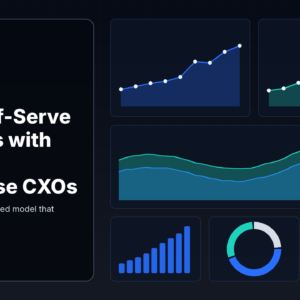
Why the Self-Serve PLG Playbook Fails with Indian Enterprise CXOs (And the High-Touch Assisted Model That Actually Wins)

Self-serve PLG works when the user is also the buyer. In Indian enterprises, they almost never are. A product-led funnel can get your tool into a team’s hands, but it rarely gets a CXO to sign. The model that wins is a high-touch, assisted motion that uses product usage as proof, not as the whole sales strategy. Here is why the standard playbook stalls in India’s large organisations, and what to run instead. Why does the self-serve PLG playbook fail with Indian enterprise CXOs? Product-led growth, as described by pioneers such as OpenView, assumes that users discover, try and adopt the product themselves, and that revenue follows usage. That assumption holds for tools with low risk, low price and individual buyers. Enterprise buying in India breaks all three conditions at once. The user is not the buyer. An analyst may love your tool. The budget sits with a CIO, CFO or business head who has never opened it. Risk is organisational. A CXO signs against security, vendor-continuity and reputational risk, none of which a free trial answers. Trust is personal. Decisions often move on credibility, references and conversations with someone they respect, not on a sign-up flow. Does a free trial or freemium plan ever work in Indian enterprises? It can work for teams, departments and SMB-sized units, where one manager has a card or small discretionary budget. It rarely scales to the top accounts without a human who turns usage into a business case. What does the high-touch assisted model actually look like? Assisted does not mean old-fashioned. It means every stage of the product experience is paired with a person who removes a specific obstacle. Stage Pure self-serve PLG Assisted model for Indian enterprises Discovery Organic search, product trial Warm introduction, peer room, referral Evaluation Self-guided trial Guided pilot with named success criteria Decision User upgrades with a card Business case built for the CXO and the committee Contracting Click-through terms Negotiated MSA, security review, procurement Expansion In-app prompts Account lead plans rollout across divisions How do you turn product usage into a signed enterprise contract? Use the product as the evidence, and a person as the translator. A practical sequence: Find your champion. Identify the user who gets the most value and ask them to explain the problem in their own words. Quantify the result. Convert usage into time saved, errors avoided or revenue influenced, in a one-page summary the CXO can read in two minutes. Map the buying committee. Ask your champion who else must say yes: IT, security, finance, legal, and the business owner. Run an executive conversation. A founder or senior lead speaks to the CXO about outcomes and risk, not features. Offer a scoped commitment. A defined pilot or first-division rollout with clear exit and expansion terms reduces perceived risk. When should you still invest in self-serve? Do not abandon it. Use self-serve as the top of the funnel and as a signal engine. Track which accounts have several active users, which teams invite colleagues, and which admins explore security settings. Those are the accounts your sales team should call first. Think of it as product-qualified leads feeding a human-led close. Many global companies now run exactly this hybrid, and it fits Indian enterprise buying better than a pure self-serve approach. FAQ Is PLG dead for B2B SaaS in India? No. PLG is useful for building awareness, usage data and champions inside accounts. It fails as the only motion for large enterprises, where committees, security reviews and relationships decide the contract. A hybrid model works better. What is a product-qualified lead (PQL)? A PQL is an account or user whose in-product behaviour suggests buying intent, such as multiple active teammates or admin-level exploration. Sales teams use PQLs to prioritise who to approach with a human conversation. How many people does an assisted enterprise sale need? It depends on deal size, but you typically need one senior owner for the relationship, one technical resource for security and integration questions, and a customer success lead after signing. Founders often cover the first two roles in early deals. Conclusion PLG gets you into the room, but it does not get a CXO to sign. In Indian enterprises, winning sales pair product evidence with human trust: a champion, a business case, a guided pilot and a senior conversation. Building an assisted enterprise motion? Meet founders and CXOs who have done it at The Builders Club, and bring your toughest sales question to our next roundtable. Join The Builders Club. About the author: Sohail Khan is Founder and Director of The Builders Club, a professional community of 35,000+ founders and CXOs across India, UAE, Singapore and the US.

Read More »